
7 Powerful Digital Product Marketing Strategies to Sell Digital Products in 2026
Creating a digital product is only the beginning. The real challenge is getting the right people to discover it, understand its value, trust the creator and finally make a purchase.
That is why Digital Product Marketing has become an essential skill for creators, entrepreneurs, coaches, educators, designers and small businesses in 2026.
A digital product can be an ebook, template, planner, workbook, checklist, spreadsheet, printable, course, prompt pack, design kit, guide or bundle. Unlike physical products, digital products can usually be delivered instantly without inventory, packaging or shipping.
However, having a product online does not automatically generate sales.
You need a system.
This beginner’s guide explains how to build that system, which social media platforms to use, how to create promotional creatives, how frequently to post, how to connect SEO with social media and how to optimize your digital product marketing strategy.

What Is digital product marketing?
Digital Products Marketing means attracting potential buyers, communicating the product’s value, building trust and guiding interested people toward a purchase.
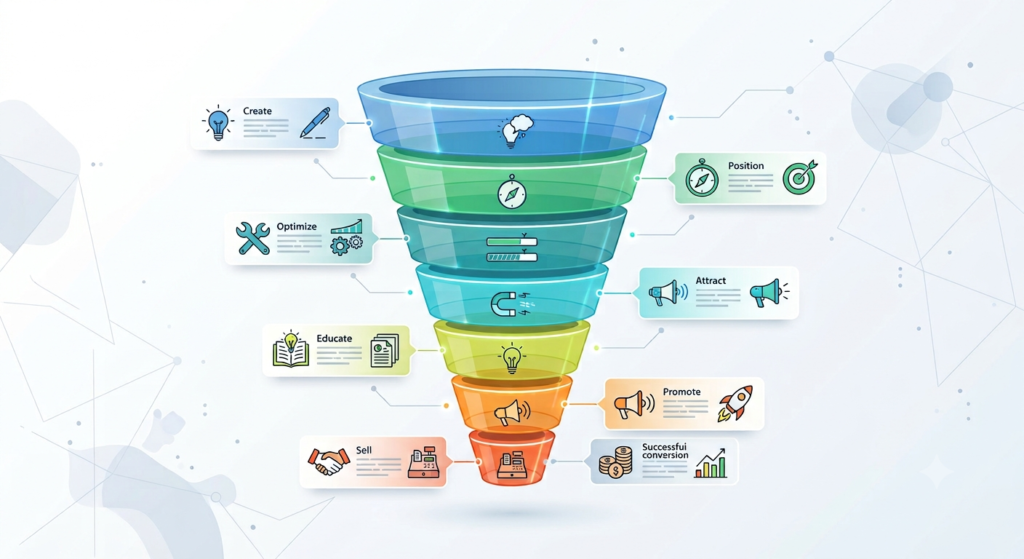
The process can be simplified into seven stages:
Create → Position → Optimize → Attract → Educate → Promote → Sell
For example, suppose you create a ₹499 digital planner.
Simply uploading the planner to a website is not marketing.
A complete system would include:
- A product page
- A clear product promise
- Search-friendly content
- Social media posts
- Pinterest Pins
- Educational content
- Promotional creatives
- A clear call to action
- A simple checkout process
- Follow-up content
- Analytics and optimization
This is the foundation of digital product marketing.
Why Digital Product Marketing Is Important in 2026
Digital products are attractive because one product can potentially be sold repeatedly without recreating the physical inventory for every customer.
But competition is also increasing.
Thousands of creators are selling templates, ebooks, planners, courses and digital bundles. Therefore, customers need a reason to notice your product and understand why it is relevant to them.
The strongest approach is not simply saying:
“Buy my product.”
Instead, show:
Problem → Solution → Benefit → Proof → Action
For example:
Problem: “You want to manage your monthly money but don’t know where it goes.”
Solution: “Use a simple monthly money tracker.”
Benefit: “See your income, expenses and savings goals in one place.”
Proof: Show the actual pages.
Action: “Get the digital tracker today.”
This approach makes promotion feel useful rather than aggressive.
The 7-Step Digital Product Marketing System
1. Define Your Product and Buyer
Before you promote anything, identify exactly what you are selling and who needs it.
Ask:
- What problem does the product solve?
- Who experiences this problem?
- What result does the buyer want?
- Why would they pay for the solution?
- What makes your product easier to use?
- What price makes sense for the perceived value?
Avoid trying to sell one product to everybody.
A product designed for beginner entrepreneurs should communicate differently from a product designed for experienced marketers.
Your message should make the right person think:
“This was created for me.”
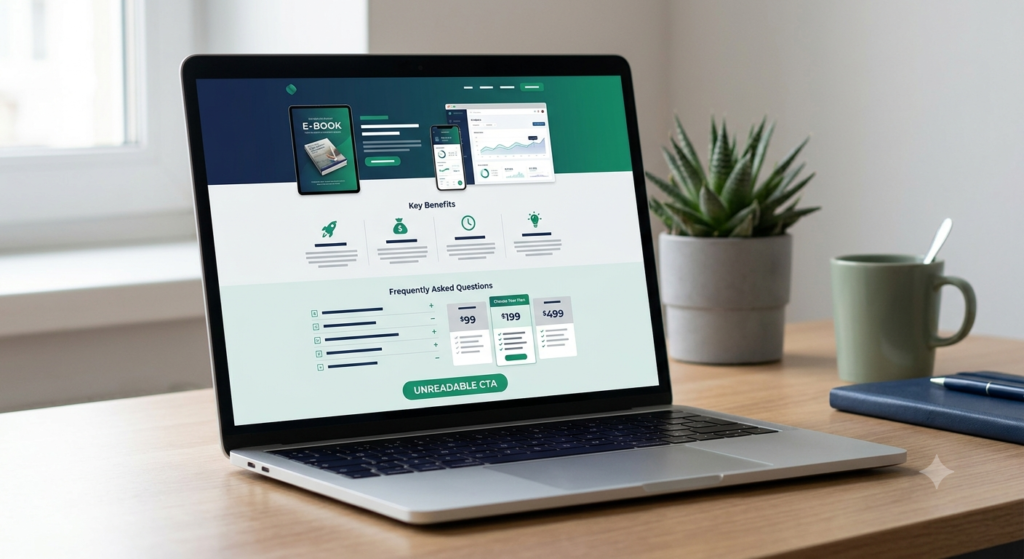
2. Build a Strong Product Sales Page
Your sales page is the bridge between attention and revenue.
A basic digital product sales page should include:
Product headline
Tell visitors what the product does.
Problem
Describe the situation your audience recognizes.
Solution
Explain how your product helps.
What’s included
List the actual files, pages, templates or resources.
Benefits
Explain what the buyer can accomplish with the product.
Preview
Show screenshots or selected pages.
Price
Make the price easy to understand.
Call to action
Use a clear CTA such as:
Get the Bundle
Start Your Challenge
Download Now
Get Instant Access
FAQ
Answer questions about delivery, format, access, refunds and usage.
A well-structured sales page helps sell digital products without requiring constant personal explanation.
3. Optimize Your Product for Search
SEO can bring people to your product even when you are not actively posting.
Start with one primary keyword and several related terms.
For this article, the primary keyword is:
digital product marketing
Supporting keywords include:
- digital product marketing strategy
- sell digital products
- digital product promotion
- social media marketing for digital products
Use the primary keyword naturally in:
- SEO title
- Introduction
- One or two headings
- Body content
- Meta description
- Image alt text where genuinely relevant
- URL/slug where appropriate
- Conclusion
Do not repeat it unnaturally.
Google’s SEO documentation emphasizes helping search engines understand your content and using clear, useful page structures rather than manipulating rankings through excessive repetition.
Your on-page SEO checklist
Before publishing, check:
- One clear H1
- Keyword-focused SEO title
- Meta description
- Short descriptive URL
- Helpful H2/H3 headings
- Internal links
- Relevant external links
- Optimized images
- Descriptive image alt text
- Mobile-friendly layout
- Fast-loading images
- Clear CTA
- FAQ section
- Appropriate schema markup
4. Choose the Right Social Media Platforms
You do not need to be everywhere.
For a beginner for digital product marketing, choose platforms according to your product and audience.
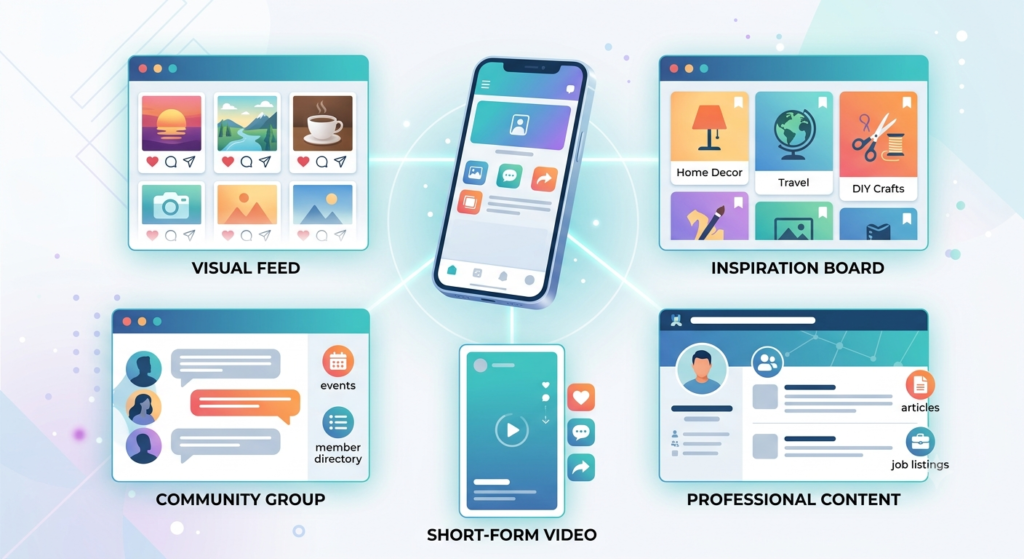
| Platform | Best use | Suggested frequency |
|---|---|---|
| Product discovery, Reels, carousels, Stories | 4–5 feed posts/week + Stories | |
| Community, Groups, Pages, sharing offers | 3–5 posts/week | |
| Search discovery and evergreen traffic | 3–7 Pins/week | |
| Business, professional and B2B products | 2–4 posts/week | |
| TikTok | Short educational/product demonstrations | 3–7 videos/week |
| YouTube | Tutorials, education and product demonstrations | 1–2 videos/week |
These are starting schedules, not universal algorithms. Consistency and content quality matter more than blindly hitting a number.
Pinterest itself recommends creating new original Pins at least weekly and provides scheduling tools for consistent publishing.
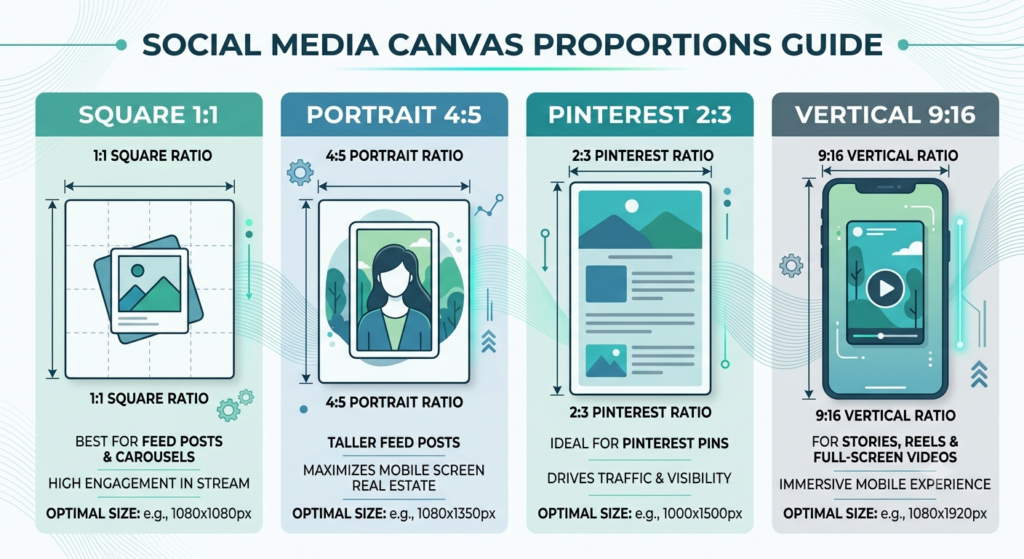
For Pinterest specifically, the platform recommends a vertical 2:3 format, such as 1000 × 1500 pixels, with clear branding, concise messaging and a specific CTA.
5. Create Promotional Creatives That Sell
Your creative is often the first thing people notice.
Do not make every graphic look like an advertisement.
Create different creative categories.
Creative 1: Problem
Example:
“Still struggling to save your first ₹500?”
Creative 2: Education
“3 simple ways to control unnecessary spending.”
Creative 3: Product preview
Show actual pages from your digital product.
Creative 4: Benefits
“One simple bundle. Seven practical resources.”
Creative 5: FAQ
Answer a common objection.
Creative 6: Comparison
Show:
Without a system vs. With a system
Creative 7: Direct promotion
“Get the complete bundle for ₹499.”
Creative 8: Social proof
When you have genuine customer feedback, display it.
Never create fake testimonials.
Recommended Creative Sizes for 2026
Current social-media specifications vary by platform and can change, so check the platform’s current publishing interface before designing a large batch. A current 2026 cross-platform reference lists these common dimensions.
| Platform | Recommended creative | Size |
|---|---|---|
| Instagram Feed | Portrait | 1080 × 1350 px |
| Instagram Square | Square | 1080 × 1080 px |
| Instagram Stories | Vertical | 1080 × 1920 px |
| Instagram Reels | Vertical | 1080 × 1920 px |
| Facebook Feed | Portrait/Square | 1080 × 1350 / 1080 × 1080 px |
| Facebook Stories | Vertical | 1080 × 1920 px |
| Landscape | 1200 × 627 px | |
| LinkedIn Square | Square | 1200 × 1200 px |
| TikTok | Vertical | 1080 × 1920 px |
| Pinterest Standard Pin | Vertical 2:3 | 1000 × 1500 px |
Canva tip
Instead of creating completely different designs every day, create one master design system.
Use:
- One headline font
- One body font
- Your brand colors
- Consistent logo placement
- Consistent CTA
- Consistent spacing
Then resize or adapt the creative for different platforms.
This saves time and creates brand recognition.
6. Use a Content Mix Instead of Constant Selling
If every post says “Buy now,” people can become less interested.
Use a simple content ratio.
40% Educational
Teach something useful.
Examples:
- Money-saving tips
- Marketing tips
- Productivity methods
- SEO tips
- Beginner guides
30% Problem and solution
Talk about problems your product addresses.
20% Product demonstration
Show pages, features, templates and use cases.
10% Direct promotion
Clearly ask people to purchase.
This creates a healthier content ecosystem.
The purpose is not to hide the product. The purpose is to give people enough useful information to understand why the product exists.
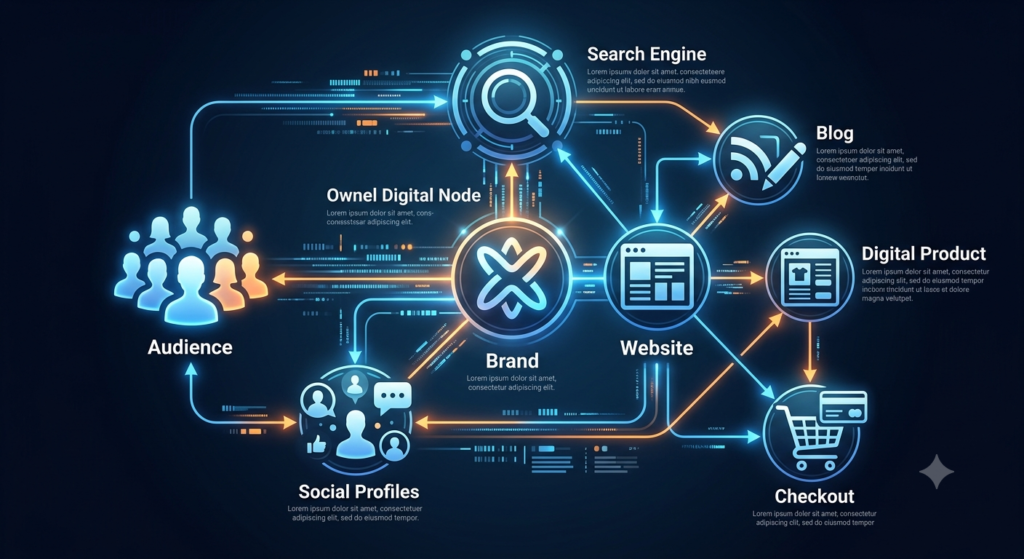
7. Connect Social Media, SEO and Your Website
This is where your entire digital-product ecosystem becomes stronger.
Think of your website as the central hub.
Social media attracts attention.
Pinterest creates discovery.
Search engines create organic visibility.
Your website explains the product.
Your checkout processes the purchase.
Your email list creates an owned audience.
Your analytics tell you what is working.
Together, these elements create a connected marketing system.
This is also why digital product marketing can become the backbone of your digital business entity.
Your brand, website, product, social profiles, content, keywords, links and customer journey should all describe the same business.
For example:
Brand entity: Aahraa
↓
Website entity: Aahraa.com
↓
Topic entity: Digital marketing and digital products marketing
↓
Product entity: Soft Life Wealth Bundle
↓
Social entities: Instagram, Pinterest, Facebook
↓
Content entities: Blog posts, Pins, carousels and educational posts
↓
Commercial action: Product purchase
The more consistently these elements describe the same business, the easier it becomes to create a recognizable digital presence.
Structured data can also help Google understand certain page information and relationships, although schema markup does not guarantee a particular search ranking or rich result.
Social Media Marketing for Digital Products: A Simple Weekly Plan
You do not need to create 20 completely different pieces of content every week.
Repurpose one idea.
Monday
Educational Instagram carousel
Tuesday
Pinterest Pin linking to the product or related article
Wednesday
Product preview
Thursday
Educational post
Friday
Problem/solution post
Saturday
Product promotion
Sunday
FAQ, recap or useful tip
You can then convert one article into several pieces of content.
For example:
Blog: “How to Create a Simple Savings System”
becomes:
- Instagram carousel
- Pinterest Pin
- Facebook post
- LinkedIn post
- Story
- Product-related CTA
One idea can therefore produce an entire week’s content.
How to Make Digital Product Promotion More Effective
Effective digital product promotion starts with the customer’s problem rather than the creator’s desire to make a sale.
Instead of:
“My new planner is available.”
Try:
“If your monthly expenses disappear before you understand where your money went, a simple tracking system can make the picture much clearer.”
Then introduce the product.
The customer should understand:
Why → What → How → Value → Action
This is especially important for low-ticket products because the buyer still needs to believe that the product will save time, solve a problem or help them achieve something meaningful.
Common Mistakes Beginners Make
Mistake 1: Creating too many products
Start with one clear product.
Learn how people respond before creating another ten.
Mistake 2: Promoting only the product
Educational content builds context and trust.
Mistake 3: Using poor product previews
People want to see what they are buying.
Show real pages.
Mistake 4: Changing niches constantly
A consistent topic makes your brand easier to understand.
Mistake 5: Using too many platforms
Start with two or three platforms you can maintain consistently.
Mistake 6: Ignoring SEO
Social media posts can disappear quickly. Search-optimized website content can continue attracting visitors over time.
Mistake 7: Expecting immediate sales
Marketing is a process of testing.
Track:
- Impressions
- Reach
- Saves
- Shares
- Clicks
- Product-page visits
- Add-to-cart actions
- Purchases
- Conversion rate
Then improve the weakest part of the journey.
How to Reach 99/100 SEO Optimization
No SEO plugin score can guarantee Google rankings, but you can aim for an exceptionally well-optimized page.
Use this final checklist:
SEO
☐ Primary keyword in SEO title
☐ Primary keyword near the beginning
☐ Primary keyword in URL
☐ Primary keyword in meta description
☐ Primary keyword in introduction
☐ Supporting keywords naturally distributed
☐ H2/H3 structure
☐ Short paragraphs
☐ Descriptive headings
☐ Internal links
☐ Relevant external links
☐ Image alt text
☐ Optimized image filenames
☐ Mobile-friendly design
☐ Fast-loading images
☐ FAQ section
☐ Appropriate schema
☐ Clear CTA
☐ No keyword stuffing
☐ Original, useful content
Content quality
☐ Answers beginner questions
☐ Explains what to do
☐ Explains how to do it
☐ Provides examples
☐ Includes practical sizes
☐ Includes posting frequency
☐ Includes platform selection
☐ Includes creative ideas
☐ Includes mistakes to avoid
☐ Includes an action plan
Final 30-Day Beginner Action Plan
If you are starting from zero, keep the process simple.
Week 1: Prepare
Create:
- One digital product
- One sales page
- Product previews
- Brand templates
- Instagram profile
- Pinterest business presence
- Basic analytics
Week 2: Publish
Start educational and product-related content.
Do not wait for perfection.
Week 3: Test
Test:
- Different headlines
- Different thumbnails
- Different CTAs
- Different content angles
- Different product benefits
Week 4: Improve
Look at the data.
If people see the post but do not click, improve the CTA.
If people click but do not purchase, improve the sales page.
If people purchase but do not understand the product, improve onboarding and instructions.
This is how digital products market becomes a measurable business process instead of random posting.

Conclusion
Successful digital products marketing in 2026 is not about posting constantly or being present on every social platform.
It is about building a connected system.
Create something useful.
Understand your buyer.
Build a clear sales page.
Optimize it for search.
Use social media to attract attention.
Create useful and visually strong creatives.
Post consistently.
Connect every platform back to your website.
Measure what happens.
Then improve.
Your digital product does not need to become famous overnight. It needs to become visible to the right audience, understandable to potential buyers and easy to purchase.
That is the foundation of sustainable digital product marketing and a practical way to sell digital products online.
Start with one product, one audience, two or three platforms and one consistent message.
Then build from there.