
Introduction
In today’s competitive digital landscape, businesses need more than just a website to attract customers. They need visibility at the exact moment potential buyers are searching for solutions. This is where a Google Ads Campaign becomes one of the most powerful marketing tools available.
This guide explores the essential foundations of a successful Google Ads Campaign, including campaign structure, campaign types, objectives, keyword research, targeting strategies, and ad creation best practices.
What Is a Google Ads Campaign?
A Google Ads Campaign is a collection of advertisements managed within the Google Ads platform to achieve specific marketing goals.
Businesses use Google Ads to:
- Generate leads
- Increase online sales
- Drive website traffic
- Promote mobile applications
- Build brand awareness
- Increase phone calls
- Boost local store visits
The platform operates primarily on a Pay-Per-Click (PPC Advertising) model, meaning advertisers generally pay when users click on their advertisements.Google displays ads to people actively searching for related products, services, or information.
This makes Google Ads Campaigns highly effective for reaching motivated buyers and decision-makers.
Why Google Ads Is the Backbone of Digital Marketing
Many businesses think of Google Ads as simply a traffic source. In reality, it functions as the central connection point for multiple digital marketing activities.
A successful Google Ads Campaign integrates with:
- Business websites
- Landing pages
- Google Analytics
- CRM platforms
- Email marketing systems
- Sales funnels
- E-commerce stores
- Conversion tracking tools
- Remarketing campaigns
Every click provides valuable customer data.
Every conversion reveals buyer behavior.
Every campaign helps businesses understand what customers truly want.
This information can improve not only advertising performance but also content marketing, sales processes, product development, and customer retention strategies.
Because Google Ads connects so many business systems, it is often considered the backbone of modern digital marketing.
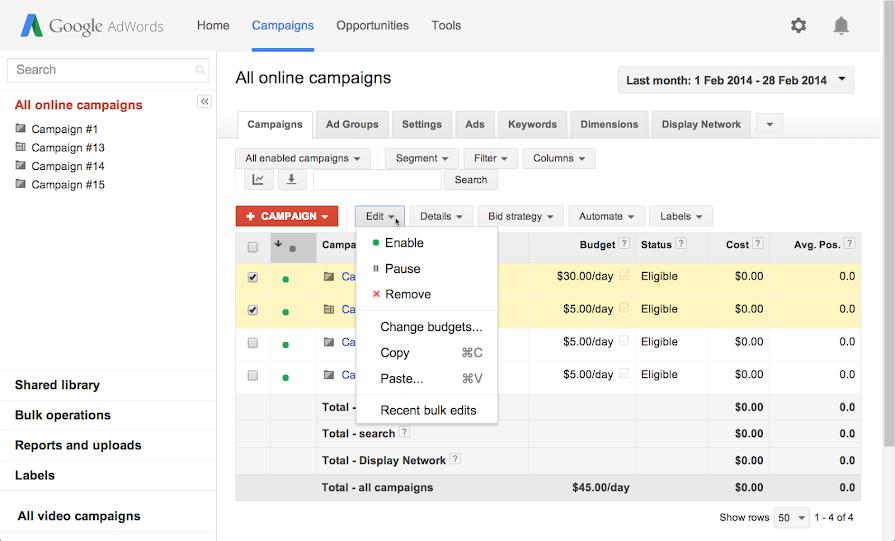
Understanding Google Ads Campaign Structure
A strong campaign structure is one of the most overlooked factors in PPC Advertising success.
Google Ads follows a hierarchy:
Account
The account contains all campaigns associated with a business.
Campaign
Each campaign has its own:
- Budget
- Location targeting
- Audience settings
- Bidding strategy
- Marketing objective
Ad Groups
Ad groups organize related keywords and advertisements into focused categories.
Keywords
Keywords determine when advertisements appear.
Ads
These are the messages displayed to users.
Landing Pages
The destination pages where visitors complete desired actions.
A well-organized structure improves:
- Relevance
- Quality Score
- Click-through rates
- Conversion rates
- Budget control
- Reporting accuracy
For example, a digital marketing agency might separate campaigns into:
- Google Ads Services
- SEO Services
- Social Media Marketing
- Website Development
Each campaign can then contain multiple ad groups focused on specific customer needs.
This structure makes optimization significantly easier and improves overall campaign performance.
Types of Google Ads Campaigns
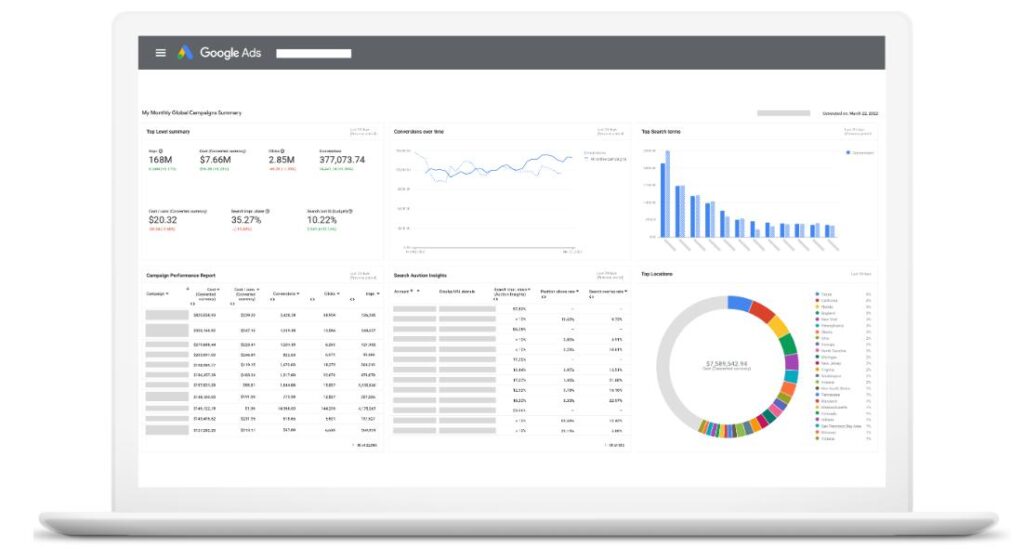
Google Ads offers multiple campaign formats designed for different business goals.
Understanding these campaign types helps advertisers choose the right approach for their objectives.
Search Campaigns
Search Campaigns display text advertisements directly within Google search results.
These campaigns target users actively searching for solutions.
Example searches:
- Google Ads management agency
- PPC advertising services
- Search engine marketing consultant
Because search users often have strong purchase intent, Search Campaigns frequently deliver high-quality leads.
Display Campaigns
Display Campaigns use visual banner advertisements shown across millions of websites within Google’s Display Network.
Benefits include:
- Increased brand awareness
- Wider audience reach
- Remarketing opportunities
- Visual storytelling
Display campaigns are particularly effective for businesses looking to remain visible throughout the customer journey.
Shopping Campaigns
Shopping Campaigns are designed primarily for eCommerce businesses.
These ads display:
- Product images
- Product names
- Prices
- Merchant information
Because shoppers can see product details before clicking, Shopping Campaigns often attract highly qualified traffic.
Video Campaigns
Video Campaigns display advertisements across YouTube and Google’s video partner network.
Businesses use video ads to:
- Build brand awareness
- Educate audiences
- Demonstrate products
- Generate leads
Video content often creates stronger emotional engagement compared to text-based advertisements.
Performance Max Campaigns
Performance Max uses artificial intelligence to display advertisements across Google’s entire ecosystem.
This includes:
- Search
- Display
- YouTube
- Gmail
- Maps
- Discover
Google automatically allocates budget and placements based on predicted performance.
Performance Max has become increasingly popular because it combines automation with broad reach.
Demand Generation Campaigns
Demand Generation Campaigns help businesses attract attention before customers actively search.
These campaigns focus on:
- Visual content
- Brand awareness
- Customer engagement
- Audience discovery
Demand Generation is especially useful for businesses introducing new products or services.
App Campaigns
App Campaigns promote mobile applications.
Google automatically displays app ads across:
- Search
- Play Store
- YouTube
- Display Network
The primary goal is usually app installations and user engagement.
Local Campaigns
Local Campaigns help businesses drive:
- Store visits
- Phone calls
- Direction requests
- Local awareness
These campaigns are ideal for restaurants, clinics, retail stores, and service providers.
Setting Effective Campaign Objectives
Before launching any Google Ads Campaign, advertisers must define a clear objective.
Without a goal, optimization becomes difficult.
Lead Generation
Lead generation campaigns focus on acquiring:
- Contact forms
- Consultation requests
- Quote requests
- Phone calls
These campaigns are common among agencies, consultants, and service-based businesses.
Sales
Sales campaigns aim to increase purchases and revenue.
ECommerce businesses frequently optimize campaigns around:
- Product purchases
- Average order value
- Return on ad spend
Website Traffic
Traffic-focused campaigns prioritize bringing visitors to a website.
This objective is useful for:
- New websites
- Content promotion
- Awareness campaigns
Brand Awareness
Brand awareness campaigns prioritize visibility and reach.
Businesses use these campaigns to strengthen recognition and familiarity among target audiences.
App Promotion
App campaigns focus on installations, registrations, and user activity.
Selecting the correct objective allows Google’s machine learning systems to optimize more effectively.
Keyword Research: The Foundation of PPC Advertising
Keywords are the bridge between user searches and advertisements.
Effective keyword research ensures your ads appear for the right audience.
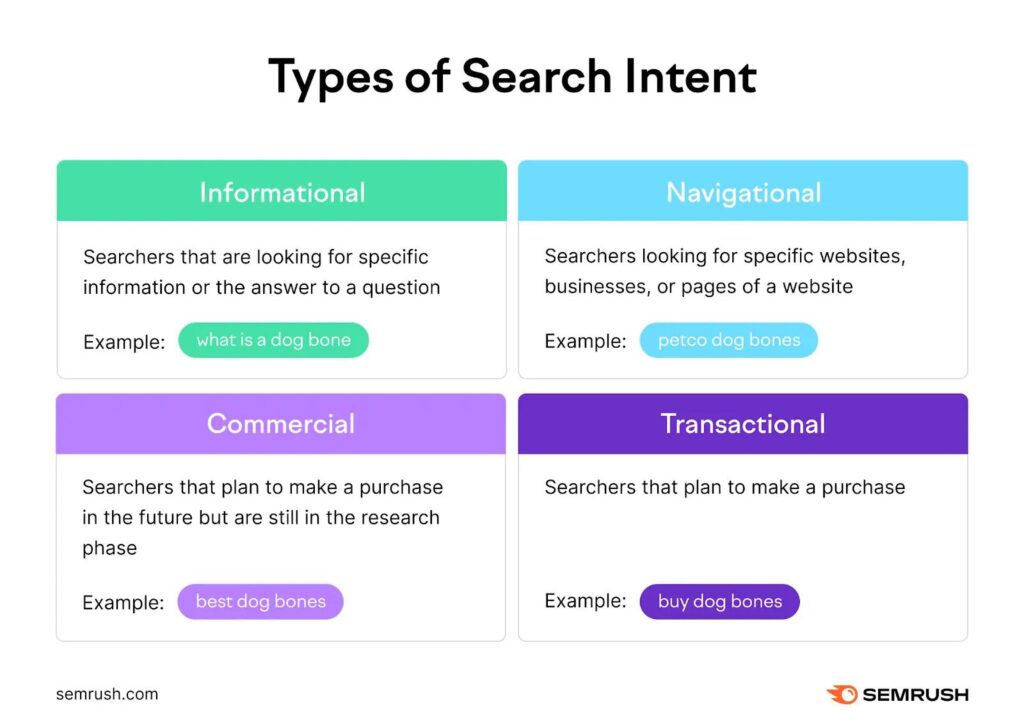
Understanding Search Intent
Search intent is often more important than search volume.
Users typically fall into three categories:
Informational Intent
Users seeking information.
Examples:
- What is Google Ads?
- How does PPC advertising work?
Commercial Intent
Users comparing solutions.
Examples:
- Best Google Ads agency
- Top PPC advertising companies
Transactional Intent
Users ready to take action.
Examples:
- Hire Google Ads expert
- Google Ads management services
Transactional keywords often produce the highest conversion rates because users are closer to making purchasing decisions.
Short-Tail Keywords
Short-tail keywords are broad and highly competitive.
Examples:
- Google Ads
- PPC Advertising
- Digital Marketing
These keywords generate large search volumes but often have lower conversion rates.
Long-Tail Keywords
Long-tail keywords are more specific and targeted.
Examples:
- Google Ads management for small businesses
- PPC advertising services for eCommerce stores
Although search volume may be lower, long-tail keywords frequently generate higher-quality leads.
Businesses that balance short-tail and long-tail keywords often achieve better campaign performance.

Keyword Match Types
Google Ads offers several match types that control how closely a user’s search must match a keyword.
Broad Match
Broad Match provides the widest reach.
Google may show ads for related searches, synonyms, and variations.
This helps discover new opportunities but requires careful monitoring.
Phrase Match
Phrase Match offers more control while maintaining flexibility.
Ads generally appear when searches contain the keyword phrase or close variations.
Exact Match
Exact Match provides the highest level of targeting.
Ads appear for searches that closely match the selected keyword.
Exact Match often delivers highly qualified traffic and stronger conversion rates.
Most successful advertisers use a combination of match types to balance reach, relevance, and performance.
Negative Keywords: Protecting Your Budget
Negative keywords tell Google when not to show advertisements.
This feature helps prevent wasted advertising spend.
Common negative keywords include:
- Free
- Jobs
- Internship
- Course
- Training
- Cheap
For example, a Google Ads Management agency seeking paying clients may not want its ads displayed for users searching:
- Free Google Ads course
- Google Ads internship
- Google Ads jobs
Negative keywords improve:
- Traffic quality
- Conversion rates
- Budget efficiency
- Return on investment
They are one of the most effective yet underutilized optimization tools within Google Ads.
Creating High-Converting Google Ads
Even the best keyword strategy can fail if advertisements do not capture attention and persuade users to click.
Effective Google Ads combine relevance, clarity, and value.
Writing Effective Headlines
The headline is often the first thing users notice.
Strong headlines should:
- Include primary keywords
- Highlight benefits
- Address customer needs
- Create curiosity when appropriate
Examples:
- Expert Google Ads Management Services
- Increase Leads with Proven PPC Advertising
- Grow Your Business with Google Advertising
A relevant headline can significantly improve Click-Through Rate (CTR).
Writing Compelling Descriptions
Descriptions should explain how your product or service solves a problem.
Focus on:
- Benefits instead of features
- Results customers can expect
- Unique selling points
- Trust and credibility
Instead of saying:
“We provide Google Ads management.”
Say:
“Generate more qualified leads and maximize ROI with data-driven Google Ads management strategies.”
Strong Call-to-Action (CTA)
Every advertisement should guide users toward a specific action.
Examples include:
- Request a Free Consultation
- Get a Custom Quote
- Book Your Demo
- Start Today
A clear CTA increases engagement and conversions.
Ad Extensions (Assets)
Google Ads Assets, formerly known as Ad Extensions, provide additional information and improve ad visibility.
Sitelink Assets
Allow advertisers to add extra links beneath advertisements.
Examples:
- Pricing
- Services
- Contact Page
- About Us
Call Assets
Enable users to call directly from advertisements.
Ideal for local businesses and service providers.
Location Assets
Display business addresses and directions.
Useful for businesses targeting local customers.
Price Assets
Show pricing information before users click.
This improves transparency and attracts qualified visitors.
Promotion Assets
Highlight discounts, seasonal offers, and limited-time deals.
Callout Assets
Display additional benefits such as:
- Free Consultation
- 24/7 Support
- Certified Experts
Structured Snippets
Show categories of products, services, or features.
Assets often improve ad visibility, CTR, and overall campaign performance.
Landing Pages: Where Conversions Happen
A click is valuable only if it leads to a meaningful action.
Landing pages play a crucial role in converting visitors into leads or customers.
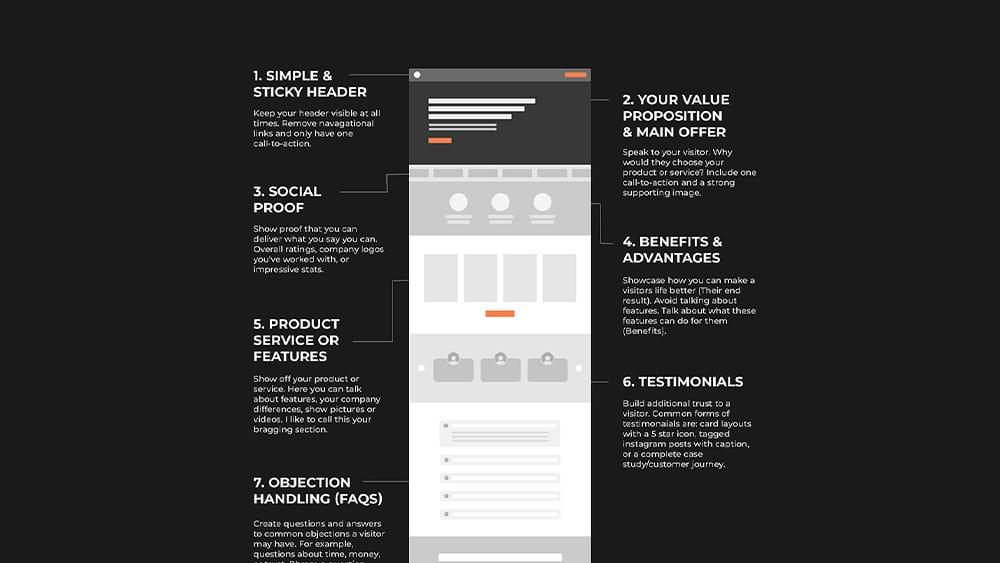
An effective landing page should include:
Clear Headline
Visitors should immediately understand the offer.
Strong Value Proposition
Explain why users should choose your business.
Trust Signals
Examples include:
- Customer reviews
- Testimonials
- Certifications
- Awards
- Case studies
Mobile Optimization
Most Google Ads traffic comes from mobile devices.
A mobile-friendly experience is essential.
Fast Loading Speed
Slow pages increase bounce rates and reduce conversions.
Conversion-Focused Design
Limit distractions and provide a clear action path.
A well-designed landing page often improves results more than increasing advertising budgets.
Understanding Important Google Ads Metrics
Successful advertisers rely on data rather than assumptions.
CPC (Cost Per Click)
CPC represents the amount paid when someone clicks an advertisement.
Formula:
CPC = Total Cost ÷ Total Clicks
A lower CPC helps businesses generate more traffic within the same budget.
CTR (Click-Through Rate)
CTR measures the percentage of users who click an advertisement after seeing it.
Formula:
CTR = (Clicks ÷ Impressions) × 100
A higher CTR generally indicates better ad relevance.
CPA (Cost Per Acquisition)
CPA measures the cost required to generate a conversion.
Formula:
CPA = Ad Spend ÷ Conversions
Lower CPA usually indicates greater advertising efficiency.
CPM (Cost Per Thousand Impressions)
CPM measures the cost of displaying an ad one thousand times.
This metric is commonly used in Display and Awareness campaigns.
Conversion Rate
Conversion Rate measures the percentage of visitors completing a desired action.
Formula:
Conversion Rate = (Conversions ÷ Clicks) × 100
A higher conversion rate often indicates stronger landing page performance.
ROAS (Return on Ad Spend)
ROAS measures revenue generated relative to advertising spend.
Formula:
ROAS = Revenue ÷ Ad Spend
Example:
₹50,000 revenue from ₹10,000 ad spend equals a 5X ROAS.
Impression Share
Impression Share measures how often ads appear compared to available opportunities.
Low Impression Share may indicate:
- Limited budget
- Low bids
- Poor Quality Score
Understanding these metrics helps advertisers make informed optimization decisions.
Quality Score and Its Impact
Quality Score is Google’s estimate of the relevance and usefulness of advertisements.
Scores range from 1 to 10.
Quality Score is based on three primary factors.
Expected CTR
The likelihood that users will click an ad.
Ad Relevance
How closely the advertisement matches user searches.
Landing Page Experience
The quality of the destination page after users click.
Benefits of a higher Quality Score include:
- Lower CPC
- Better ad rankings
- Increased visibility
- Improved campaign efficiency
Improving Quality Score is one of the most effective ways to reduce advertising costs.
Google Ads Bidding Strategies
Google Ads offers multiple bidding options designed for different objectives.
Manual CPC
Advertisers control bids manually.
Suitable for experienced advertisers.
Enhanced CPC
Google automatically adjusts bids based on conversion likelihood.
Maximize Clicks
Designed to generate maximum traffic.
Maximize Conversions
Focuses on generating leads or sales.
Target CPA
Optimizes campaigns toward a specific acquisition cost.
Target ROAS
Optimizes campaigns toward a desired return on ad spend.
Target Impression Share
Prioritizes visibility and ad exposure.
Choosing the right bidding strategy depends on business goals and available data.
Audience Targeting
Keywords alone are no longer enough.
Modern Google Ads Campaigns combine keyword targeting with audience targeting.
Demographic Targeting
Target users based on:
- Age
- Gender
- Household income
- Parental status
Affinity Audiences
Reach users based on long-term interests and behaviors.
In-Market Audiences
Target users actively researching products or services.
Custom Audiences
Create audiences based on specific interests and online behavior.
Customer Match
Upload customer lists to reach existing contacts.
Audience targeting helps advertisers reach more qualified prospects.
Remarketing: Reconnecting With Interested Users
Remarketing is one of the most profitable advertising strategies available.
Many users do not convert during their first visit.
Remarketing allows businesses to show advertisements to previous visitors.
Benefits include:
- Increased brand recall
- Higher conversion rates
- Better ROI
- Improved customer retention
Examples of remarketing audiences:
- Cart abandoners
- Previous website visitors
- Past customers
- Email subscribers
Because these users already know your brand, they are often easier to convert.
Conversion Tracking
Without conversion tracking, campaign optimization becomes guesswork.
Conversion tracking measures valuable actions such as:
- Purchases
- Leads
- Form submissions
- Phone calls
- Downloads
- App installations
Google Analytics 4 (GA4)
Provides detailed user behavior insights.
Google Tag Manager
Simplifies tracking implementation.
Enhanced Conversions
Improves conversion measurement accuracy.
Accurate tracking allows businesses to understand which campaigns generate the best results and highest profitability.
Campaign Optimization Techniques
Successful Google Ads Management requires continuous optimization.
A/B Testing
Test different headlines, descriptions, and landing pages.
Search Term Analysis
Identify profitable search queries and add negative keywords.
Device Optimization
Adjust bids for desktop, tablet, and mobile users.
Geo Targeting
Allocate more budget to high-performing locations.
Budget Optimization
Invest more in profitable campaigns and reduce spending on underperforming areas.
Audience Exclusions
Exclude low-performing audiences.
Landing Page Testing
Improve conversion rates through ongoing experimentation.
Small improvements across multiple areas often produce significant performance gains.
Artificial Intelligence and Automation in Google Ads
Artificial Intelligence is transforming Google Advertising.
Modern automation features include:
Smart Bidding
Automatically adjusts bids using machine learning.
Performance Max
Optimizes campaigns across all Google properties.
Predictive Audiences
Identifies users likely to convert.
AI Asset Generation
Creates ad variations and creative assets automatically.
Conversion Modeling
Improves reporting accuracy when direct tracking is limited.
Businesses that combine automation with human strategy often achieve the strongest results.
Frequently Asked Questions
What is a Google Ads Campaign?
A Google Ads Campaign is a group of advertisements designed to achieve specific business goals such as traffic, leads, sales, or brand awareness.
How much does Google Ads cost?
Google Ads has no fixed cost. Advertisers control their own budgets, and costs depend on competition, keywords, targeting, and bidding strategies.
What is a good CTR for Google Ads?
A good CTR varies by industry, but higher CTRs generally indicate better ad relevance and user engagement.
What is the difference between CPC and CPA?
CPC measures the cost of a click, while CPA measures the cost of acquiring a lead or customer.
Is Google Ads better than SEO?
Google Ads delivers immediate visibility, while SEO provides long-term organic traffic. Many businesses achieve the best results by combining both strategies.
A successful Google Ads Campaign is much more than creating advertisements. It involves strategic planning, keyword research, audience targeting, compelling ad copy, optimized landing pages, accurate conversion tracking, and continuous optimization. Understanding important metrics such as CPC, CTR, CPA, CPM, Conversion Rate, ROAS, and Quality Score enables businesses to make smarter decisions and maximize advertising performance.
When every component works together, Google Ads becomes a powerful growth engine capable of generating qualified traffic, increasing conversions, and supporting long-term business success. Whether you are a beginner or an experienced advertiser, mastering these campaign elements will help you build more profitable and sustainable digital marketing campaigns.