
What Is YouTube Content Planning? 7 Powerful Steps for Beginners
Creating YouTube videos without a plan can quickly become frustrating. You may have good ideas, but still struggle to decide what to publish, when to publish, and what your audience actually wants.
That is where YouTube content planning becomes important. It gives your channel a clear direction and connects your video ideas with your audience, keywords, goals, and overall YouTube SEO strategy.
For beginners, YouTube content strategy is not about creating a complicated calendar. It is about building a repeatable system that helps you consistently create useful videos.
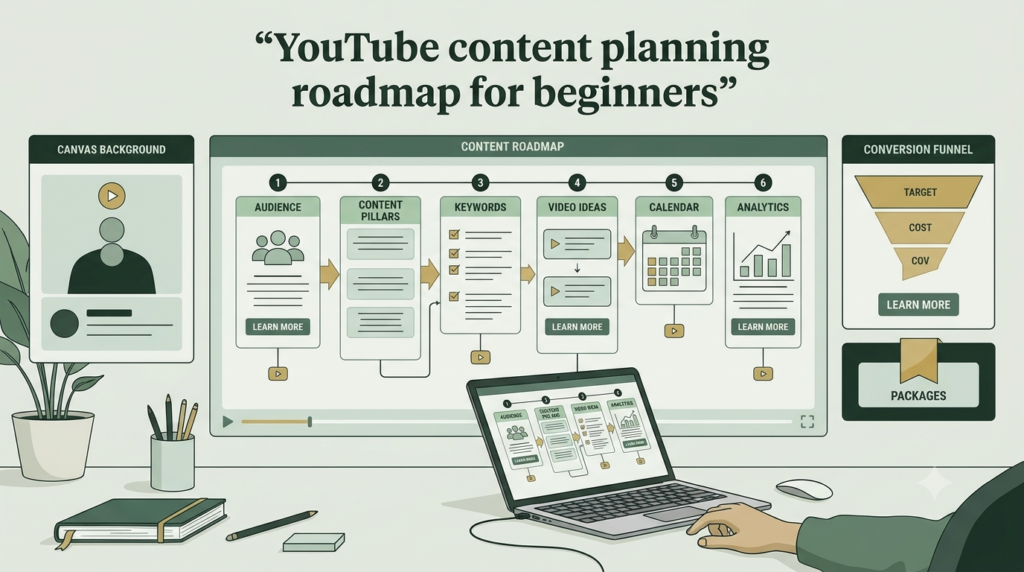
What Is YouTube Content Planning?
YouTube content planning is the process of deciding what videos to create, who they are for, what search or audience need they address, and how they fit into your overall channel strategy.
A good plan normally connects:
- Your target audience
- Your channel niche
- Content pillars
- Keyword research
- Search intent
- Video topics
- Publishing schedule
- YouTube SEO
- Performance analysis
- Future content ideas
Think of it as a roadmap. Instead of asking, “What should I post today?” you already have a group of relevant topics ready to develop.
Why Is YouTube Content Planning the Backbone of Your Channel?
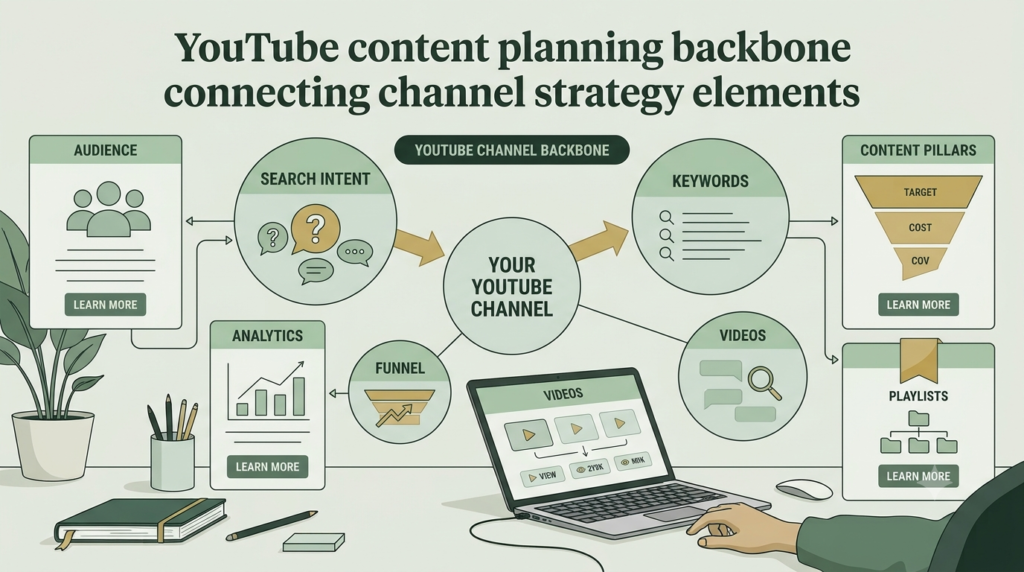
Your content plan is the backbone that connects nearly every important YouTube entity and activity.
Your channel is the central entity. Around it are related entities such as your audience, topics, videos, playlists, keywords, thumbnails, titles, descriptions, creators, and content pillars.
Without a connection between these elements, your channel can look random.
With a structured plan, they begin supporting one another.
For example:
Channel → Content Pillar → Topic → Keyword → Video → Playlist → Related Video → Audience → Analytics
This structure helps YouTube and your viewers understand what your channel is consistently about.
A content plan also makes it easier to build topical authority because you can cover a subject from several related angles rather than publishing unrelated videos.
7 Essential Elements of YouTube Content Planning
| Element | What it means | Beginner action |
|---|---|---|
| Audience | People you want to reach | Define one specific viewer |
| Niche | Your main subject | Choose a focused topic |
| Content pillars | Major topic categories | Select 3–5 pillars |
| Keywords | Words people search | Research relevant phrases |
| Search intent | Reason behind a search | Match video to the need |
| Content calendar | Publishing schedule | Plan topics in advance |
| Analytics | Performance information | Improve future videos |
1. Define Your Target Audience
Start by deciding exactly who you want to help.
Instead of saying, “My audience is everyone interested in YouTube,” make it more specific.
For example:
Beginner YouTube creators who want to grow their channels using SEO.
Ask:
- What problem does my viewer have?
- What are they searching for?
- What level of knowledge do they have?
- What result do they want?
A clear audience makes your content decisions much easier.
2. Choose Your Content Pillars
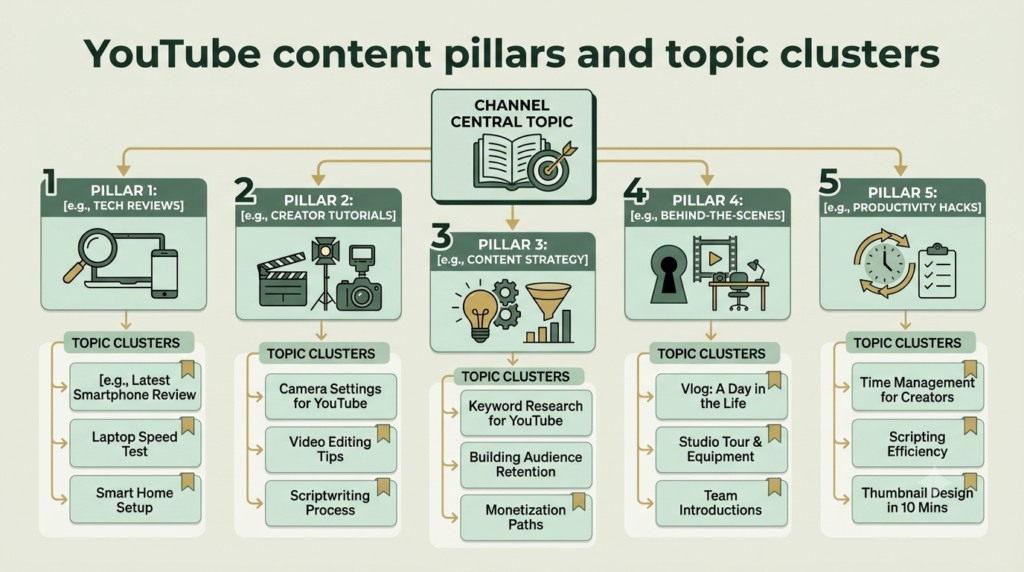
Content pillars are the main subjects your channel repeatedly covers.
For a YouTube SEO channel, possible pillars could include:
- YouTube basics
- Keyword research
- Video SEO
- Channel optimization
- YouTube analytics
Each pillar can then produce multiple smaller topics.
For example:
Video SEO → Titles → Descriptions → Tags → Thumbnails → Retention → Internal linking
This creates a content cluster rather than a collection of unrelated videos.
3. Research Keywords and Topics
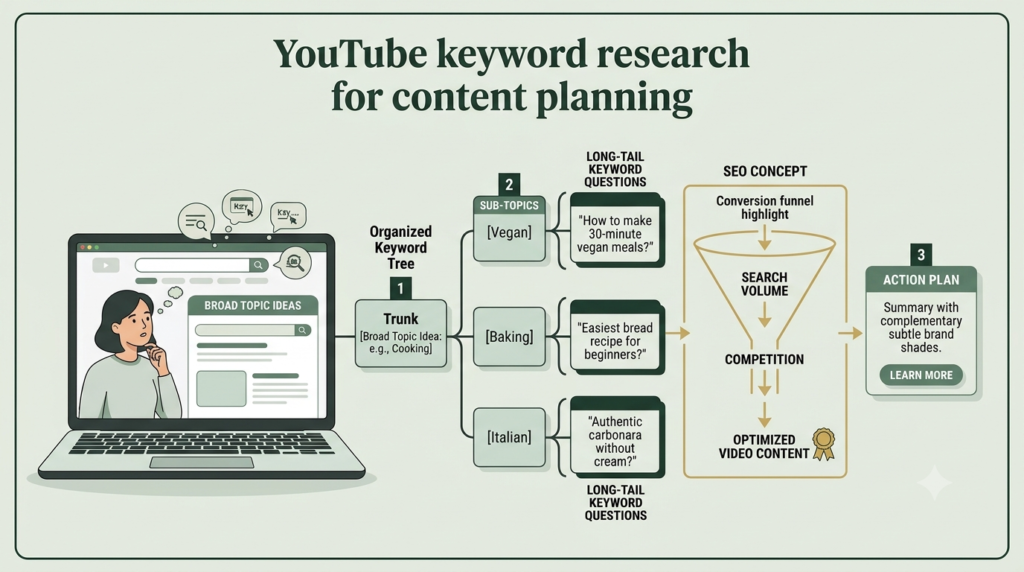
Keyword research helps you discover what people are actually searching for.
Start with a broad topic and develop specific questions from it.
For example:
Broad topic: YouTube SEO
Specific topics:
- What is YouTube SEO?
- How does YouTube keyword research work?
- How to write YouTube titles?
- What is YouTube video SEO?
- How to optimize YouTube descriptions?
Do not choose a keyword simply because it has search volume. It should also match your audience and your channel’s purpose.
4. Understand Search Intent
Search intent means the reason behind a search.
A viewer searching “what is YouTube SEO” probably wants an explanation.
Someone searching “how to optimize YouTube videos” wants instructions.
Someone searching “best YouTube SEO tools” may be comparing solutions.
Your video should satisfy the reason behind the search.
A mismatch between keyword and content can lead to poor viewer satisfaction even when the keyword itself is relevant.
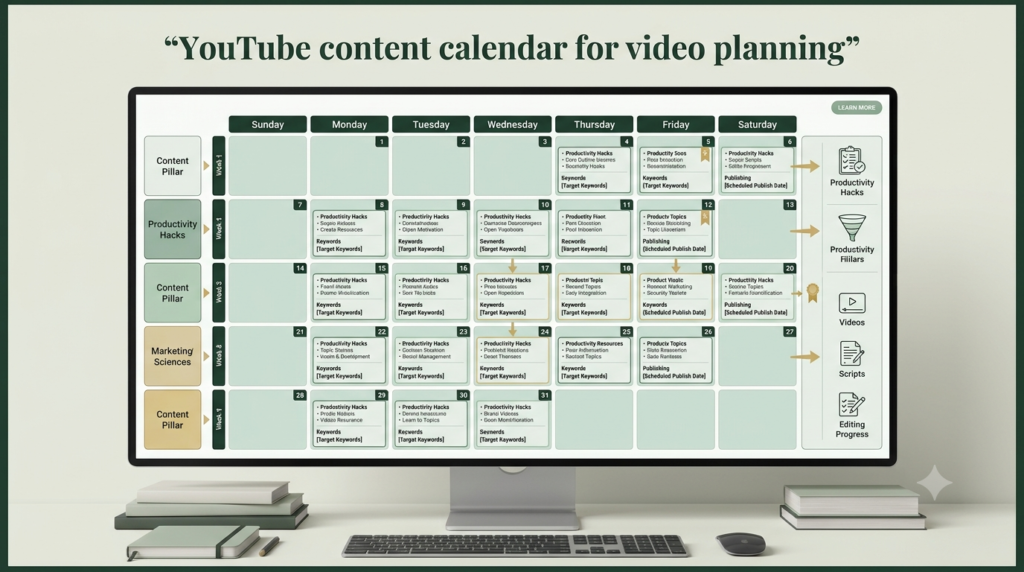
5. Create a Content Calendar
A content calendar turns ideas into an actionable publishing schedule.
You do not need to plan an entire year.
Start with four weeks.
Your simple calendar can contain:
- Publishing date
- Video topic
- Primary keyword
- Content pillar
- Search intent
- Working title
- Thumbnail idea
- Status
For example:
| Week | Topic | Pillar | Intent |
|---|---|---|---|
| 1 | YouTube Keyword Research | SEO | Informational |
| 1 | YouTube Titles | Video SEO | Informational |
| 2 | YouTube Descriptions | Video SEO | Informational |
| 2 | YouTube Playlists | Channel SEO | Informational |
This approach reduces the pressure of deciding what to create every day.
6. Connect Videos Into Content Clusters
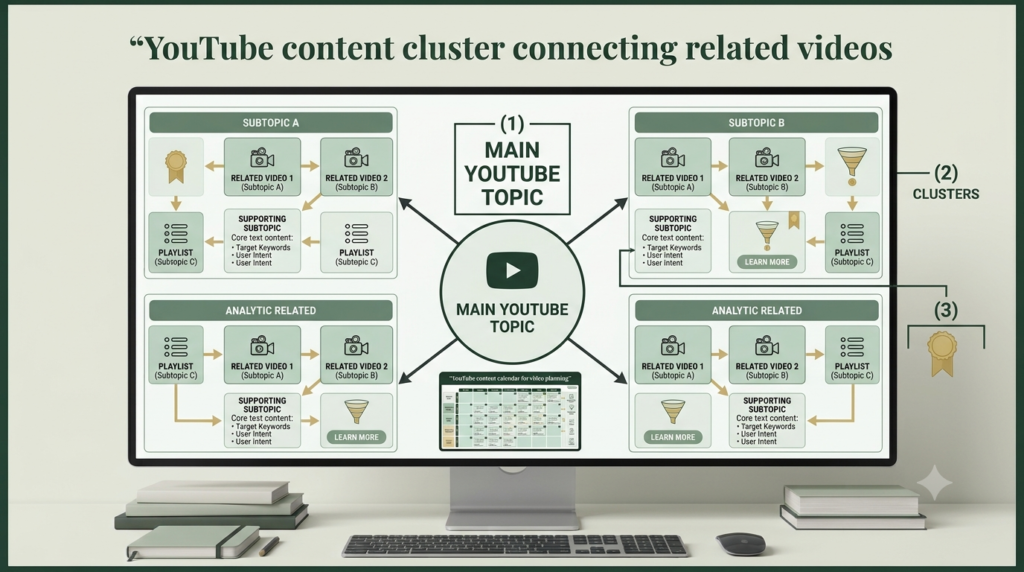
Do not treat every video as an isolated piece of content.
Connect closely related videos.
For example:
YouTube SEO
→ Keyword Research
→ Titles
→ Descriptions
→ Tags
→ Thumbnails
→ Analytics
You can connect these videos through playlists, descriptions, channel organization, and future content planning.
This helps create a logical viewer journey.
7. Measure and Improve YouTube content planning
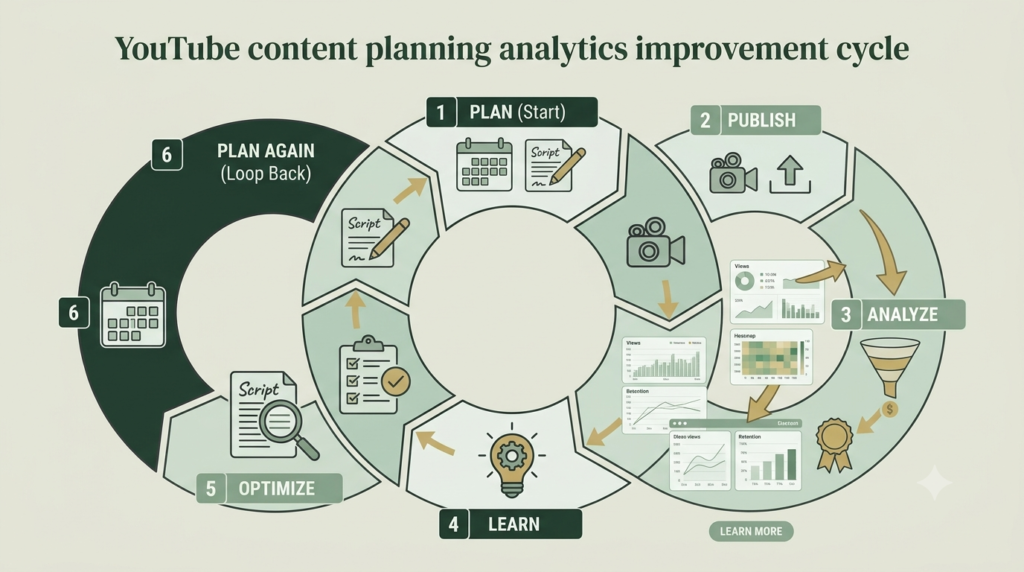
Your content plan should not remain fixed forever.
After publishing videos, examine performance data.
Look at signals such as:
- Impressions
- Click-through rate
- Views
- Watch time
- Audience retention
- Traffic sources
- Returning viewers
A video that performs well can inspire additional related topics.
A video that underperforms can reveal an opportunity to improve the title, thumbnail, topic angle, opening, or audience targeting.
How to Create a YouTube Content Plan Step by Step
Here is a simple beginner workflow:
Step 1: Define your audience.
Step 2: Select your main niche.
Step 3: Create 3–5 content pillars.
Step 4: Research keywords and audience questions.
Step 5: Group related keywords into topic clusters.
Step 6: Assign each topic a search intent.
Step 7: Create a four-week content calendar.
Step 8: Produce and optimize each video.
Step 9: Publish consistently.
Step 10: Review analytics and update your future plan.
The important point is that planning should happen before production, not after you have already created dozens of disconnected videos.
How to Optimize Your YouTube Content Plan to 99/100
There is no legitimate way to guarantee a specific SEO score because different SEO tools use different scoring systems. However, you can optimize the plan strongly by checking these areas:
Keyword alignment
Make sure the primary keyword matches the actual topic.
Search intent
Create content that answers the viewer’s real question.
Topic relevance
Keep videos closely related to your channel’s niche.
Content depth
Cover the topic sufficiently without unnecessary repetition.
Internal relationships
Connect related videos through playlists and descriptions where appropriate.
Consistency
Publish according to a realistic schedule you can maintain.
Audience value
Prioritize solving a genuine viewer problem rather than writing solely for algorithms.
Performance feedback
Use analytics to decide which topics deserve more coverage.
Most importantly, do not stuff keywords simply to increase an SEO plugin score. Search engines and viewers both benefit from useful, natural content.
Common YouTube Content Planning Mistakes
Avoid these mistakes:
- Creating videos without knowing the target audience
- Choosing random topics every week
- Copying competitors without adding original value
- Targeting keywords unrelated to your niche
- Ignoring search intent
- Creating too many content pillars
- Publishing without reviewing analytics
- Changing your strategy after only one or two videos
- Focusing entirely on keywords instead of viewers
A smaller, focused content system is usually easier for a beginner to maintain.
A Simple YouTube Content Planning Formula
Use this formula whenever you develop a new topic:
Audience problem + Relevant keyword + Search intent + Useful solution + Related content = Strong video idea
For example:
Beginner YouTuber + YouTube keyword research + informational intent + step-by-step tutorial = YouTube Keyword Research video
This gives your content a clear purpose before you begin production.
FAQ
What is YouTube content planning?
YouTube content planning is the process of deciding what videos to create, who they are for, what search intent they address, and when they should be published.
Why is content planning important for YouTube?
It gives your channel direction and connects topics, keywords, content pillars, videos, playlists, and analytics into one consistent strategy.
How often should I create a YouTube content plan?
Beginners can start with a four-week plan. You can expand YouTube video planning, once you understand your publishing capacity and audience response.
How many content pillars should a YouTube channel have?
Three to five focused content pillars are a practical starting point. The right number depends on your niche and how much useful content you can produce around each pillar.
Does content planning improve YouTube SEO?
It can support stronger SEO by helping you consistently cover relevant topics, match search intent, build topical relationships, and create useful content for a defined audience.
Should I plan every YouTube video before creating it?
You do not need to plan every detail months ahead. A better approach is to maintain a strategic topic backlog while planning your next several videos in greater detail.
Final Thoughts
YouTube content planning is more than maintaining a list of video ideas. It is the strategic system that connects your audience, niche, content pillars, keywords, search intent, videos, playlists, and analytics.
For beginners, the best approach is simple: choose a focused audience, build a few content pillars, research useful topics, organize them into clusters, create a realistic calendar, and improve your strategy using performance data.
You do not need hundreds of video ideas to start. You need a clear system that turns the right ideas into useful videos consistently.
Ready to Plan Your YouTube Growth?
Start with one audience, three content pillars, and ten relevant video ideas. Then turn those ideas into your first simple four-week YouTube content plan.