
11 Powerful YouTube Keyword Research Strategies for Beginners in 2026
YouTube keyword research is the process of finding the words and phrases people actually use when searching for videos on YouTube. For beginners, it is one of the simplest ways to turn a vague video idea into a focused topic that matches audience interest.
You do not need expensive SEO software to begin. With YouTube search, Google, YouTube Analytics, and a few free research methods, you can discover useful keywords and build a practical content plan.
YouTube explains that Search considers relevance, engagement, and quality. Relevance includes how well the title, description, tags, and video content match a viewer’s search.
Why YouTube Keyword Research Is the Backbone of Your Content Entity
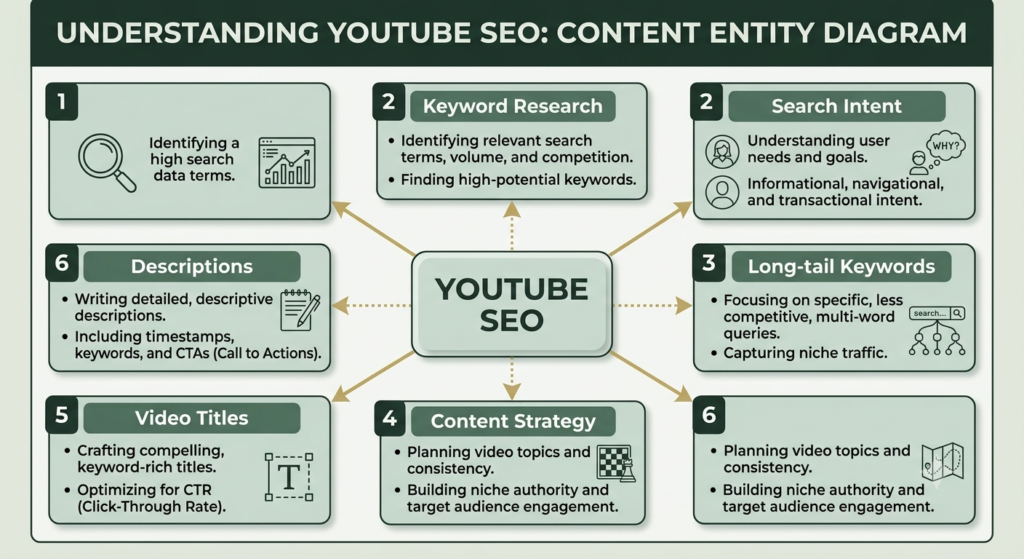
Think of your content entity as the complete meaning and identity of your topic.
For example:
Main entity: YouTube Keyword Research
↓
Related entities: YouTube SEO, keyword tools, search intent, long-tail keywords, video titles, descriptions, content strategy
↓
Supporting content: keyword research guide, YouTube SEO guide, title optimization, description optimization, competitor research
This creates a connected topical structure rather than a collection of unrelated articles.
Keyword research therefore becomes the backbone of your content entity because it helps you identify the main topic, related concepts, questions, subtopics, and language your audience uses. On your website, this can support topical authority and internal linking. On YouTube, it helps you build videos around real search topics.
Google also explains that structured data helps it understand and classify website content, while relevant site structure and content help search engines understand relationships between information.
11 Powerful YouTube Keyword Research Tips
1. Start With Your Main Topic
Begin with a broad topic related to your channel.
For example, instead of starting with:
“What video should I make?”
start with:
“YouTube SEO”
Then expand it into related topics such as YouTube keyword research, YouTube titles, descriptions, thumbnails, channel optimization, and content strategy.
This gives you a clear topical direction.
2. Use YouTube Search Suggestions
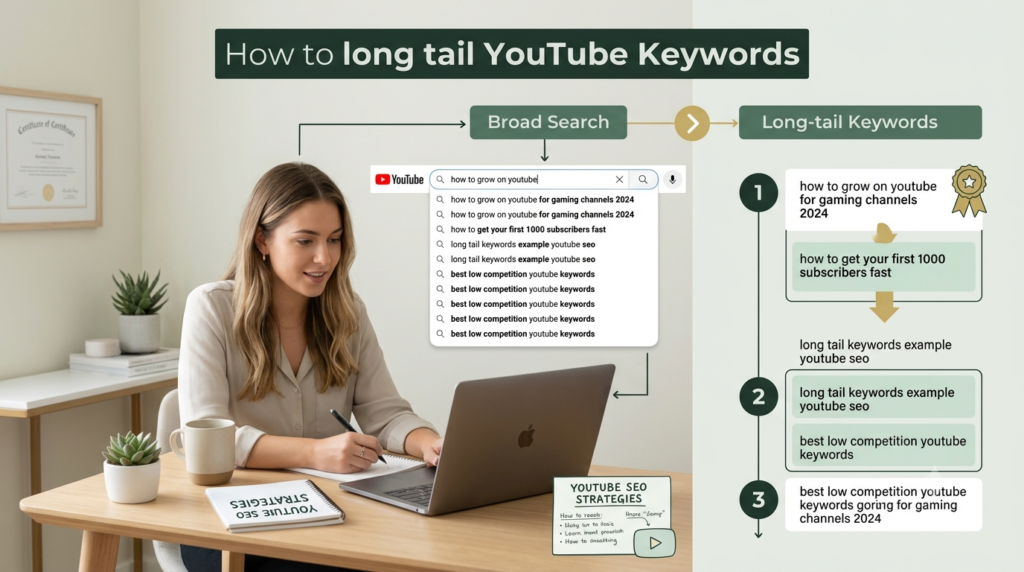
Type your main topic into the YouTube search box and observe the suggestions.
For example, search:
YouTube keyword research
You may discover variations such as:
- YouTube keyword research for beginners
- YouTube keyword research tools
- how to find YouTube keywords
- YouTube SEO keyword research
These suggestions can become video ideas, article headings, or future content clusters.
3. Focus on Search Intent
Search intent means understanding what the person actually wants.
Someone searching:
“YouTube keyword research tools”
probably wants tools.
Someone searching:
“how to find YouTube keywords”
probably wants a tutorial.
Someone searching:
“YouTube keyword research for beginners”
probably wants an easy explanation.
Match your content to the intent instead of forcing one keyword into every piece of content.
4. Find Long-Tail Keywords
Long-tail keywords are more specific search phrases.
Instead of targeting only:
YouTube keywords
try:
how to find YouTube keywords for beginners
Longer phrases often reveal a clearer problem or question. They can also help beginners create focused content instead of competing around an extremely broad topic.
5. Use YouTube Keyword Strategy and Tools
YouTube keyword tools can help generate related phrases and organize keyword ideas.
Start with free methods before paying for software.
Useful sources include YouTube search suggestions, YouTube Analytics, Google Trends, and Google Ads Keyword Planner. YouTube itself recommends using the Research tab in YouTube Analytics and Google Ads Keyword Planner to identify popular keywords and related terms.
6. Study Competing Videos
Search your target phrase on YouTube and examine the videos appearing for that topic.
Look at:
- video titles
- thumbnails
- topics covered
- viewer questions
- video length
- publication dates
- comments
Do not copy another creator’s content. Instead, identify what viewers still need and create your own original explanation.
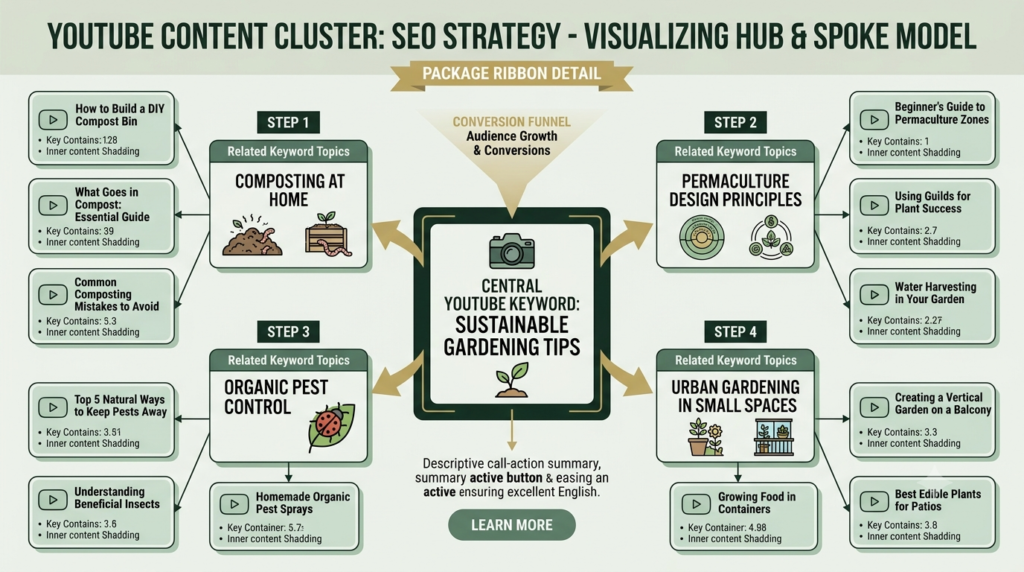
7. Build Keyword Groups
Do not treat every keyword as a completely separate topic.
For example:
Primary topic: YouTube keyword research
Related keywords:
- YouTube keyword research for beginners
- YouTube keyword tools
- how to find YouTube keywords
- YouTube SEO
- YouTube search optimization
- long-tail YouTube keywords
These can form one content cluster.
8. Put the Main Keyword in the Right Places
Once you choose a keyword, use it naturally in important areas.
For a YouTube video, consider:
- video title
- first part of the description
- spoken/video content where relevant
- thumbnail concept
- chapters where appropriate
- related playlist
YouTube specifically recommends using one or two main words prominently in both the title and description.
For your website article, use the primary keyword naturally in the:
- SEO title
- URL
- introduction
- one or more headings where appropriate
- body content
- image alt text when genuinely descriptive
- meta description
- internal-link anchor text where relevant
9. Do Not Stuff Keywords
More keywords do not automatically mean better rankings.
For example, avoid writing: YouTube keyword research helps with YouTube keyword research because YouTube keyword research is important for YouTube keyword research.
That sounds unnatural and makes the reader uncomfortable.
Instead, write for humans first and use related terms naturally.
Your 1.5% density target can be used as a practical Rank Math guideline, but it should never override readability or search intent.
10. Turn Keywords Into a Content Calendar
Your research becomes much more valuable when it produces a content plan.
For example:
Pillar:
YouTube SEO Complete Beginner’s Guide
Cluster:
YouTube Keyword Research
Supporting articles/videos:
- YouTube Keyword Research for Beginners
- YouTube Keyword Tools
- How to Find YouTube Keywords
- YouTube Long-Tail Keywords
- YouTube Search Intent
- YouTube Video Title Optimization
This structure helps connect related content through internal links and gives your website a clearer topical relationship.
11. Check Performance and Improve
Keyword research does not end when you publish.
After your video or article has had time to collect data, review performance.
For YouTube, check:
- impressions
- click-through rate
- watch time
- audience retention
- traffic sources
- search terms
YouTube Analytics includes reports showing how viewers find your content and which search terms are associated with discovery.
If people are finding your content through an unexpected search phrase, that can become your next content idea.
How to Correct Your YouTube Keyword Research to 100% SEO Optimization
Use this final checklist before publishing:
Keyword checklist
☐ Primary keyword selected
☐ Three to four related keywords selected
☐ Search intent identified
☐ Long-tail variations included
☐ Keyword appears naturally in the introduction
☐ Keyword used naturally throughout the article
☐ Related entities and synonyms included
☐ No keyword stuffing
On-page SEO checklist
☐ SEO title under approximately 60 characters
☐ Primary keyword included in title
☐ Positive/power word included
☐ Number included in title
☐ Short, descriptive URL
☐ Meta description approximately 140–155 characters
☐ One clear H1
☐ Useful H2/H3 headings
☐ Internal links added
☐ Relevant external authority links added
☐ Images compressed and properly named
☐ Descriptive alt text added
☐ Schema configured correctly
☐ Breadcrumb title added
YouTube checklist
☐ Keyword matches the actual video topic
☐ Title clearly communicates the benefit
☐ Description is unique
☐ Main keyword appears naturally near the beginning
☐ Thumbnail supports the title without misleading viewers
☐ Related video or playlist links added
☐ Analytics reviewed after publication
YouTube emphasizes that titles, thumbnails, and descriptions are important metadata, while tags generally play a minimal role in discovery except for situations such as common misspellings.
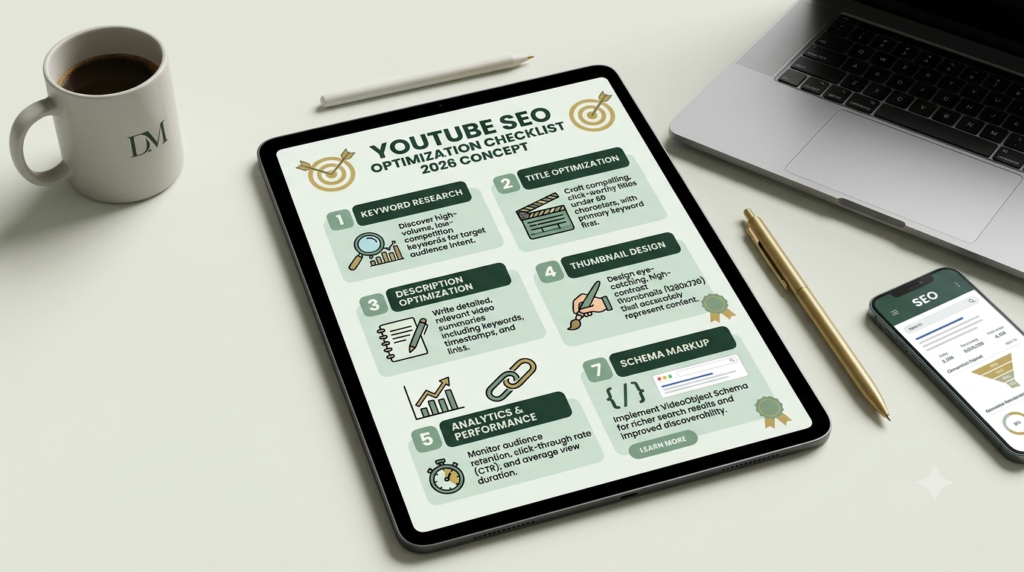
How YouTube Keyword Research Supports Your Whole SEO Strategy
The real power of YouTube keyword research is that one research session can create an entire content ecosystem.
One keyword can become:
Keyword → YouTube video → blog article → supporting articles → internal links → digital product → email/freebie → future content
For Aahraa, this is particularly useful because YouTube and SEO can become connected content pillars rather than two unrelated niches.
Your main entity can be YouTube SEO, with keyword research as one major cluster. From there, you can build related content around titles, descriptions, thumbnails, channel optimization, video strategy, and analytics.
That means you are not simply publishing individual articles. You are building a connected knowledge structure around a recognizable topic.
Conclusion
YouTube keyword research gives beginners a practical starting point for creating content based on real search language and audience needs. The goal is not to find a magical keyword that guarantees rankings. The goal is to understand the topic, search intent, related concepts, and questions your audience cares about.
Start with YouTube suggestions, expand your ideas with free keyword tools, study competing content, group related terms, and then turn your research into useful videos and supporting website content.
Most importantly, remember this:
Research the keyword, understand the person behind the search, and then create the best useful answer you can.
That is how keyword research becomes the backbone of a strong YouTube and SEO content entity.