
7 Proven Campaign Efficiency Metrics: A Complete Beginner’s Guide for 2026
Ever spent money on a campaign and wondered, “Did that actually work?” Every marketer asks that, from solo founders to global brands. The answer lives in campaign efficiency metrics: simple numbers that show how well your budget, time and creativity turn into real results.
This guide covers the seven most important marketing campaign metrics, how to calculate each one, and how to fix weak numbers step by step. By the end, you’ll know how to measure campaign performance with confidence in 2026.
What Are Campaign Efficiency Metrics?
Campaign efficiency metrics measure how much output you get for every unit of input. Input is your budget, hours and effort. Output is clicks, leads, sales and loyal customers. Think of a car’s fuel gauge: it doesn’t just say you’re moving, it says how far each litre takes you.
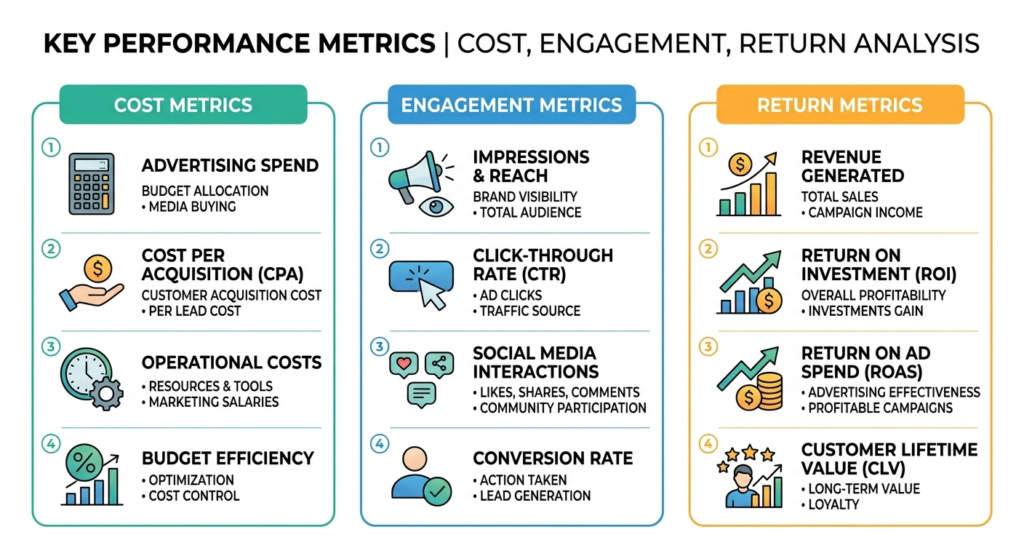
Unlike vanity numbers such as page likes, marketing KPIs tied to efficiency connect directly to money and growth. They fall into three families:
- Cost metrics: CPC, CPM, CPA
- Engagement and conversion metrics: CTR, conversion rate
- Return metrics: ROI, ROAS, CLV
7 Campaign Efficiency Metrics Every Beginner Must Track
1. Return on Investment (ROI)
ROI shows the overall profit your campaign generated. It is the ultimate measure of campaign ROI.
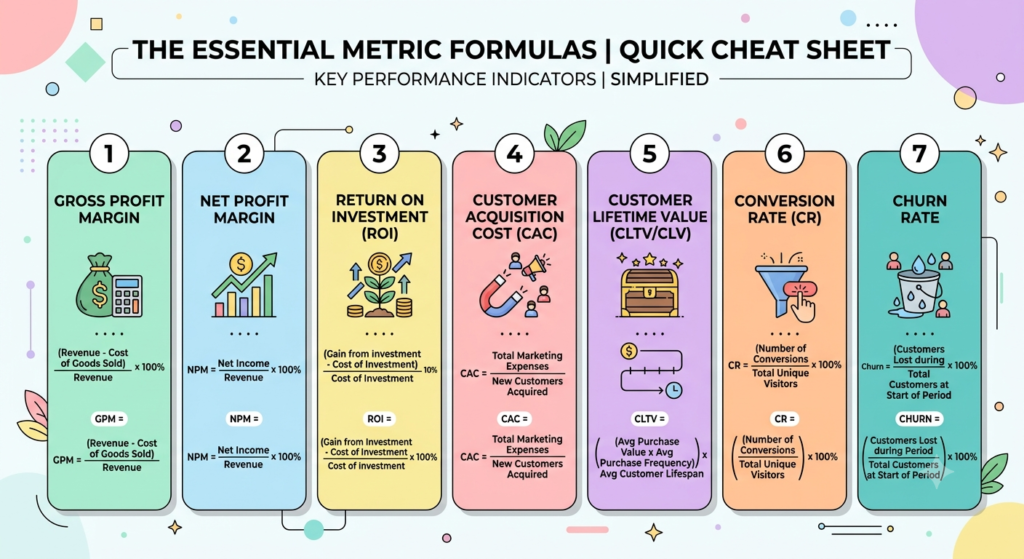
Formula: (Revenue − Total Cost) ÷ Total Cost × 100
Example: You spend $1,000 and earn $3,000, so ROI is 200%.
How to improve: Count every cost (tools, design, salaries) so the number is honest, then move budget away from low-return channels.
2. Return on Ad Spend (ROAS)
ROAS tells you how much revenue each advertising dollar brings back. It differs from ROI because it ignores costs other than ad spend.
Formula: Revenue from ads ÷ Ad spend
Example: $4,500 revenue on $1,500 of ads gives a ROAS of 3.0.
How to improve: Exclude poor audiences, promote best-sellers and improve product pages.
3. Cost Per Acquisition (CPA)
CPA is what you pay to win one customer or lead.
Formula: Total campaign spend ÷ Number of conversions
Example: $1,000 spent for 50 customers means a CPA of $20.
How to improve: Tighten targeting, test new ad copy and simplify the landing page. (CAC is similar but includes all sales and marketing costs.)
4. Click-Through Rate (CTR)
CTR shows how many people who saw your ad actually clicked it. It is your first test of message relevance.
Formula: Clicks ÷ Impressions × 100
Example: 200 clicks from 10,000 views is a 2% CTR.
How to improve: Write sharper headlines, add a clear call-to-action and use eye-catching visuals.
5. Conversion Rate
This is the percentage of visitors who complete your goal, such as buying, subscribing or booking.
Formula: Conversions ÷ Visitors × 100
Example: 50 sales from 1,000 visitors is a 5% conversion rate.
How to improve: Speed up your pages, reduce form fields, add reviews and make the offer obvious.
6. Cost Per Click (CPC) and Cost Per Mille (CPM)
CPC is the price of each click. CPM is the price of 1,000 impressions.
Formulas: CPC = Spend ÷ Clicks; CPM = Spend ÷ Impressions × 1,000
How to improve: Raise ad relevance, refresh creative and test different placements. Cheap clicks that never convert are not efficient, so read CPC alongside conversion rate.
7. Customer Lifetime Value (CLV)
CLV estimates the total revenue one customer brings over their relationship with you.
Formula: Average order value × Purchase frequency × Customer lifespan
Example: $40 × 3 purchases a year × 2 years = $240.
How to improve: Use email nurturing, loyalty rewards and upsells. A common rule of thumb is a CLV of at least three times your CPA.
How to Measure Campaign Performance and Optimize Step by Step
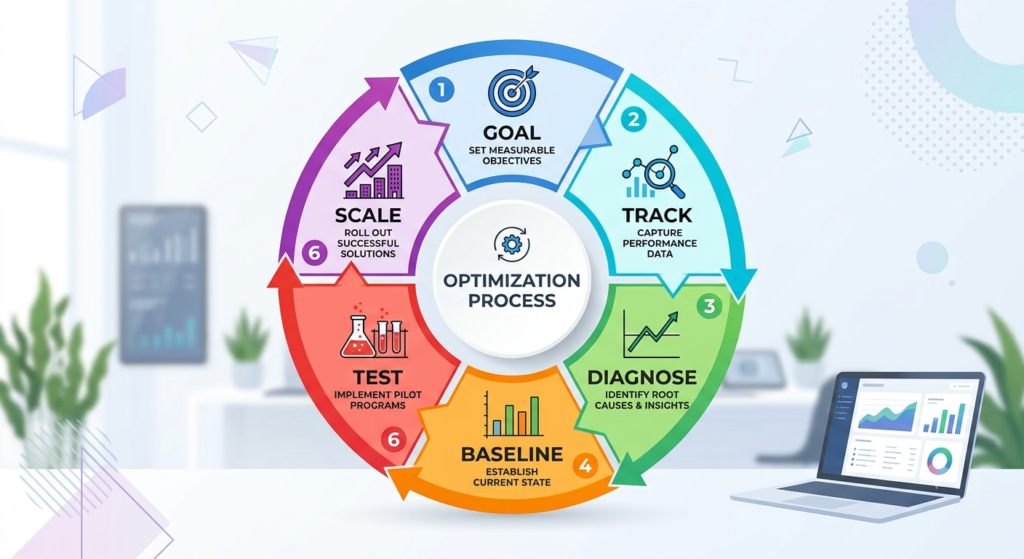
No campaign ever reaches a literal 100% optimization, because audiences and platforms keep changing. But this process closes the gaps quickly:
- Set one clear goal. Make it specific and time-bound, such as “200 leads in 30 days.”
- Track everything. Add UTM tags to links and set up conversion events in GA4.
- Build a baseline. Collect two to four weeks of data before judging.
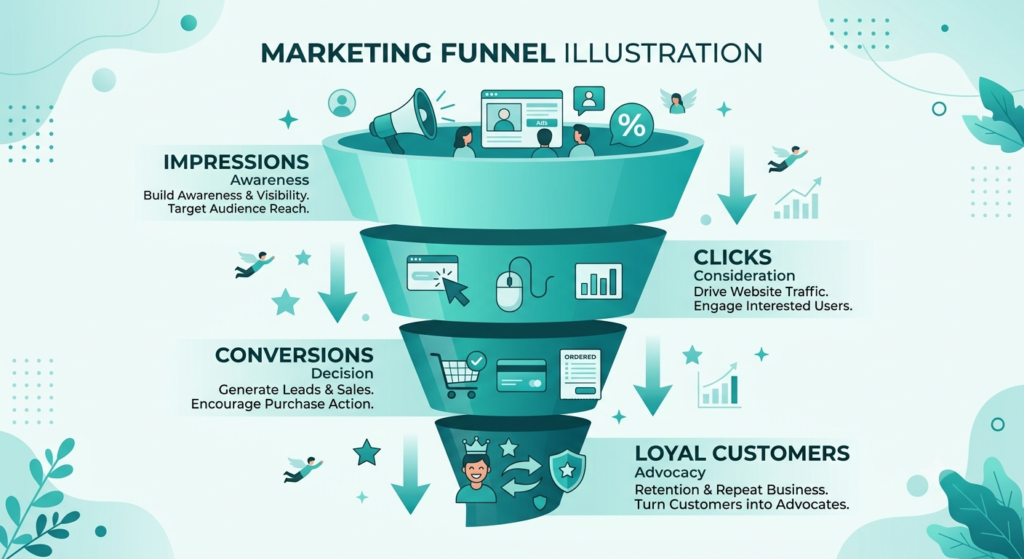
- Diagnose the funnel. Low CTR points to weak creative. High CTR but low conversions points to the landing page. High CPA points to targeting. Low CLV points to retention.
- Change one variable at a time. A/B test headlines, images, offers and audiences.
- Review and scale. Check weekly, report monthly, scale winners and pause losers.
Why Campaign Efficiency Metrics Are the Backbone of Every Entity
Every organisation that spends money to earn attention needs proof that the spend works. Startups use campaign efficiency metrics to stretch tight budgets. E-commerce stores use them to protect margins. Agencies use them to prove value to clients. Non-profits use them to show donors that funds create impact. Schools, hospitals and enterprises use them to justify budgets and forecast growth.
Metrics give every team a shared language. Instead of arguing over opinions, decision-makers point to numbers. That is why marketing KPIs support budgeting, accountability, forecasting and strategy in every entity, whatever its size or industry.

Frequently Asked Questions (FAQs)
1. What are campaign efficiency metrics?
Campaign efficiency metrics are numbers that show how well your budget, time and effort turn into results such as clicks, leads, sales and customer value. Common examples are ROI, ROAS, CPA, CTR, conversion rate, CPC and CLV.
2. What is the difference between ROI and ROAS?
ROI measures overall profit after all costs, including tools, design and salaries. ROAS measures only the revenue earned per dollar of ad spend. Use ROAS to judge ad performance and ROI to judge whether the campaign was truly profitable.
3. What is a good conversion rate for a marketing campaign?
It varies by industry, traffic source and offer. Many beginners see 2% to 5% and treat it as a rough starting range. Compare against your own past results first, then improve with faster pages, clearer offers and shorter forms.
4. How do I measure campaign performance as a beginner?
Set one clear goal, add UTM tags to your links, and track conversions in Google Analytics 4. Collect two to four weeks of data as a baseline, then compare CPA, conversion rate and ROI against your goal.
5. Which metric should I track first?
Start with CPA, conversion rate and ROI. Together they show what you pay for each customer, how well visitors convert and whether you make a profit. Add CTR, CPC and CLV as you grow.
6. What is the difference between CPA and CAC?
CPA is the cost of one conversion from a specific campaign, such as a lead or sale. CAC covers all sales and marketing costs needed to win a customer across the business. CAC is usually higher and gives the wider picture.
7. How often should I review marketing KPIs?
Check fast-moving numbers such as CTR, CPC and CPA weekly. Review strategic numbers such as ROI and CLV monthly or quarterly. Avoid judging a campaign in its first few days, because early data is often too thin to trust.
8. Which free tools can I use to track campaign efficiency?
Google Analytics 4, Looker Studio, Google Ads, Meta Ads Manager and Google Sheets cover most beginner needs. Google’s Campaign URL Builder is also useful for tagging links so you can see which campaign drove each visit.
Conclusion
Mastering campaign efficiency metrics doesn’t require a data-science degree. Start with ROI, CPA and conversion rate, add the rest as you grow, and review them on a fixed schedule. Track, diagnose, test and repeat, and your marketing will get smarter every month in 2026 and beyond.