
Introduction
Digital advertising has changed dramatically over the last few years. Businesses no longer need to manually manage multiple campaigns across different Google properties. With the introduction of Performance Max Google Ad Campaign Insights, advertisers can now run a single campaign that reaches customers across Google’s entire advertising ecosystem.
Performance Max, often called PMax, uses artificial intelligence and machine learning to identify potential customers, optimize bids, select placements, and improve conversions automatically. Whether you are a beginner, small business owner, eCommerce seller, or digital marketer, understanding this campaign type is essential in 2026.
This guide explains every important element of a Performance Max campaign and why it has become the backbone of modern Google advertising.
What is a Performance Max Campaign?
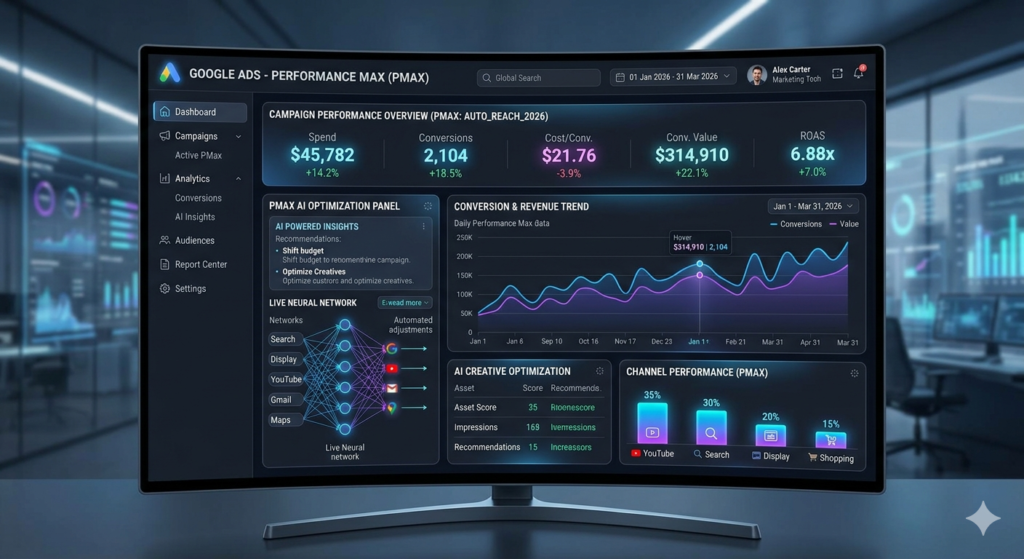
A Performance Max Campaign is a goal-based advertising campaign within Google Ads that allows advertisers to access all Google inventory through a single campaign.
These placements include:
- Google Search
- YouTube
- Gmail
- Discover
- Google Maps
- Display Network
- Shopping Ads
Instead of creating separate campaigns for each platform, Google AI automatically determines where and when your ads should appear.
Why It Matters
Performance Max simplifies campaign management while increasing reach, conversions, and return on ad spend (ROAS).
Why Performance Max is the Backbone of Google’s Advertising Ecosystem
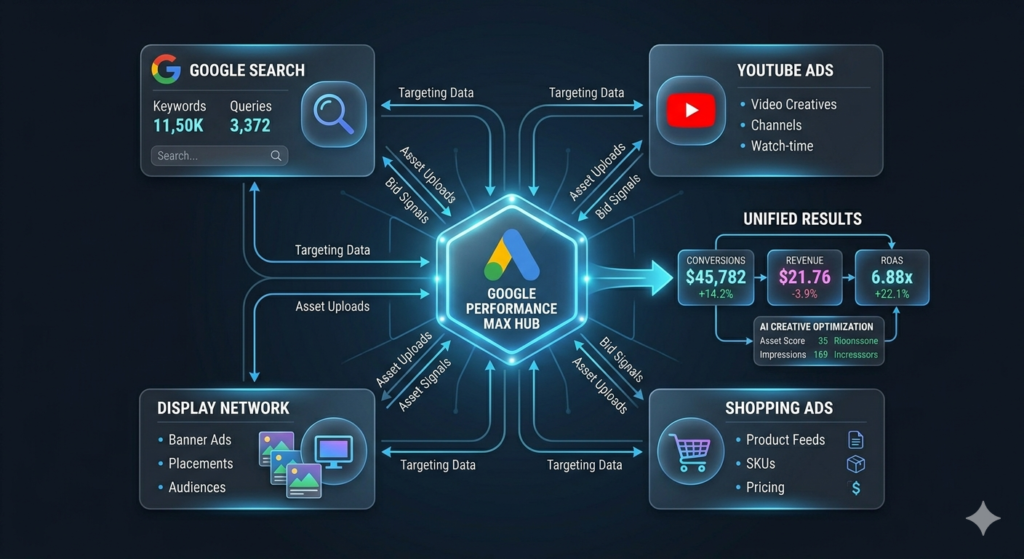
Performance Max acts as a central hub connecting all Google advertising channels.
It Connects Every Entity
The campaign combines data from:
- Keywords
- Audience Signals
- Search Intent
- Product Feeds
- Creative Assets
- Conversion Tracking
- User Behavior
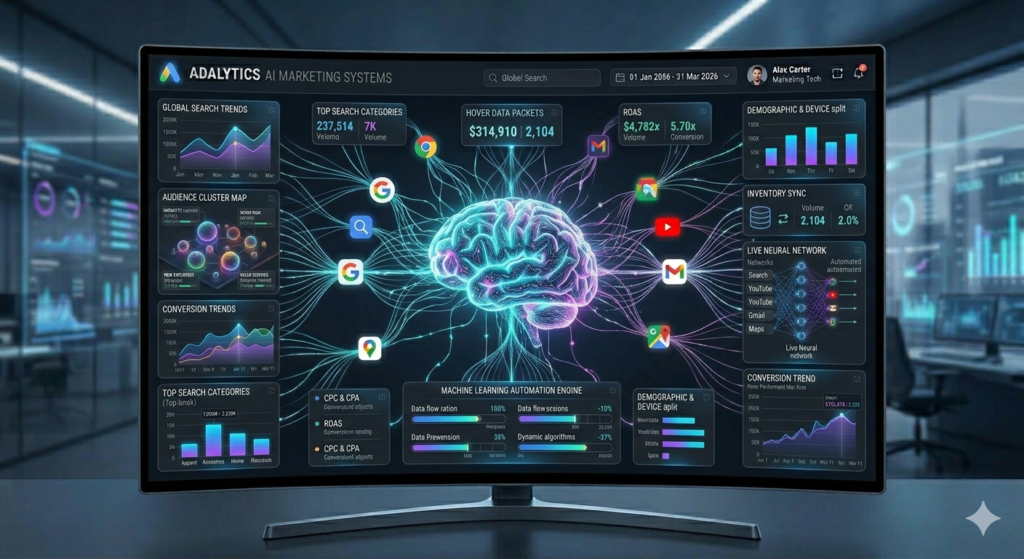
This interconnected structure allows Google AI to understand relationships between users, products, services, and content.
Think of Performance Max as the “brain” that connects every advertising entity and uses machine learning to deliver the right message to the right user at the right time.
1. Campaign Objectives
Every Performance Max campaign begins with a goal.
Common objectives include:
Sales
Increase product purchases.
Leads
Generate inquiries and form submissions.
Website Traffic
Drive visitors to specific pages.
Local Store Visits
Increase foot traffic to physical locations.
Brand Awareness
Expand audience reach.
Choosing the correct objective helps Google optimize campaign performance effectively.
2. Asset Groups
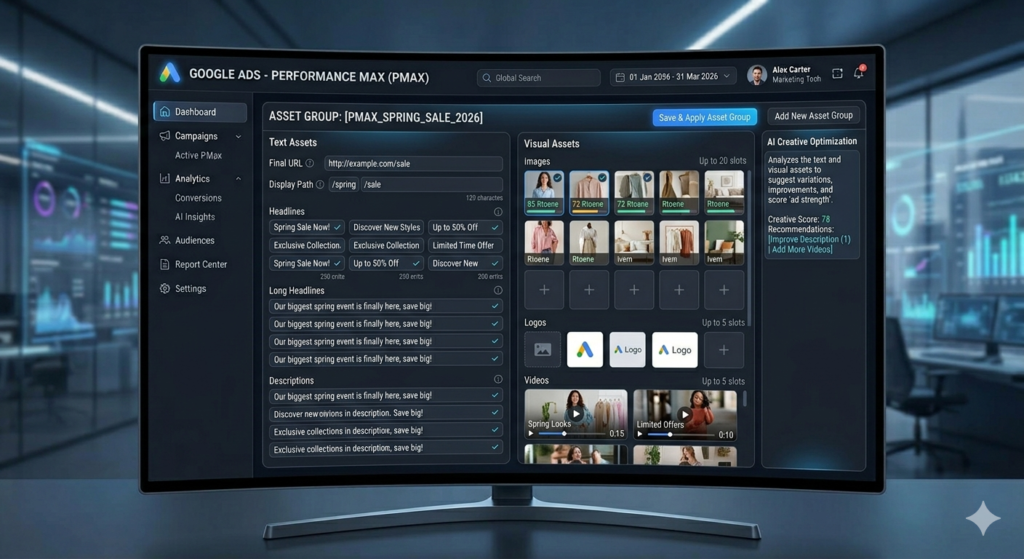
Asset Groups are one of the most important elements of a Google Ads Performance Max campaign.
An Asset Group contains:
- Headlines
- Long Headlines
- Descriptions
- Images
- Logos
- Videos
- Call-to-Action Buttons
Google automatically mixes and matches these assets to create high-performing ads.
Best Practice
Create separate Asset Groups for:
- Different products
- Services
- Customer segments
- Locations
This improves relevance and performance.
3. Audience Signals
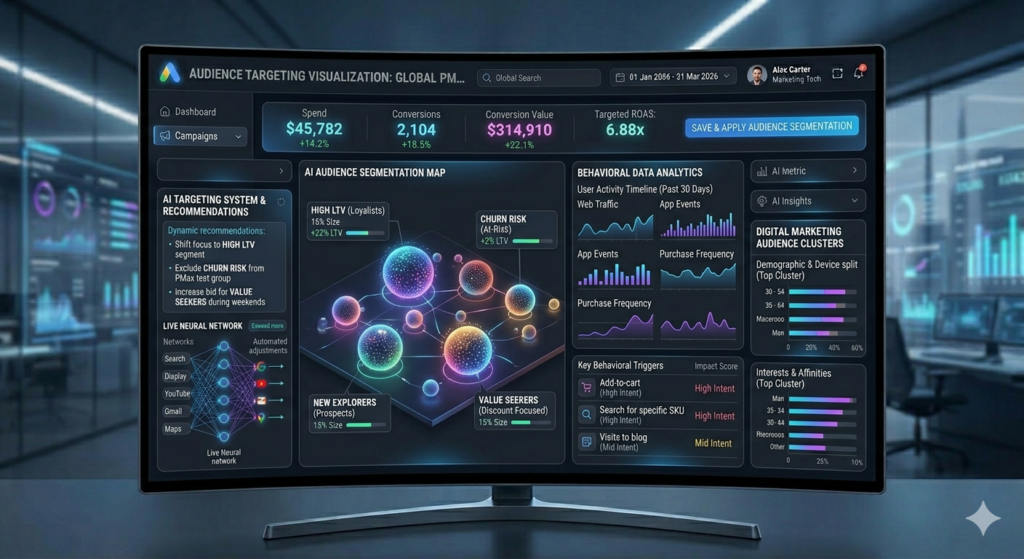
Audience Signals provide initial guidance to Google’s AI.
Examples include:
Customer Lists
Existing customers and leads.
Website Visitors
People who previously interacted with your website.
Custom Segments
Users interested in specific topics.
Demographics
Age, gender, household income, and location.
Although Google can find new audiences automatically, audience signals help accelerate learning.
4. Conversion Tracking
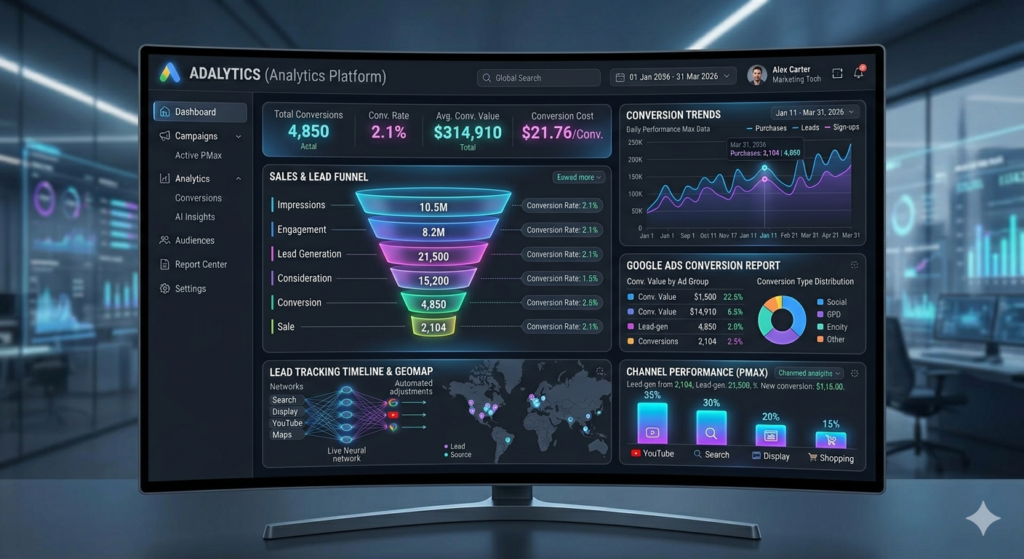
Conversion tracking is the foundation of successful PMax campaigns.
Track actions such as:
- Purchases
- Form submissions
- Phone calls
- Newsletter signups
- Appointment bookings
Without accurate conversion tracking, Google’s AI cannot optimize effectively.
5. Automated Bidding
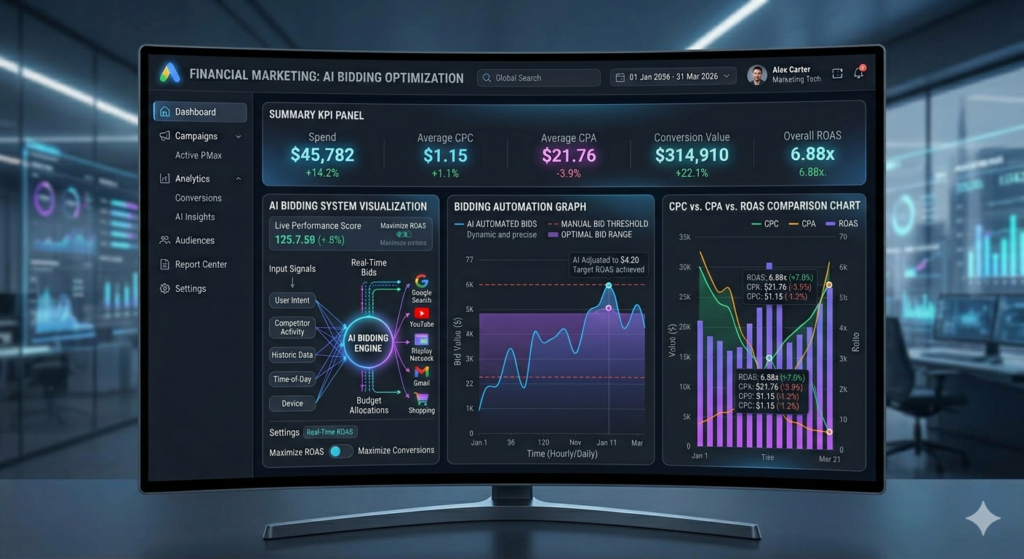
One major advantage of Google Advertising Automation is automated bidding.
Popular bidding strategies include:
Maximize Conversions
Focuses on generating the highest number of conversions.
Maximize Conversion Value
Optimizes for revenue.
Target CPA
Maintains a desired cost per acquisition.
Target ROAS
Optimizes return on advertising spend.
These strategies continuously adjust bids based on real-time data.
6. Creative Assets
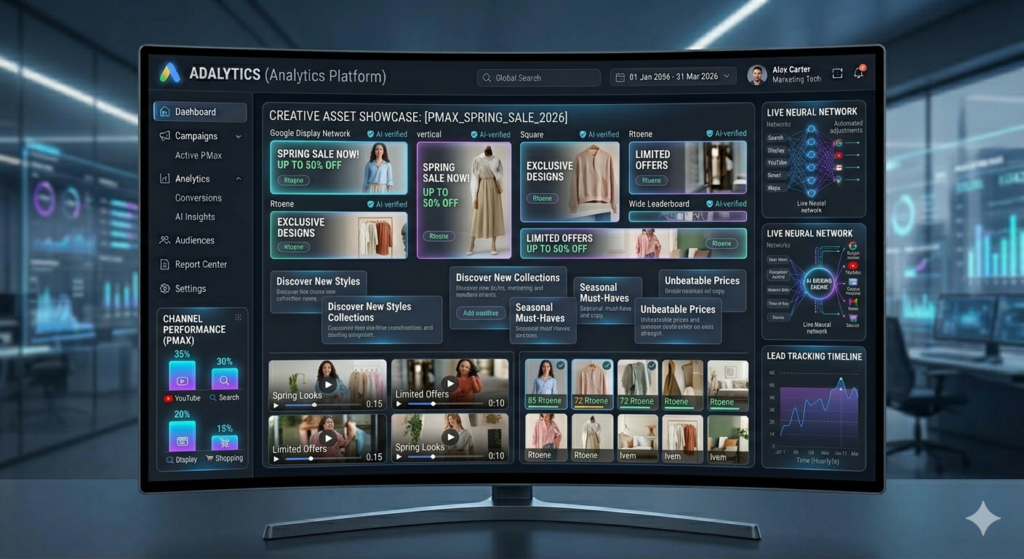
Creative quality directly impacts campaign success.
Images
Use high-resolution images.
Videos
Upload engaging videos whenever possible.
Headlines
Focus on benefits and solutions.
Descriptions
Clearly explain value propositions.
Google AI evaluates combinations and prioritizes high-performing assets.
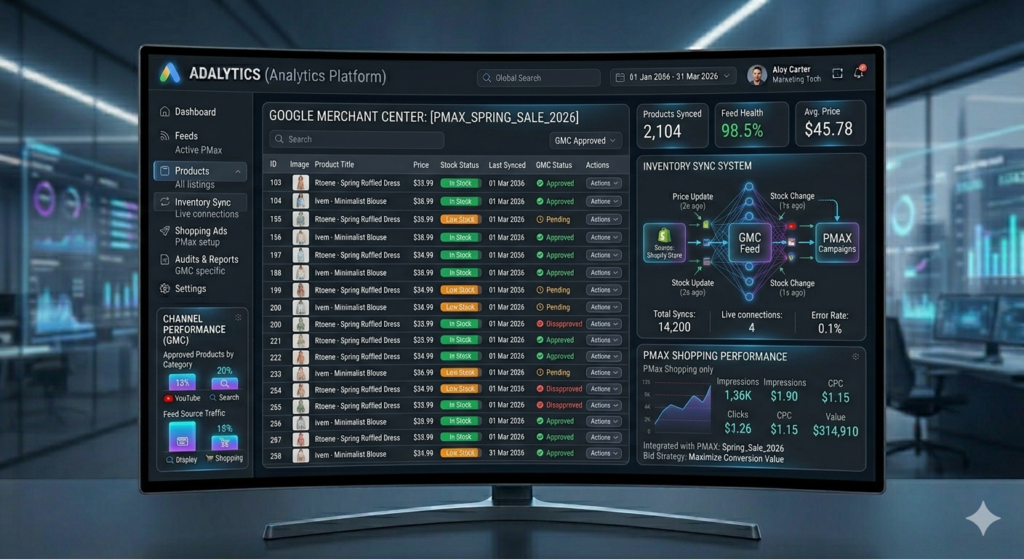
7. Product Feeds
For eCommerce businesses, product feeds are essential.
A product feed includes:
- Product Title
- Description
- Price
- Availability
- Images
- Product Category
A well-optimized feed improves Shopping placements and increases sales opportunities.
8. Search Themes
Search Themes help Google understand relevant customer searches.
Examples:
These themes guide Google’s AI toward valuable search intent while maintaining automation benefits.
9. Insights Reports
One of the most valuable features in 2026 is campaign insights.
Performance Max reports reveal:
Search Categories
Keywords and themes driving results.
Audience Insights
High-performing audience groups.
Asset Performance
Best-performing headlines, descriptions, and visuals.
Conversion Trends
Performance patterns over time.
These insights help marketers make smarter optimization decisions.
10. Budget Management
Budget allocation remains critical.
Recommended Approach
- Start with sufficient daily budget.
- Avoid frequent budget changes.
- Allow the learning phase to complete.
- Monitor cost per conversion regularly.
Consistent budgets help Google’s machine learning stabilize faster.
11. Optimization Strategies
Improve Asset Quality
Refresh images and headlines regularly.
Refine Audience Signals
Add new customer lists and remarketing audiences.
Monitor Search Categories
Identify new opportunities.
Strengthen Landing Pages
Improve user experience and conversion rates.
Review Conversion Tracking
Ensure all valuable actions are measured accurately.
12. AI and Machine Learning in 2026
Artificial intelligence has become the driving force behind PMax Campaign Optimization.
Google AI now evaluates:
- User intent
- Device behavior
- Location signals
- Time of day
- Search patterns
- Historical conversions
Millions of data points are processed instantly to improve campaign outcomes.
This level of automation would be impossible through manual management alone.

Common Beginner Mistakes
Avoid these mistakes:
❌ Running campaigns without conversion tracking
❌ Using poor-quality images
❌ Ignoring audience signals
❌ Making daily budget changes
❌ Not reviewing insights reports
❌ Using weak landing pages
Correcting these issues can significantly improve performance.
Future of Performance Max
In 2026 and beyond, Performance Max is expected to become even more intelligent through:
- Advanced AI optimization
- Predictive audience targeting
- Better reporting transparency
- Enhanced creative testing
- Stronger cross-channel integration
Businesses adopting these technologies early will gain a significant competitive advantage.
❓ Frequently Asked Questions (FAQ)
1. What is Performance Max in Google Ads?
Performance Max is a Google Ads campaign type that uses AI to run ads across all Google platforms like Search, YouTube, Display, Gmail, Maps, and Discover using a single campaign setup. It focuses on maximizing conversions based on your business goal.
2. How does Performance Max Google Ads campaign work?
Performance Max works using machine learning and automation. It analyzes audience behavior, conversion data, and creative assets to automatically decide where ads should appear, how much to bid, and which combinations perform best.
3. Is Performance Max better than traditional Google Ads campaigns?
In many cases, yes. Performance Max offers broader reach and automation, making it more efficient than running separate campaigns. However, it requires strong conversion tracking and quality creatives for best results.
4. What are Asset Groups in Performance Max campaigns?
Asset Groups are collections of ad creatives such as headlines, descriptions, images, videos, and logos. Google mixes and matches these assets to create optimized ads for different users and platforms.
5. What are Audience Signals in Performance Max?
Audience Signals are inputs that guide Google’s AI about your ideal customers. These include website visitors, customer lists, custom interests, and demographic targeting data. They help speed up campaign learning.
6. Do I need conversion tracking for Performance Max?
Yes, conversion tracking is essential. Without it, Google cannot understand what actions matter to your business, making it impossible to optimize campaigns effectively.
7. Is Performance Max suitable for beginners?
Yes, it is beginner-friendly because most of the process is automated. However, beginners still need to set up proper assets, audience signals, and tracking to get good results.
8. What budget is required for Performance Max campaigns?
There is no fixed budget, but a stable daily budget is recommended. Frequent changes can disrupt the AI learning phase and reduce performance efficiency.
9. How can I optimize Performance Max campaigns?
You can optimize by improving creatives, refining audience signals, reviewing insights reports, ensuring accurate conversion tracking, and maintaining consistent budgets.
10. What is the biggest benefit of Performance Max campaigns?
The biggest benefit is automation across all Google channels with a single campaign, helping businesses achieve higher conversions, better reach, and improved return on ad spend (ROAS).
Conclusion
Performance Max Google Ad Campaign Insights have transformed digital advertising by combining automation, machine learning, audience intelligence, and cross-platform reach into a single campaign structure.
From Asset Groups and Audience Signals to Automated Bidding and Conversion Tracking, every component works together to create a highly efficient advertising system. This is why Performance Max serves as the backbone of Google’s advertising ecosystem in 2026.
For beginners, learning Performance Max is no longer optional. It is one of the most valuable skills for generating leads, increasing sales, and achieving long-term business growth through Google Ads.