
7 Powerful Lead Generation Campaign Strategies for Success in 2026
A lead generation campaign is a structured marketing campaign designed to attract potential customers and encourage them to share their contact information or take another measurable action. Instead of simply trying to get more website visitors, the goal is to turn relevant attention into genuine business opportunities.
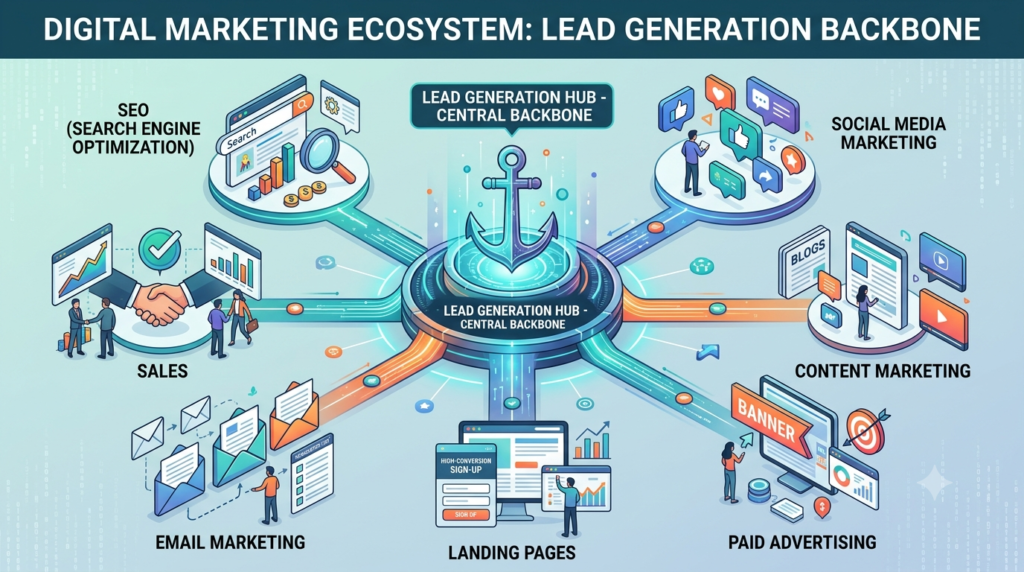
For startups and growing businesses, lead generation can become the backbone of the entire marketing ecosystem because leads connect content, SEO, social media, advertising, landing pages, email marketing, sales, and customer relationships.
In 2026, successful lead generation is less about collecting the largest possible number of contacts and more about attracting the right people, offering useful value, and creating a smooth path from first interaction to conversion.
What Is a Lead Generation Campaign?
A lead generation campaign is a coordinated marketing effort that encourages a target audience to become leads.
A lead might submit a form, request a consultation, download a resource, register for an event, subscribe to an email list, or provide contact information in response to an offer.
A basic lead generation campaign usually contains:
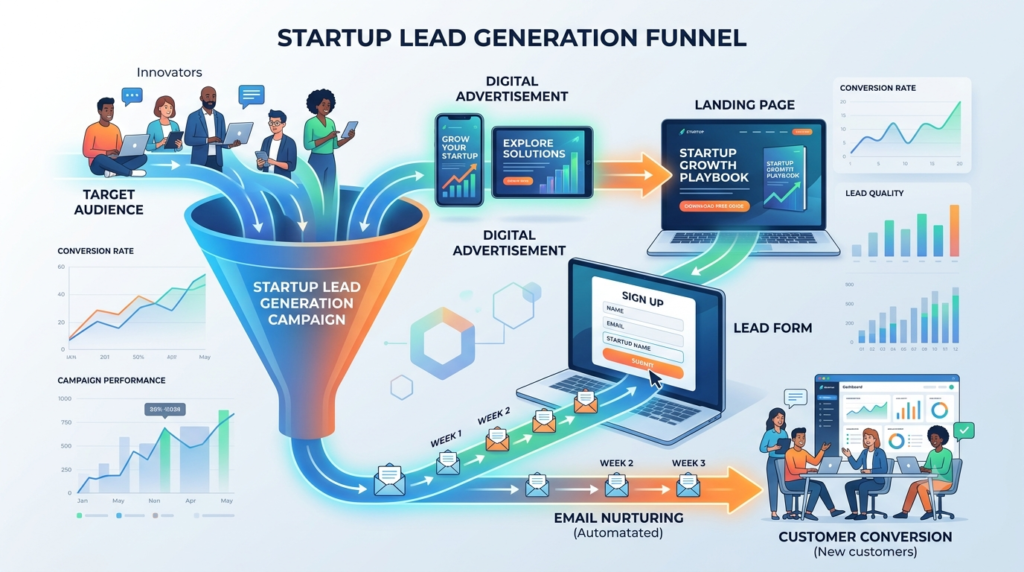
Audience → Offer → Content/Ad → Landing Page → Form → Lead → Follow-up → Conversion
Google Ads, for example, provides lead forms that can collect information directly within eligible advertisements. Google also allows advertisers to optimize lead forms for either greater volume or more qualified leads.
The important point is that lead generation is not one isolated marketing activity. It is a connected system.
Why Lead Generation Is the Backbone of Every Marketing Entity
Think of your business as an ecosystem rather than a collection of separate marketing channels.
SEO attracts people searching for information.
Social media creates awareness and engagement.
Content marketing builds trust.
Paid advertising brings targeted traffic.
A landing page presents an offer.
A form captures information.
Email marketing nurtures the relationship.
Sales converts qualified prospects into customers.
Therefore, a lead generation campaign connects these activities together.
For example:
SEO → Blog → Free Checklist → Landing Page → Email Capture → Nurturing → Product/Service
This is why lead generation can function as the backbone of a marketing system. Each channel can contribute traffic, but the lead-generation process gives that traffic a measurable next step.
7 Essential Elements of a Lead Generation Campaign
1. Define Your Target Audience
Before creating your campaign, determine exactly who you want to attract.
Consider:
- Age or business stage
- Problems and challenges
- Goals
- Interests
- Buying intent
- Location
- Budget
- Search behavior
- Preferred platforms
Create a simple buyer persona rather than trying to reach everyone.
Example:
Instead of targeting “business owners,” a startup-focused agency might target:
“Early-stage startup founders who need affordable digital marketing support to establish their online presence.”
The more clearly you understand the audience, the easier it becomes to create the right offer and message.

2. Create a Valuable Lead Magnet
People usually need a reason to provide their contact information.
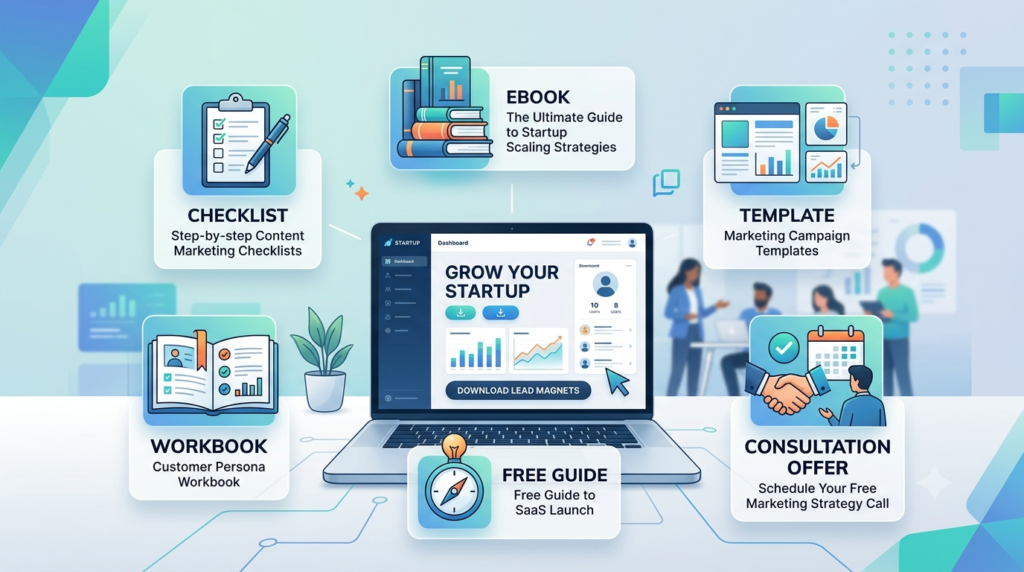
A lead magnet is something useful that you offer in exchange for an action.
Examples include:
- Free checklist
- SEO audit template
- Marketing calendar
- Beginner’s guide
- Savings planner
- Free consultation
- Template
- Workbook
- Webinar
- Free resource library
The offer should solve a specific problem.
Instead of saying:
“Download Our Free Guide”
try:
“Get the Free 20-Point Startup SEO Checklist.”
The second version communicates a specific benefit.
3. Build a Lead Generation Landing Page
A lead generation landing page is a focused page designed to encourage visitors to take one primary action.
A strong page normally includes:
- Clear headline
- Short supporting statement
- Explanation of the problem
- Benefits of the offer
- Supporting image
- Lead form
- Strong CTA
- Trust elements
- Privacy information
- Confirmation or thank-you experience
Landing pages work best when unnecessary distractions are removed and the visitor understands the offer quickly. HubSpot’s current landing-page guidance similarly emphasizes a clear goal, strong headline, visible CTA, simple design, trust signals, and reduced distractions.
Simple formula:
Problem → Solution → Benefit → Proof → CTA

4. Create a Simple Lead Form
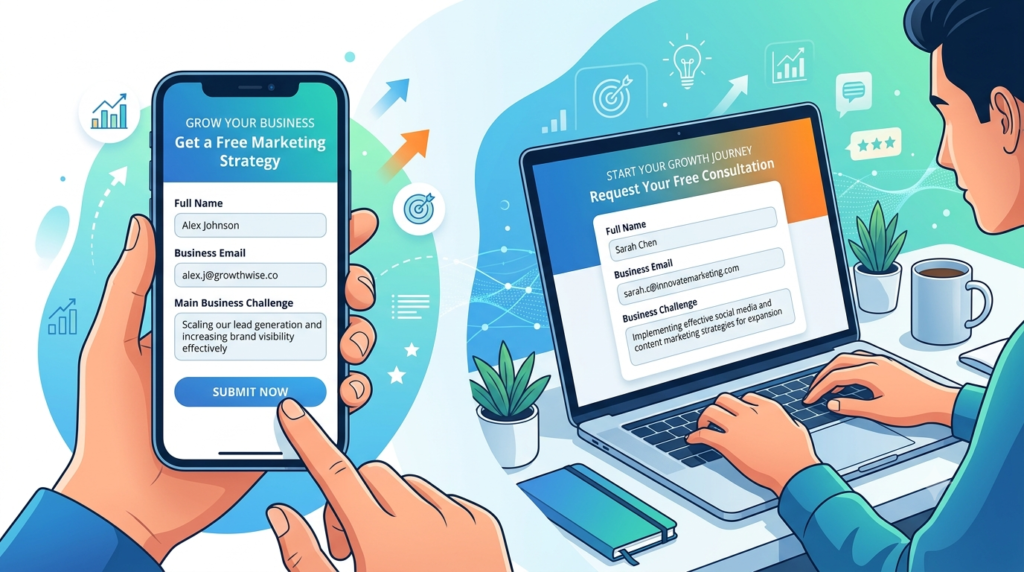
Your form should collect enough information to understand or follow up with the lead without creating unnecessary friction.
Possible fields include:
- Name
- Phone
- Business name
- Website
- Main challenge
Do not automatically ask for every possible piece of information.
The correct form length depends on your campaign objective. A shorter form can reduce friction, while additional questions can help qualify leads. HubSpot recommends balancing the information you need against what visitors are realistically willing to provide.
For a beginner campaign, start simple.
Example:
Name
Email
What do you need help with?
CTA:
“Get My Free Guide”
5. Write a Clear Call-to-Action
Your CTA tells the visitor what happens next.
Weak:
Submit
Better:
Get My Free Checklist
Other examples:
- Download My Guide
- Get the Free Template
- Book My Consultation
- Start My Free Audit
- Send Me the Checklist
The CTA should match the promise made by your advertisement or content.
If your ad says “Get a Free SEO Checklist,” the landing page should continue that same message.
This consistency reduces confusion and creates a smoother conversion experience.
6. Promote the Campaign
Once your landing page and offer are ready, bring targeted traffic to them.
Possible channels include:
Organic channels
- Google Search
- SEO
- YouTube
- Blog content
- Email marketing
Paid channels
- Google Ads
- Meta Ads
- LinkedIn Ads
- Other relevant advertising platforms
For example, Google Ads currently supports lead forms in eligible Search and Performance Max campaigns, allowing users to submit information directly through the advertising experience.
For beginners with limited budgets, organic traffic can be developed alongside paid campaigns rather than assuming advertising is the only route.
7. Track, Test and Optimize
Launching a lead generation campaign is not the finish line.
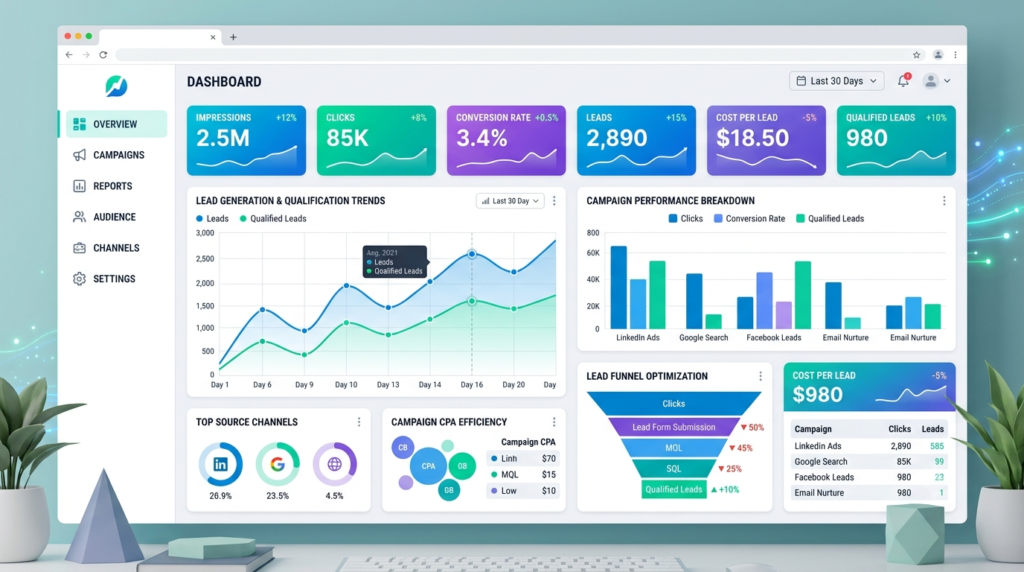
Track:
- Impressions
- Clicks
- Click-through rate
- Landing-page visits
- Form submissions
- Conversion rate
- Cost per lead
- Qualified leads
- Sales generated
- Return on investment
Then identify where people are dropping out.
For example:
10,000 impressions → 500 clicks → 300 landing-page visits → 15 leads
You may have strong traffic but weak landing-page conversion.
Alternatively:
10,000 impressions → 100 clicks → 30 leads
Your landing page may be working well, but the advertisement may need improvement.
This is the foundation of lead generation campaign optimization.
How to Create a Lead Generation Campaign Step by Step
Follow this beginner workflow:
Step 1: Choose one audience
Do not target everyone.
Step 2: Identify one problem
Find the specific problem your audience wants solved.
Step 3: Create one useful offer
Build a checklist, template, guide, consultation, or another relevant resource.
Step 4: Create your landing page
Keep the page focused around one conversion goal.
Step 5: Add your form
Ask only for information you genuinely need.
Step 6: Add your CTA
Make the next action obvious.
Step 7: Connect tracking
Track visitors, submissions, conversions, and lead quality.
Step 8: Promote the offer
Use SEO, social media, email, or paid advertising.
Step 9: Follow up
A lead should not simply disappear into a spreadsheet.
Send useful follow-up information and continue nurturing the relationship.
Step 10: Improve the campaign
Test headlines, offers, forms, CTAs, audiences, creatives, and landing-page elements.
How to Correct a Lead Generation Campaign to 100% Optimization
There is no universal “100% optimized” campaign because performance depends on the audience, offer, platform, competition, seasonality, and conversion goal.
However, you can use this practical checklist to bring your campaign as close as possible to complete optimization:
| Element | Optimization Check |
|---|---|
| Audience | One clearly defined target audience |
| Offer | Solves a specific problem |
| Keyword targeting | Matches search intent |
| Ad/message | Matches audience needs |
| Headline | Clear and benefit-focused |
| Landing page | One primary goal |
| Form | Simple and relevant |
| CTA | Specific and action-oriented |
| Trust | Proof, credibility or reassurance |
| Mobile | Easy to read and complete |
| Speed | Loads efficiently |
| Tracking | Conversion tracking installed |
| Follow-up | Leads receive timely communication |
| Testing | A/B or controlled testing used |
| Analytics | Results reviewed regularly |
| Privacy | Appropriate privacy information provided |
Google’s lead-form documentation specifically requires a privacy-policy URL for lead forms, making privacy an important part of campaign setup.
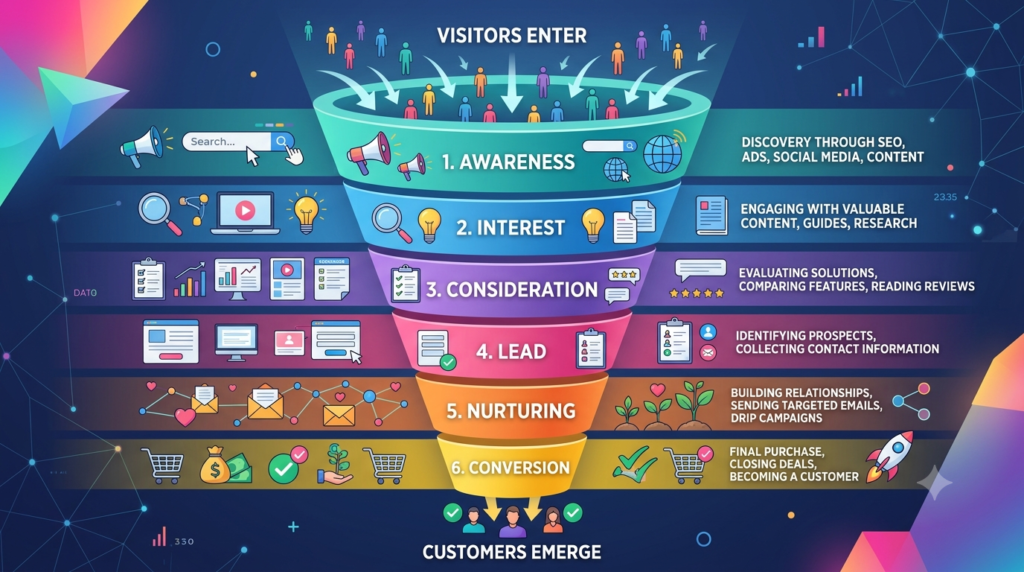
Lead Generation Funnel Explained
A lead generation funnel represents the journey from stranger to potential customer.
Awareness
People discover your brand through search, social media, content, or advertising.
Interest
They interact with your content or visit your website.
Consideration
They evaluate your offer and decide whether it is useful.
Lead
They provide their information or take another defined conversion action.
Nurturing
You provide relevant information and build trust.
Conversion
The qualified lead becomes a customer.
The funnel therefore connects marketing activity with measurable business outcomes.
Common Lead Generation Mistakes
Avoid these beginner mistakes:
1. Targeting everyone
A broad audience can make your message unclear.
2. Asking for too much information
Long forms can create unnecessary friction.
3. Sending every visitor to the homepage
A focused campaign generally benefits from a focused destination.
4. Using a vague CTA
Tell people exactly what they will receive.
5. Ignoring mobile users
Your landing page and form should be easy to use on smaller screens.
6. Collecting leads without follow-up
A lead database is useful only when you have a process for nurturing and qualifying those contacts.
7. Measuring clicks instead of business results
A campaign can receive traffic without producing useful leads.
Frequently Asked Questions About Lead Generation Campaigns
1. What is a lead generation campaign?
A lead generation campaign is a marketing campaign designed to attract potential customers and encourage them to take an action such as submitting a form, downloading a resource, requesting a consultation, or subscribing to an email list. The objective is to turn relevant visitors into identifiable leads that can be nurtured toward a purchase.
2. How do I create a lead generation campaign?
Start by identifying your target audience and one specific problem they need to solve. Then create a useful offer or lead magnet, build a focused landing page, add a simple lead form and clear call-to-action, promote the offer through relevant channels, and install conversion tracking. Finally, review the results and continuously improve the campaign.
3. What is a lead generation funnel?
A lead generation funnel represents the journey a potential customer takes from first discovering a business to becoming a lead and eventually a customer. Typical stages include awareness, interest, consideration, lead capture, nurturing, and conversion. Each stage should move the prospect toward a clearly defined next action.
4. What makes a lead generation landing page effective?
An effective lead generation landing page has a clear headline, relevant offer, benefit-focused content, simple design, prominent call-to-action, easy-to-complete form, trust elements, and mobile-friendly layout. The page should have one primary conversion objective and should match the message used in the advertisement or content that brought the visitor there.
5. How can I optimize a lead generation campaign?
Track impressions, clicks, landing-page visits, form submissions, conversion rate, cost per lead, qualified leads, and resulting sales. Then identify where visitors are dropping out. Test elements such as the audience, headline, offer, CTA, form length, landing-page copy, creative, and follow-up process. Optimization should be based on actual campaign data rather than assumptions.
Final Takeaway
A successful lead generation campaign is not simply an advertisement or a form. It is a connected system that moves the right audience from attention to action.
The strongest campaigns combine:
Right Audience + Valuable Offer + Relevant Message + Landing Page + Simple Form + Clear CTA + Follow-Up + Measurement + Continuous Optimization
For startups, this system can connect SEO, social media, content marketing, advertising, email marketing, sales, and customer relationships into one measurable marketing engine.
Start small. Choose one audience, one problem, one offer and one conversion goal. Once the basic system works, improve it using real data rather than guessing.
That is the foundation of a sustainable lead generation strategy in 2026.