
What Is YouTube Revenue? Complete Beginner’s Guide in 2026
If you create videos on YouTube, you may eventually ask an important question: what is YouTube revenue, and how do creators actually make money from their videos? YouTube Income is the money a creator earns from eligible activities connected with their YouTube content, such as advertising, YouTube Premium, memberships, Super Thanks, Super Chat, and other monetization features.
However, views alone do not automatically equal income. Your earnings can vary depending on your audience, content category, advertiser demand, viewer location, video format, and whether your content is eligible for monetization.
Understanding YouTube revenue is therefore an important foundation for anyone who wants to build a sustainable YouTube channel in 2026.
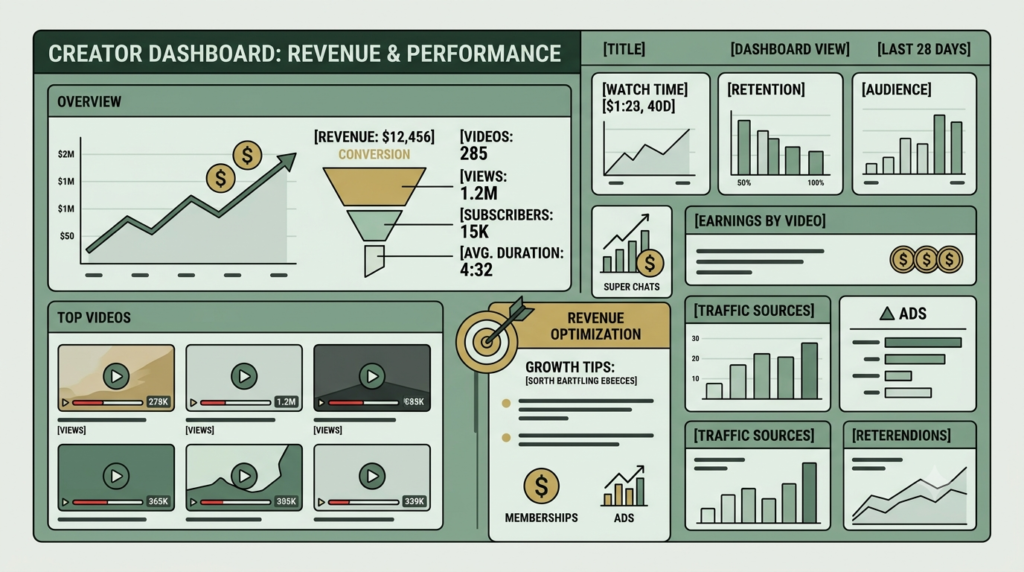
What Is YouTube Revenue?
YouTube revenue is the income generated through YouTube’s available monetization systems and creator features.
For an eligible channel, revenue can come from several sources:
- Advertising displayed on eligible content
- YouTube Premium revenue sharing
- Channel memberships
- Super Chat and Super Stickers during eligible live streams
- Super Thanks
- Shopping or other eligible creator monetization features
The exact features available to a creator depend on YouTube’s current eligibility requirements, location, channel status, and the relevant monetization program.
This means YouTube revenue is broader than advertising income alone.
How Does YouTube Revenue Work?

The basic process is relatively simple:
Create content → attract viewers → become eligible for monetization → generate eligible revenue → review estimated earnings → receive payment when payment requirements are met.
But several factors influence the amount earned.
For example, two channels can receive a similar number of views but generate very different amounts of revenue.
Factors can include:
- Audience location – Advertising markets differ between countries and regions.
- Content topic – Some subjects attract stronger advertiser demand than others.
- Viewer behavior – Watch time, engagement, and whether viewers interact with ads can influence monetization opportunities.
- Video format – Long-form videos, Shorts, and live content have different monetization systems.
- Advertiser demand – Advertising rates can change according to market conditions.
- Content eligibility – Videos must comply with YouTube’s monetization policies.
Therefore, there is no universal formula such as “1,000 views = a fixed amount of money.”
7 Major Ways YouTubers Can Earn Revenue
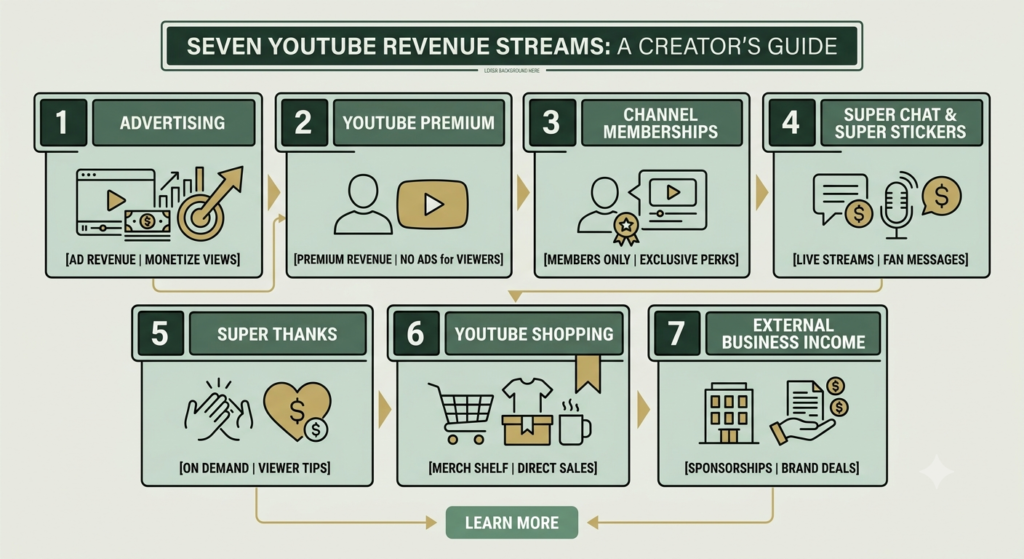
1. Advertising Revenue
Advertising is one of the most familiar forms of YouTube monetization.
Eligible videos may earn revenue when advertisements are served around or within the content. However, not every view necessarily results in an advertisement.
Your actual earnings can therefore differ considerably from another channel with the same number of views.
2. YouTube Premium Revenue
YouTube Premium subscribers watch YouTube without conventional advertising.
Eligible creators can receive a share of subscription revenue based on how Premium members engage with their content.
This makes valuable content important even when a viewer does not see an advertisement.
3. Channel Memberships
Memberships allow eligible creators to offer paid memberships to their audience.
Depending on the available features, creators can provide benefits such as:
- Members-only content
- Badges
- Custom emojis
- Exclusive community experiences
Memberships can create a more predictable recurring revenue stream than advertising alone.
4. Super Chat and Super Stickers
These features can allow eligible creators to earn money from viewers during live streams.
Viewers can pay to highlight messages or use paid interactive features, making live content another possible revenue channel.
5. Super Thanks
Super Thanks allows viewers to make a voluntary payment to support eligible creators on qualifying content.
For creators with a loyal audience, this can provide another way to monetize viewer appreciation.
6. YouTube Shopping and Other Features
Depending on eligibility and availability, creators may have access to shopping-related monetization or other YouTube earnings features.
These options can be particularly useful for creators who recommend products, sell their own products, or build commerce around their content.
A YouTube channel can also become a traffic source for income outside YouTube.
For example, a creator might use videos to promote:
- Digital products
- Courses
- Consulting
- Affiliate offers
- Services
- Sponsorship opportunities
- A website or newsletter
This is important because YouTube can function as both a content platform and a business-growth engine.
YouTube Revenue vs RPM vs CPM
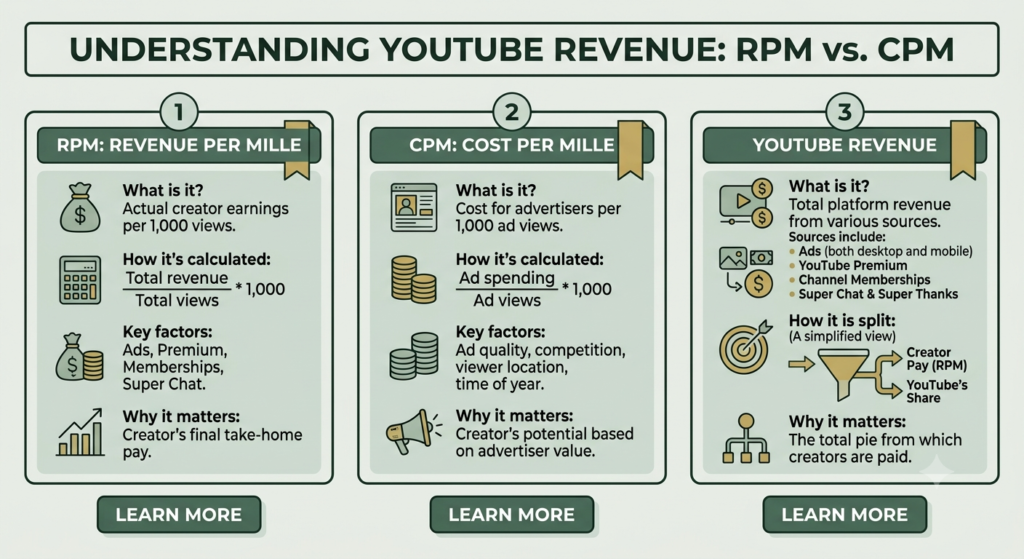
These terms are often confused by beginners.
| Term | Simple meaning |
|---|---|
| YouTube revenue | Money generated through eligible YouTube monetization sources |
| RPM | Revenue earned per 1,000 views after applicable revenue-sharing considerations |
| CPM | Advertiser-focused cost associated with 1,000 ad impressions |
| Views | Number of times content is viewed |
| Estimated revenue | Approximate earnings shown before final adjustments |
RPM is generally more useful to creators when thinking about how much their content generates per 1,000 views.
CPM, meanwhile, primarily describes advertising economics and should not be treated as the amount a creator automatically receives.
How to Increase YouTube Revenue
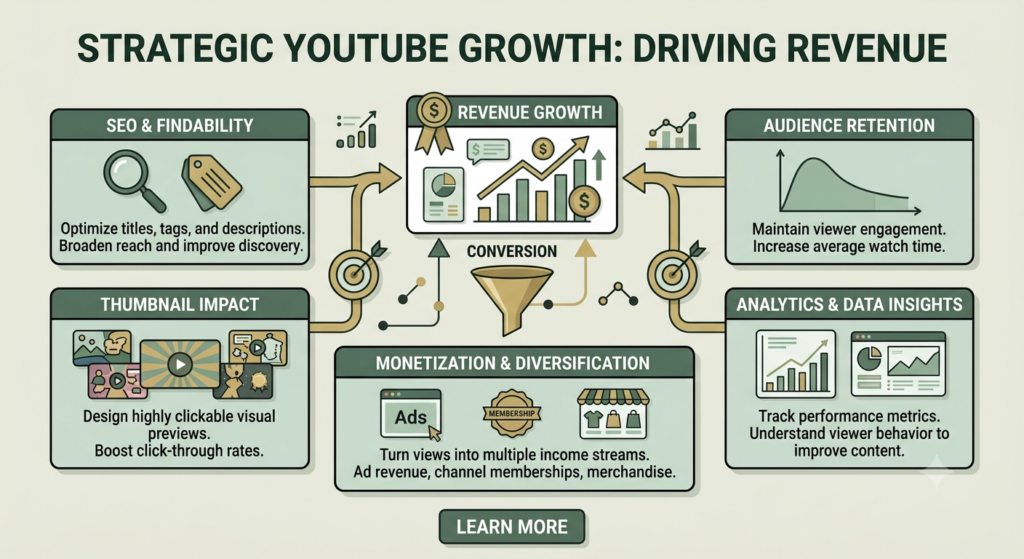
You cannot guarantee a specific income level, but you can improve the business potential of your channel.
Create Content Around Real Problems
Instead of publishing random videos, identify questions your target audience is actively searching for.
For example:
- How to start a YouTube channel
- How to improve YouTube SEO
- How to increase watch time
- How to create better thumbnails
- How to find profitable content ideas
Useful content can attract viewers who are more likely to return.
Improve YouTube SEO
YouTube SEO helps YouTube understand what your content is about and can improve its ability to surface relevant videos.
Focus on:
- Search intent
- Relevant keywords
- Clear titles
- Useful descriptions
- Strong thumbnails
- Audience retention
- Viewer satisfaction
SEO should support the viewer rather than encourage keyword stuffing.
Increase Audience Retention
Getting a click is only the beginning.
Your introduction should quickly explain what the viewer will learn and why the video is worth watching.
Avoid unnecessarily long introductions and deliver useful information early.
Build a Content Funnel
A strong channel can guide viewers from one useful video to another.
For example:
Keyword research → video SEO → title optimization → thumbnail optimization → analytics → monetization
This increases the opportunity for viewers to consume more of your content.
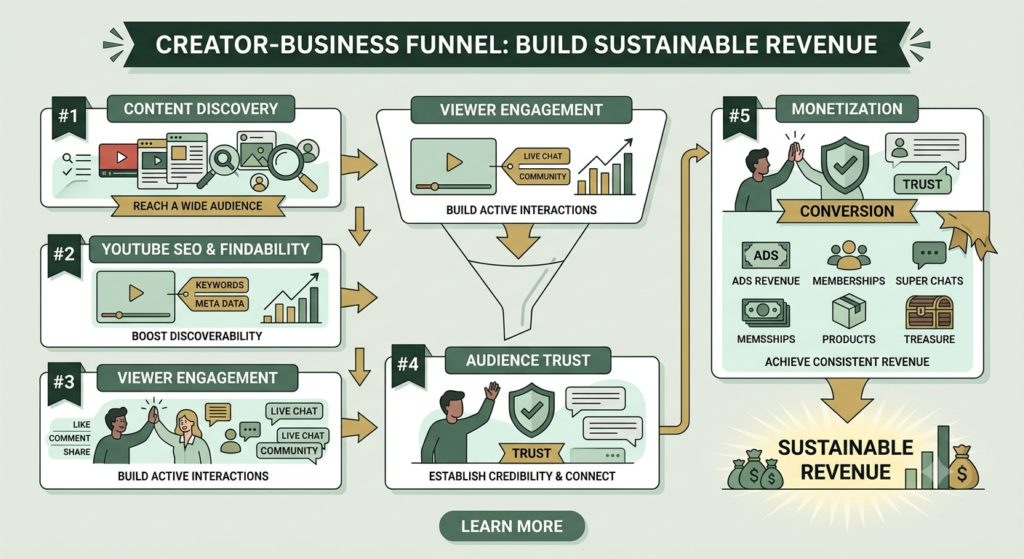
YouTube Revenue Is the Backbone of a Creator Business
Think of YouTube revenue as one part of a larger creator-business system.
Your content attracts people.
Your YouTube SEO helps those people discover your content.
Your titles and thumbnails encourage clicks.
Your retention and useful content help keep viewers engaged.
Your analytics show what is working.
Your monetization strategy converts that attention into revenue.
Finally, your website, products, services, email list, or other business assets can turn an audience into a broader business.
That is why monetization should not be treated as something you think about only after becoming successful. Understanding revenue early can help you build content with a sustainable business model in mind.
What Should a Beginner Do First?
If you are just starting, do not make revenue your only measurement.
Follow this simple sequence:
- Choose a specific audience.
- Identify their biggest problems.
- Research relevant YouTube keywords.
- Create genuinely useful videos.
- Improve titles and thumbnails.
- Study audience retention.
- Use YouTube Analytics to understand performance.
- Learn the current YouTube monetization requirements.
- Apply for eligible monetization features when you qualify.
- Diversify your income as your audience grows.
The goal is not simply to collect views. The goal is to build an audience that trusts your content.
Common YouTube Revenue Mistakes
Beginners often make these mistakes:
- Assuming every view generates the same income
- Treating CPM as personal earnings
- Focusing only on subscriber numbers
- Ignoring audience retention
- Copying competitors instead of understanding their strategy
- Publishing without a clear audience
- Relying entirely on advertising
- Ignoring YouTube’s monetization policies
- Expecting immediate income
Avoiding these mistakes can help you build a healthier long-term channel.
Frequently Asked Questions About YouTube Revenue
How much money does YouTube pay for 1,000 views?
There is no universal fixed payment for 1,000 views. Earnings vary according to factors such as audience, content, geography, advertising demand, format, and monetization eligibility.
Does YouTube pay for every view?
No. Not every view results in monetized advertising or another revenue-generating event.
Is YouTube revenue the same as CPM?
No. CPM describes an advertising metric, while creator revenue represents the money generated for the creator through eligible monetization sources.
Can a small YouTube channel make money?
Yes. A small channel can potentially generate income when it develops a targeted audience and uses eligible monetization methods or revenue sources outside advertising.
Is YouTube Shorts revenue different from long-form revenue?
Yes. Shorts and long-form videos use different monetization mechanisms, so their revenue should not be compared using a simple fixed rate.
Can YouTube revenue become a full-time income?
It can for some creators, but results vary considerably. Sustainable income usually requires consistent content, a defined audience, strong viewer value, and multiple appropriate revenue streams.
Final Thoughts
Understanding YouTube revenue is essential if you want to turn a channel into a sustainable creator business.
The most important lesson is simple: views are attention, but a strategy turns attention into revenue.
Start by creating useful content for a clearly defined audience. Improve your YouTube SEO, titles, thumbnails, retention, and analytics. Then build monetization around the audience you have earned.
You do not need millions of views to start building a business. You need the right audience, valuable content, and a monetization strategy that fits their needs.
Ready to improve your YouTube growth? Explore Aahraa’s YouTube SEO resources and build your channel step by step.