
5 Proven YouTube Content Strategy Tips for Beginners in 2026
What Is a YouTube Content Strategy?
A YouTube content strategy is a simple plan that helps you decide what videos to create, who you are creating them for, why they should watch, and how often you will publish.
Think of it as the backbone of your YouTube channel. Without a strategy, you may create random videos whenever you have an idea. With a strategy, every video has a purpose and connects with the larger direction of your channel.
For beginners, this does not need to be complicated. You can start with a notebook or spreadsheet and gradually improve your plan using real audience data.
Your strategy can cover:
- Your target audience
- Your channel topic or niche
- Your content pillars
- YouTube video ideas
- Publishing frequency
- Video titles and thumbnails
- Audience research
- Performance measurement
- Content improvement
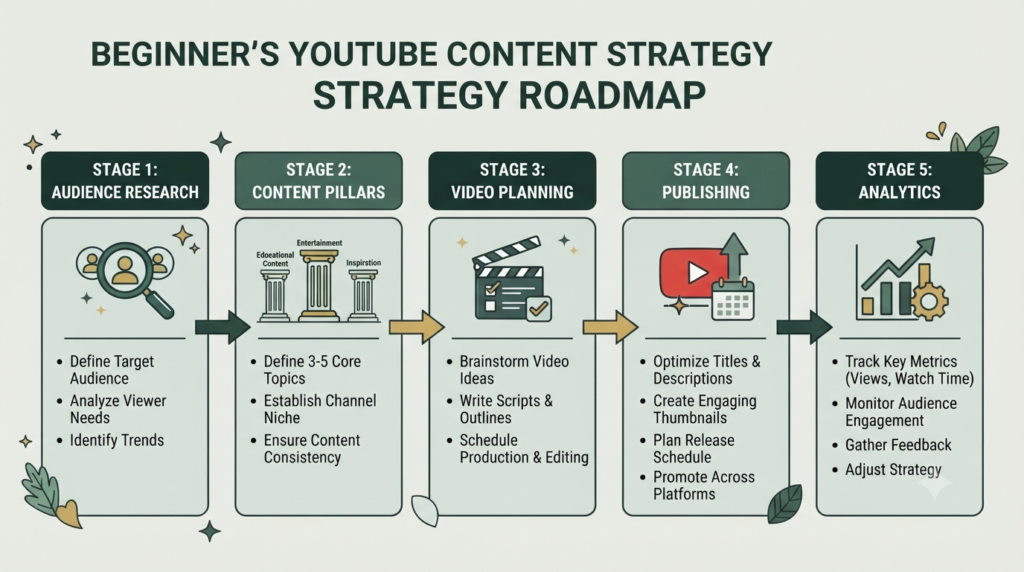
Why Is YouTube Content Strategy the Backbone of Your Channel?
Your content strategy connects almost every important part of YouTube marketing.
For example, audience research helps you understand what people want. That information produces better video ideas. Those ideas become videos with relevant titles, thumbnails and descriptions. Consistent publishing creates more opportunities to learn from analytics and improve future content.
| Strategy Element | What It Helps You Do |
|---|---|
| Audience | Understand who you want to reach |
| Niche | Give your channel a clear direction |
| Content pillars | Organize recurring topics |
| Video ideas | Maintain a useful content pipeline |
| Titles | Communicate the video’s value |
| Thumbnails | Encourage viewers to notice the video |
| Publishing schedule | Build a sustainable workflow |
| Analytics | Identify what needs improvement |
| Updating | Make future content more relevant |
This is why strategy can be considered the backbone of your YouTube channel. It connects planning, creation, optimization and measurement instead of treating each video as a separate task.
1. Define Your Audience First
Before creating videos, identify the person you want to help.
Ask:
- Who is my ideal viewer?
- What problem are they trying to solve?
- What questions do they frequently ask?
- What level of knowledge do they have?
- What result do they want?
For example, instead of choosing the broad topic digital marketing, you could focus on digital marketing for startup beginners.
This makes your content direction clearer.
How to Do YouTube Audience Research
Start with YouTube itself. Search your main topic and examine the questions, suggested searches, comments and recurring subjects.
You can also use YouTube Analytics after you begin publishing. Look at which videos attract viewers, how viewers discover your content and where people stop watching.
Do not try to understand everyone. Start by serving one clearly defined audience.
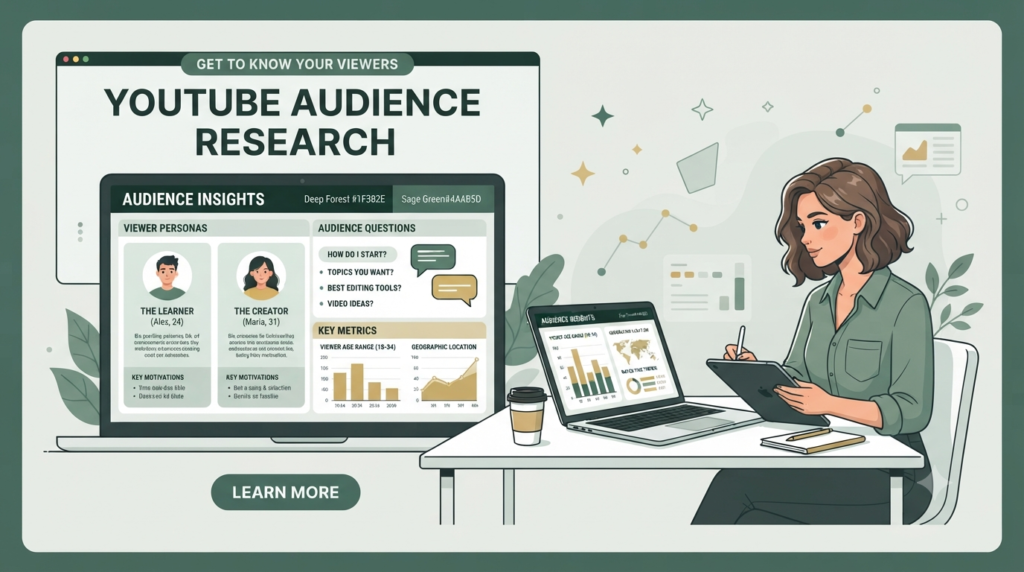
YouTube audience research for content planning
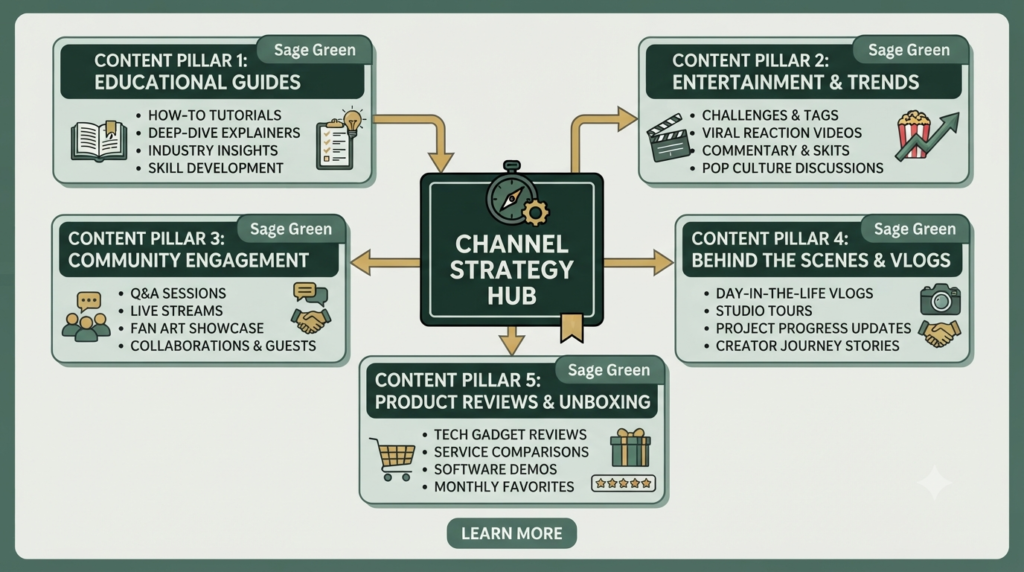
2. Build Three to Five Content Pillars
Content pillars are the major subjects you repeatedly discuss on your channel.
For example, a beginner digital-marketing channel could use:
Your pillars make YouTube content planning much easier because you do not have to invent a completely new direction every time you publish.
A useful rule is to make each pillar broad enough to generate many videos but specific enough to remain relevant to your audience.
Create a Simple Idea Bank
Under every pillar, write 10–20 potential topics.
For example:
YouTube SEO
- What is YouTube SEO?
- How to choose keywords
- How to write video titles
- How to optimize descriptions
- Common beginner SEO mistakes
Now you already have a content pipeline.
3. Create Videos Around Viewer Needs
Good YouTube video ideas should solve a problem, answer a question, teach a skill or provide useful information.
Before producing a video, complete this sentence: “After watching this video, my viewer will be able to ______.”
If you cannot complete that sentence clearly, the idea may need refinement.
Use Different Content Types
A balanced channel can include:
- Educational videos — teach a specific skill.
- How-to videos — demonstrate a process.
- List videos — organize several useful ideas.
- Beginner guides — explain a subject from the beginning.
- Case studies — examine a real example.
- Frequently asked questions — answer common viewer concerns.
- Updates — discuss relevant changes in your subject area.
This variety prevents your channel from becoming repetitive while keeping the same overall direction.
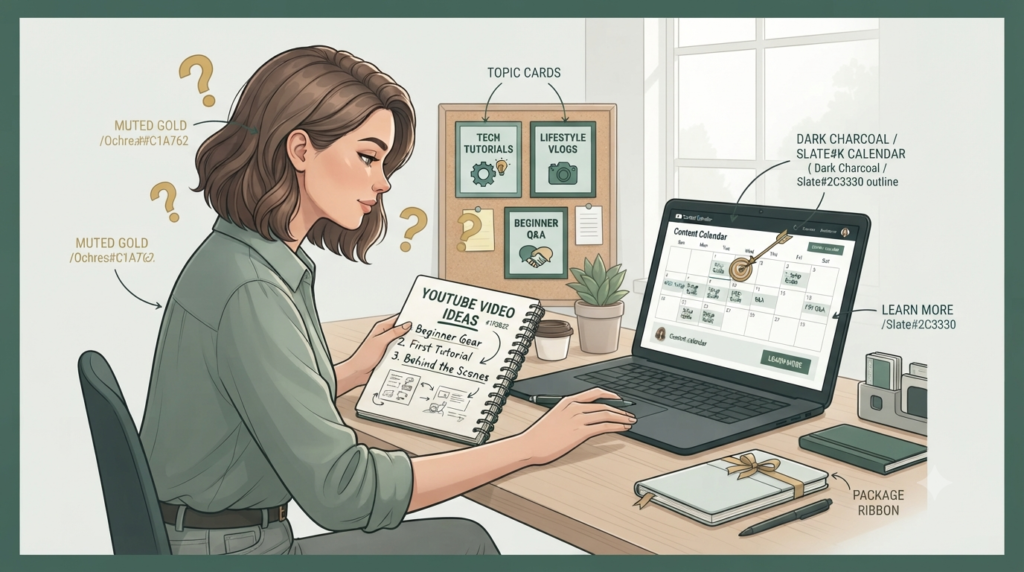
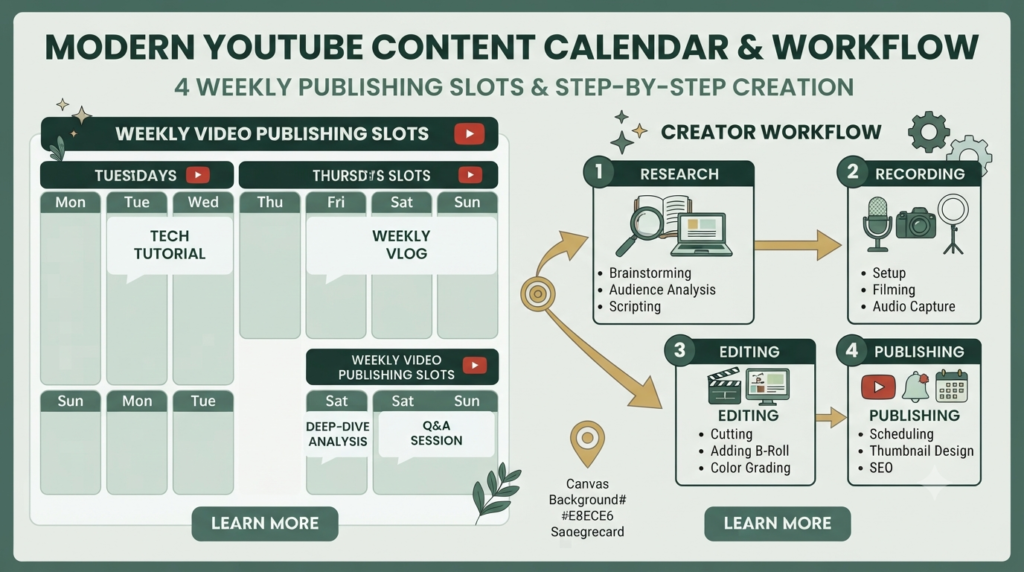
4. Create a Realistic Publishing Schedule
Consistency does not mean uploading every day.
For a beginner, a sustainable schedule is more useful than an ambitious schedule that becomes exhausting.
You could begin with:
1 long-form video per week + supporting Shorts when practical.
For each video, allow time for:
- Research
- Outline
- Script or talking points
- Recording
- Editing
- Thumbnail
- Title and description
- Upload
- Analytics review
Create several ideas before your next publishing date so that you are not starting from zero every week.
A simple content calendar can look like this:
| Week | Pillar | Video Topic | Format | Status |
|---|---|---|---|---|
| 1 | YouTube Basics | YouTube for Beginners | Guide | Planned |
| 2 | YouTube SEO | YouTube SEO Basics | Tutorial | Planned |
| 3 | Content Creation | Video Ideas | List | Planned |
| 4 | Channel Growth | Beginner Mistakes | Guide | Planned |
5. Measure, Learn and Improve
Your first strategy will not be perfect—and it does not need to be.
Your published videos provide information that can improve your next decisions.
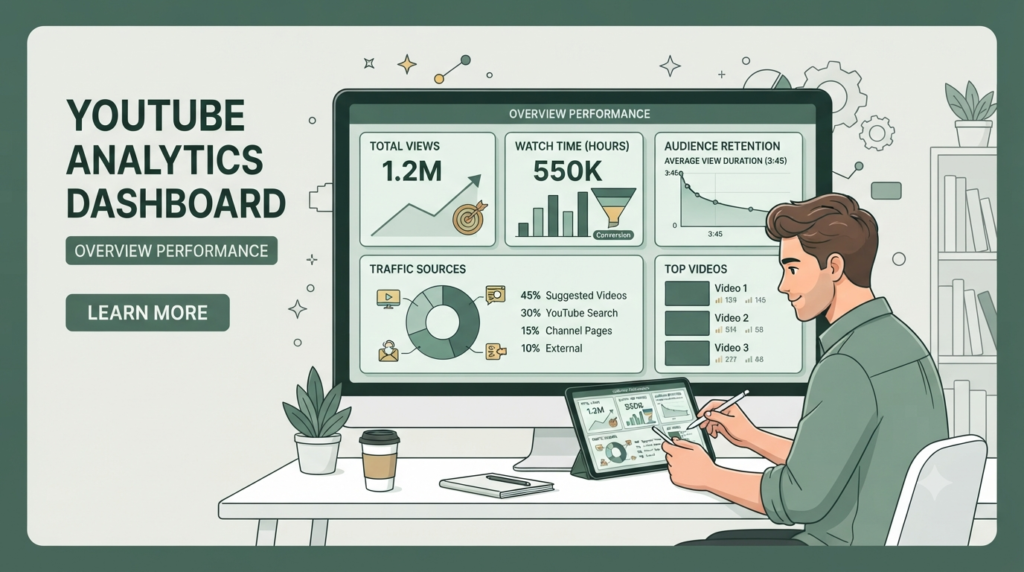
Use YouTube Analytics to review metrics such as:
- Impressions
- Click-through rate
- Views
- Watch time
- Audience retention
- Traffic sources
- Returning viewers
Do not judge a video only by its view count.
For example, if people click but leave quickly, examine whether the opening matches the promise of the title and thumbnail. If impressions are high but clicks are low, review the packaging, particularly the title and thumbnail.
This creates a continuous cycle:
Plan → Create → Publish → Measure → Learn → Improve → Plan again
That cycle is the heart of a sustainable YouTube content strategy.
How to Make Your Strategy Better Over Time
Once you have published several videos, identify:
Topics that attract attention: create related follow-up videos.
Questions appearing in comments: turn them into new videos.
Videos with strong retention: study their structure and opening.
Weak-performing topics: decide whether the issue is the topic, packaging, audience fit or execution before abandoning the entire content pillar.
This approach turns your channel into a learning system rather than a collection of unrelated uploads.
Frequently Asked Questions About YouTube Content Strategy
1. What is a YouTube content strategy?
A YouTube content strategy is a structured plan for deciding what videos to create, who they are for, what problems they solve, when to publish them and how to measure their performance. It gives your channel a clear direction instead of relying on random video ideas.
2. Why is a YouTube content strategy important?
A YouTube content strategy acts as the backbone of your channel because it connects audience research, content planning, video creation, SEO, publishing and analytics. It helps you create more focused content and make better decisions over time.
3. How do beginners create a YouTube content strategy?
Start by choosing a clear audience and topic. Then create three to five content pillars, generate video ideas under each pillar, choose a realistic publishing schedule and track your results using YouTube Analytics.
4. How many content pillars should a YouTube channel have?
For most beginners, three to five content pillars are enough. This provides variety while keeping the channel focused. Each pillar should relate to the same overall audience and channel purpose.
5. How do I find good YouTube video ideas?
You can find YouTube video ideas by researching YouTube search suggestions, audience questions, comments, competitor topics and your own analytics. Focus especially on questions and problems that your target audience repeatedly searches for.
6. How often should I upload YouTube videos?
There is no universal number that works for every creator. A beginner should choose a schedule that can be maintained consistently. For example, one useful long-form video per week can be a practical starting point.
7. What should I measure in YouTube Analytics?
Important metrics include impressions, click-through rate, views, watch time, audience retention, traffic sources and returning viewers. These metrics help you understand how people discover and respond to your content.
8. Does a YouTube content strategy help with SEO?
Yes. A well-planned strategy helps you create content around relevant viewer questions and topics. It also makes it easier to organize related videos, use appropriate keywords and build a consistent topical focus.
9. Should I follow trends when creating YouTube content?
Trends can provide opportunities, but they should fit your audience and channel topic. Do not chase every trend. A better approach is to adapt relevant trends to your established content pillars and audience needs.
10. Can I change my YouTube content strategy later?
Yes. Your strategy should evolve as you learn more about your audience and performance. Review your results regularly and improve topics, formats, titles, thumbnails and publishing decisions based on evidence rather than changing direction after every individual video.
Final Takeaway
A successful beginner does not need hundreds of videos or a complicated marketing system.
Start with one audience, a clear topic, three to five content pillars and a realistic publishing schedule. Build an idea bank, create videos that solve genuine viewer problems, and use analytics to improve your decisions.
Your YouTube content strategy is the backbone that connects your audience research, video ideas, content planning, publishing, SEO and channel growth.
Start small. Stay useful. Learn from every upload.
Ready to Build Your YouTube Strategy?
Create your first four-week content calendar today, choose your first video topic, and turn your strategy into action one video at a time.