
YouTube Monetization: Complete Beginner’s Guide in 2026
Starting a YouTube channel is exciting, but eventually most creators ask the same question: How can I turn my content into income? Understanding YouTube Monetization is important because it shows you how YouTube’s Partner Program works, what eligibility requirements you need to meet, and which revenue options may be available to your channel.
The good news is that monetization is not only about getting millions of views. A focused channel with useful content, an engaged audience, and a sustainable publishing strategy can create several potential income streams.
This guide explains YouTube monetization requirements, the YouTube Partner Program, how to monetize YouTube, and practical YouTube monetization 2026 strategies for beginners.
What Is YouTube Monetization?
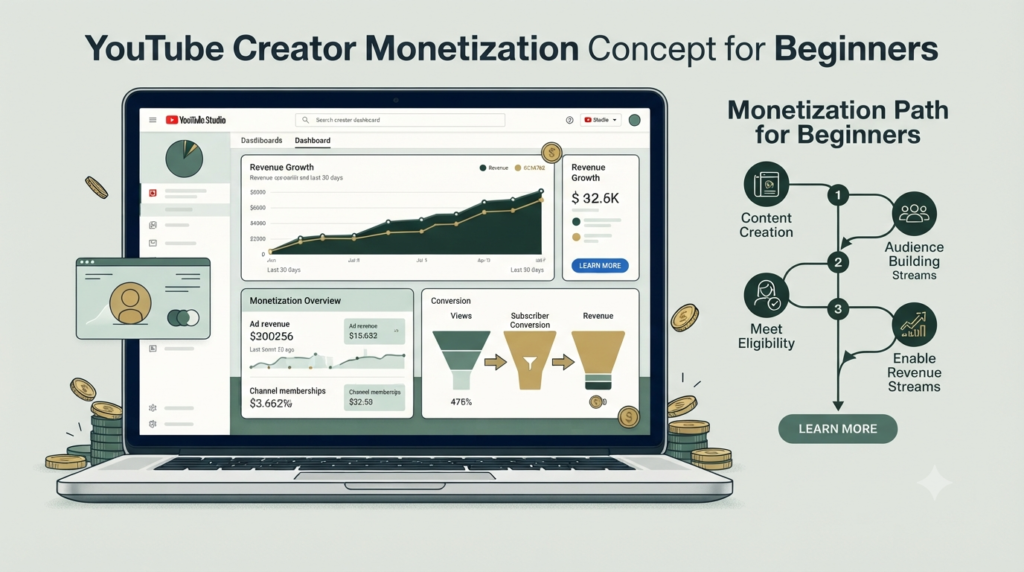
YouTube Monetization means earning revenue from eligible content and activities connected with your YouTube channel.
Once your channel qualifies for the appropriate YouTube Partner Program features, you may be able to earn through options such as:
- Advertising revenue
- YouTube Premium revenue
- Channel memberships
- Super Chat and Super Stickers
- Super Thanks
- Shopping features, where available
Not every feature is available to every creator, country, or channel. YouTube determines eligibility according to its current policies and feature requirements.
For the latest official information, always check YouTube’s official monetization overview.
7 Powerful YouTube Monetization Steps for Beginners
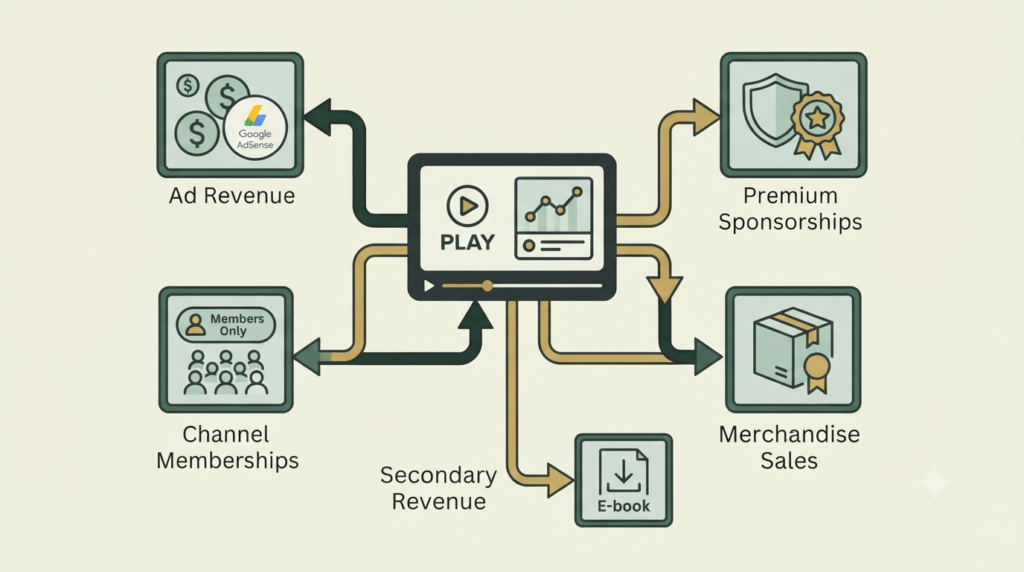
1. Build a Clear YouTube Channel Topic
Before thinking about revenue, decide what your channel helps people accomplish.
For example, your channel could focus on:
- YouTube SEO
- Cooking
- Personal finance
- Fitness
- Education
- Technology
- Beauty
- Travel
- Tutorials
A clear topic makes it easier for viewers to understand why they should subscribe.
Simple rule: solve a specific problem for a specific audience.
2. Understand YouTube Monetization Requirements
One of the most important beginner steps is understanding the current YouTube monetization requirements.
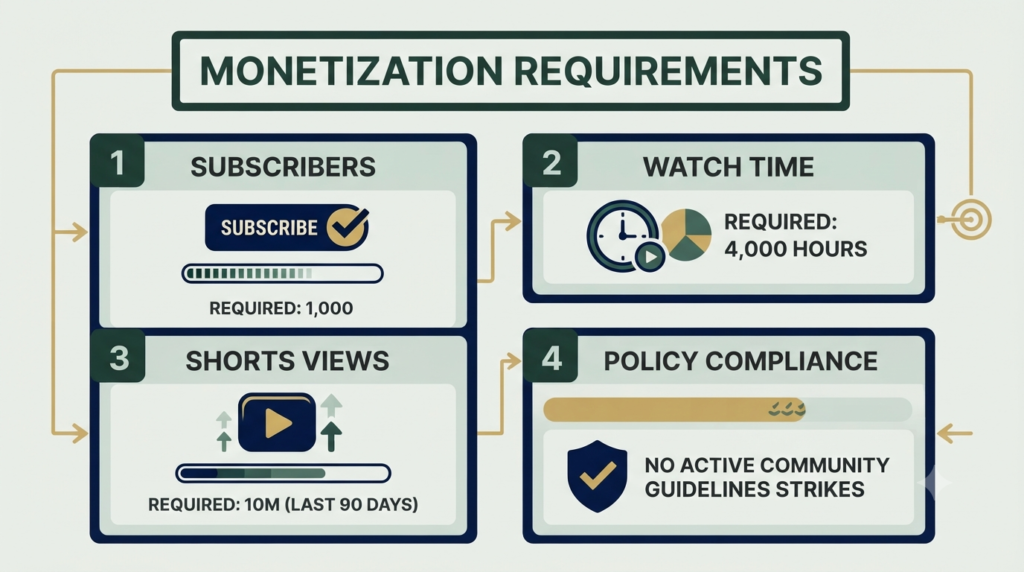
YouTube has different eligibility levels for different Partner Program features. The requirements can change, and availability can vary by country.
At the time of writing, YouTube’s official documentation describes an earlier-access YPP threshold and a higher threshold for advertising revenue.
For example, eligible creators can potentially apply for expanded YPP access at:
- 500 subscribers
- 3 public uploads within the previous 90 days
- Plus either 3,000 valid public watch hours in the previous 12 months or 3 million valid public Shorts views in the previous 90 days
For advertising revenue and YouTube Premium revenue, the higher threshold generally includes:
- 1,000 subscribers
- Plus either 4,000 valid public watch hours in the previous 12 months or 10 million valid public Shorts views in the previous 90 days
You should verify the requirements shown inside YouTube Studio → Earn, because YouTube can update eligibility rules and feature availability.
3. Apply for the YouTube Partner Program
The YouTube Partner Program (YPP) is YouTube’s creator monetization program.
When your channel becomes eligible, YouTube Studio can show your progress and available application options.
The basic process is:
- Open YouTube Studio.
- Select Earn.
- Review your eligibility.
- Accept the relevant terms.
- Connect or create the required AdSense for YouTube account.
- Submit your channel for review.
- Wait for YouTube’s review decision.
Approval is not automatic simply because you reach a subscriber or watch-time threshold. Your channel must also comply with YouTube’s monetization policies.
Official guidance: YouTube Partner Program overview and eligibility.

4. Create Original and Valuable Content
Reaching the numbers is only part of the journey.
YouTube expects monetized channels to follow its policies concerning original, authentic, and advertiser-friendly content.
Avoid building a channel around:
- Copied videos
- Reused content without meaningful added value
- Mass-produced low-value content
- Copyrighted material you do not have permission to use
- Misleading titles or thumbnails
- Content designed primarily to manipulate views
Instead, add your own explanation, experience, commentary, demonstrations, research, or educational value.
Human value matters. AI can help with research or planning, but your finished content should provide genuine value to viewers.
5. Improve Your Videos for Search and Discovery
How to monetize YouTube successfully starts with getting the right people to discover your videos.
Use YouTube SEO throughout your content.
Pay attention to:
| Element | What to optimize |
|---|---|
| Topic | Solve a specific viewer problem |
| Title | Clear keyword + compelling benefit |
| Thumbnail | Simple visual + readable message |
| Description | Explain the video’s value |
| Keywords | Use relevant phrases naturally |
| Chapters | Make long videos easier to navigate |
| Playlists | Group related content |
| Engagement | Encourage meaningful comments |
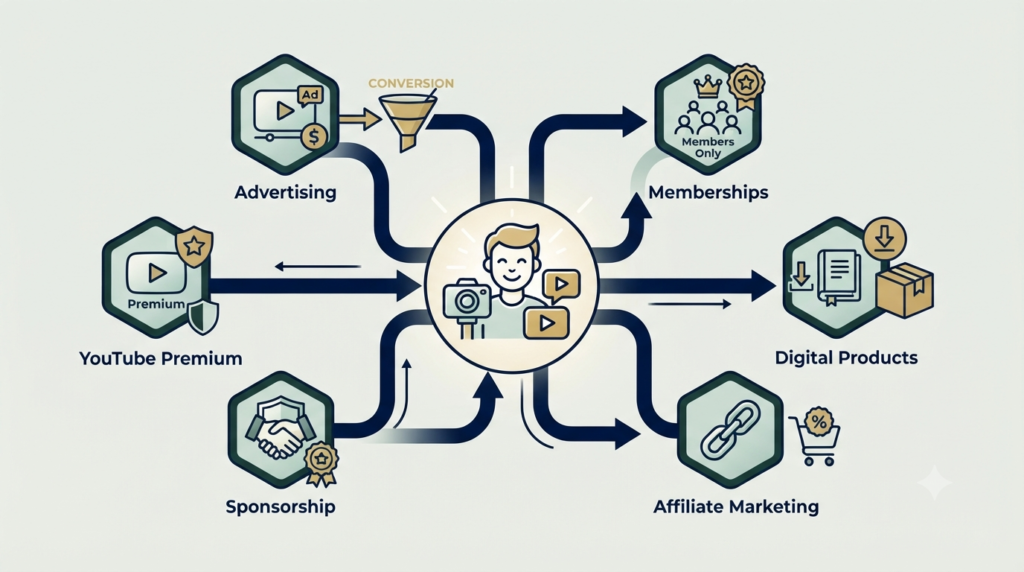
6. Diversify Your YouTube Income
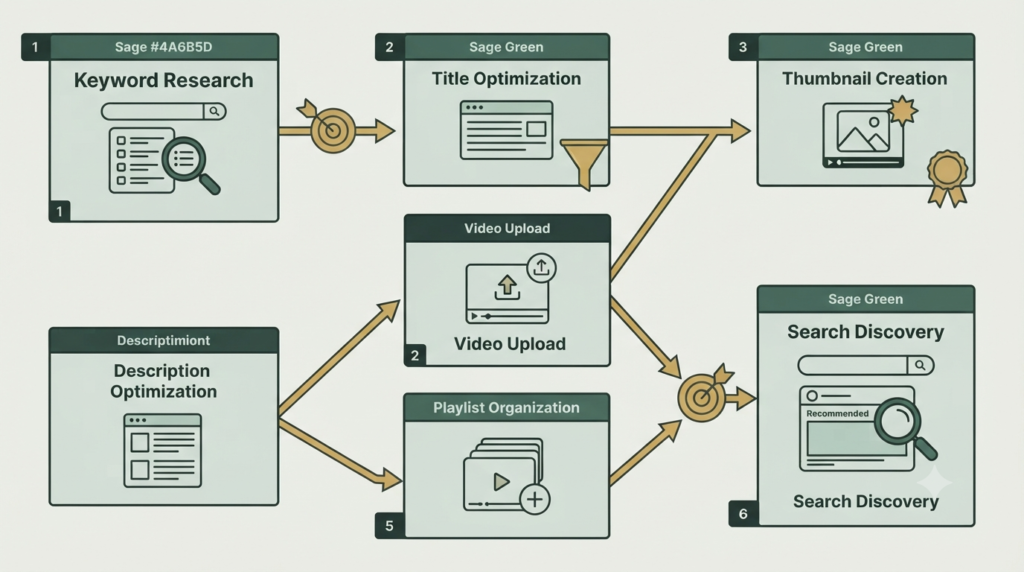
YouTube advertising does not have to be your only income source.
Depending on your eligibility and audience, potential revenue sources can include:
- Ad revenue
- YouTube Premium
- Memberships
- Super Thanks
- Super Chat
- Shopping
- Affiliate marketing
- Digital products
- Services
- Sponsorships
This is where YouTube can become more powerful for a business.
For example, a tutorial channel could attract viewers through YouTube search and then direct interested viewers toward a relevant digital product.
The important principle is:
Create useful content first. Build trust second. Monetize appropriately third.
7. Track Your Analytics and Improve
You cannot improve what you do not measure.
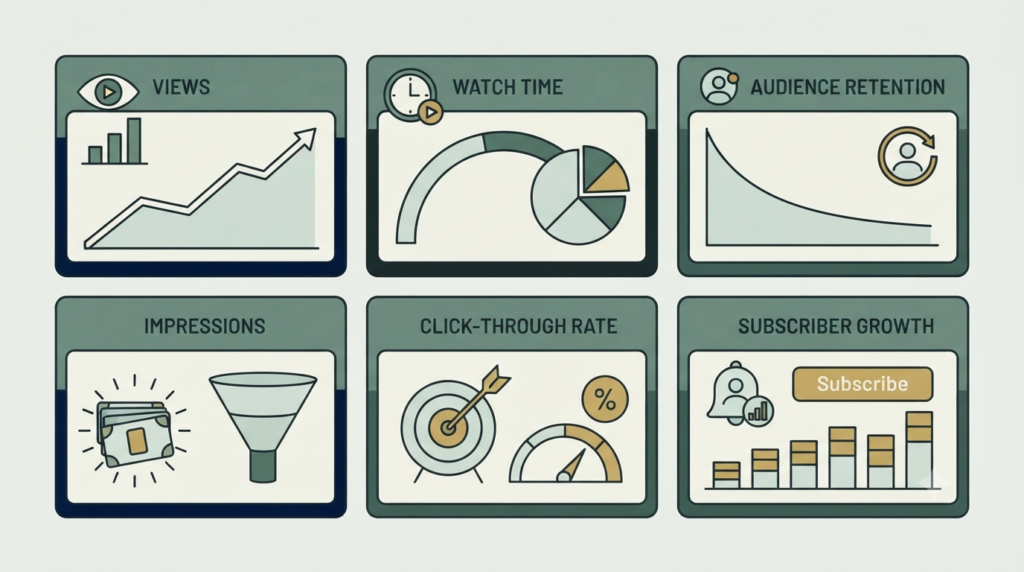
YouTube Analytics can help you understand:
- Views
- Watch time
- Average view duration
- Audience retention
- Impressions
- Click-through rate
- Subscribers gained
- Traffic sources
- Returning viewers
- Audience demographics and other available audience information
Look for patterns rather than obsessing over one video’s performance.
If a video gets impressions but few clicks, examine the title and thumbnail.
If viewers leave early, improve the introduction and pacing.
If viewers watch for a long time but the video gets little search traffic, review the topic and SEO.
How to Correct Poor YouTube Monetization Performance
If your channel is not progressing, do not immediately assume you need more videos.
Check these areas:
Low views
Review your topic, search demand, title, thumbnail, and distribution.
Low retention
Make the opening more useful and remove unnecessary introductions.
Low CTR
Test a clearer title and stronger thumbnail concept.
Few subscribers
Give viewers a clear reason to subscribe and create related videos around the same topic.
Monetization rejected
Read the specific reason provided by YouTube and correct the relevant policy or content issue before applying again.
Why YouTube Monetization Is the Backbone of Your YouTube SEO Entity
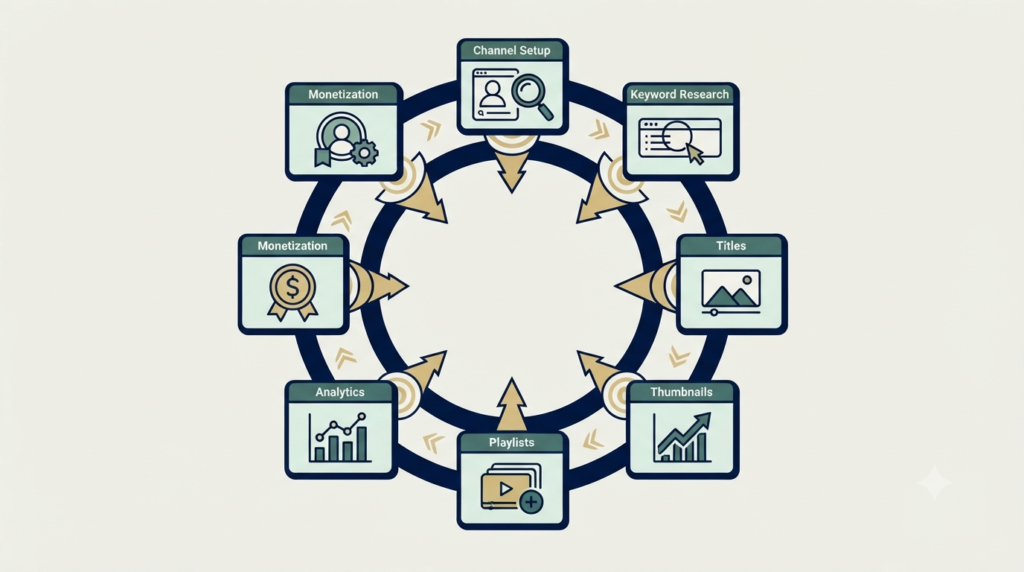
Think of your YouTube strategy as an interconnected entity rather than isolated articles.
Channel Setup → Keyword Research → Titles → Thumbnails → Video SEO → Playlists → Analytics → Monetization
Each topic supports another.
For example, keyword research helps you select a topic. The topic influences the title and thumbnail. The video generates engagement data. Analytics tells you what worked. Successful topics can become playlists and future videos. Finally, monetization turns an established audience into potential revenue.
This connected structure also helps your Aahraa topical authority around YouTube SEO.
Simple YouTube Monetization Checklist
Before trying to monetize, check:
- Your channel has a clear niche.
- Your content provides original value.
- You understand current YPP eligibility.
- Your channel follows YouTube policies.
- Your titles accurately describe your videos.
- Your thumbnails are clear and relevant.
- Your videos target useful search topics.
- You monitor YouTube Analytics.
- You improve weak-performing videos.
- You have a realistic long-term content strategy.
Frequently Asked Questions
1. What is YouTube Monetization?
YouTube Monetization allows eligible creators to earn money from qualifying YouTube features such as advertising, YouTube Premium, memberships, Super Thanks, and other available monetization tools.
2. How many subscribers do I need to monetize YouTube?
The current YouTube Partner Program has different eligibility levels. Some YPP features may become available from 500 subscribers when additional requirements are met, while advertising revenue generally requires the higher 1,000-subscriber threshold plus the applicable watch-time or Shorts-view requirement.
3. What is the YouTube Partner Program?
The YouTube Partner Program is YouTube’s program that gives eligible creators access to monetization features and other creator benefits.
4. Can I monetize YouTube Shorts?
Yes. Eligible creators can earn from Shorts through YouTube’s monetization system, subject to current eligibility and policy requirements.
5. Does YouTube monetization happen automatically?
No. Reaching the required metrics does not guarantee approval. YouTube reviews channels for compliance with its monetization policies.
6. Can a small YouTube channel make money?
Yes, although income varies considerably. A small but highly targeted audience can potentially support revenue through appropriate products, affiliates, memberships, sponsorships, or other methods in addition to YouTube’s own monetization features.
Final Thoughts
YouTube Monetization should not be treated as a shortcut to quick income. It is better viewed as the result of building a useful channel that consistently attracts and helps a defined audience.
Start with valuable content, learn YouTube SEO, understand your analytics, follow YouTube’s policies, and gradually develop multiple appropriate revenue streams.
If you are still building your channel, focus first on helping viewers rather than chasing monetization numbers. A useful channel gives you a stronger foundation for sustainable growth.
Ready to improve your YouTube channel?
Explore the complete Aahraa YouTube SEO guides on keyword research, video SEO, titles, thumbnails, channel setup, playlists, analytics, and monetization to build your channel step by step.