
YouTube Ad Revenue: 7 Powerful Ways to Understand It in 2026

If you are building a YouTube channel, YouTube ad revenue is one of the most common ways to earn money from videos. But simply uploading videos does not automatically generate income. Your channel needs to meet YouTube’s monetization requirements, follow its policies, and generate eligible views from an audience advertisers want to reach.
The good news is that you do not need to understand complicated advertising systems before you start. Once you understand how YouTube ad revenue works, what affects earnings, and how to improve your videos, you can make better decisions about your content strategy.
What Is YouTube Ad Revenue?
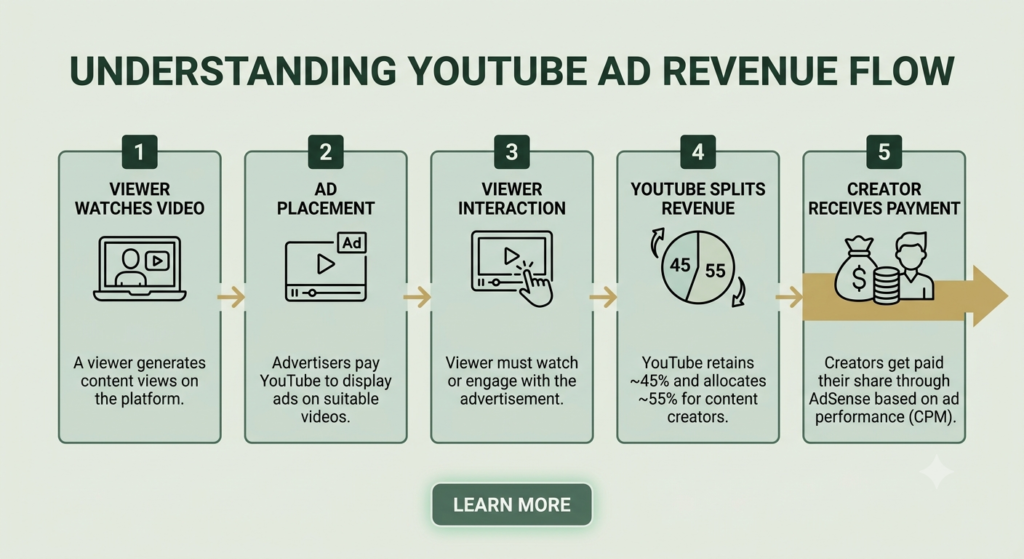
YouTube ad revenue is the money generated when advertisements are served on eligible YouTube content and the creator receives a share of that advertising revenue through the YouTube Partner Program.
Advertisers pay YouTube to show advertisements to relevant audiences. YouTube then shares part of the eligible advertising revenue with monetized creators according to its applicable revenue-sharing rules.
Your earnings can vary significantly because not every view produces the same advertising value.
Factors include:
- Viewer location
- Advertiser demand
- Video topic
- Audience demographics
- Ad availability
- Video format
- Seasonality
- Whether a particular view is monetized
Therefore, there is no universal amount that a creator earns for every 1,000 views.
How Does YouTube Ad Revenue Work?
The basic process is easier to understand as a simple chain:
Content → Views → Eligible ad opportunities → Advertiser spending → Revenue share → Creator earnings
For example, imagine you publish a useful tutorial. People discover it through YouTube Search, watch the video, and some eligible viewers are shown advertisements. Advertisers pay for those advertising opportunities, and eligible revenue is attributed through YouTube’s monetization system.
This means YouTube SEO is important even though SEO itself does not directly pay you.
Better search visibility can help the right people discover your videos. More relevant viewers can create more opportunities for watch time, engagement, returning viewers, and ultimately monetization.

How to Start Earning YouTube Ad Revenue
To earn advertising revenue as a creator, you generally need to participate in the YouTube Partner Program and meet the applicable eligibility requirements.
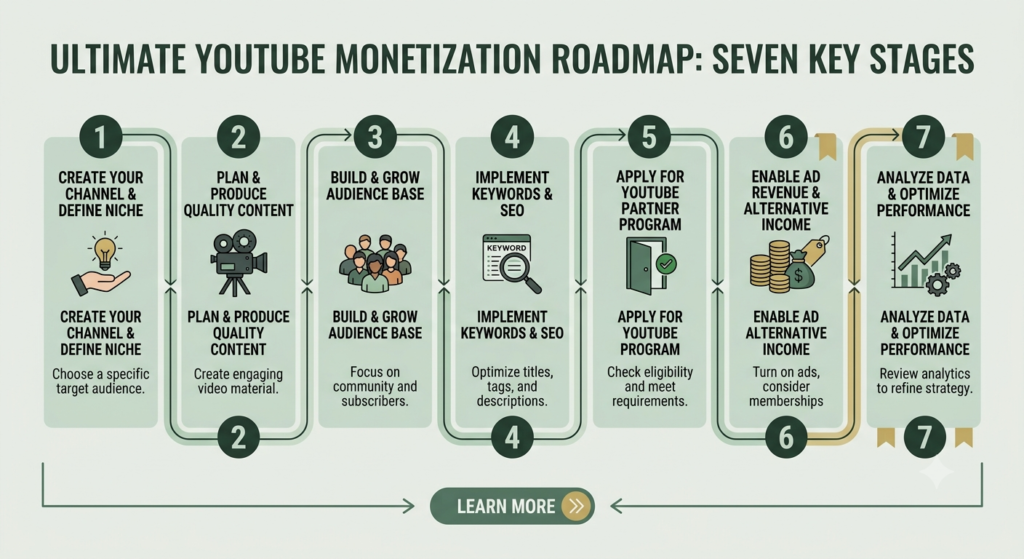
Start with these steps:
1. Build a YouTube channel
Choose a clear topic and audience. A focused channel makes it easier to develop useful content consistently.
2. Publish original content
Create videos that provide genuine value. Avoid relying on copied, repetitive, or minimally transformed material.
3. Improve your YouTube SEO
Use relevant keywords naturally in your title, description and content. Your YouTube keyword research should identify what your audience actually searches for.
4. Improve titles and thumbnails
A useful video still needs to attract attention. Strong YouTube titles and relevant thumbnails can encourage qualified viewers to click.
5. Monitor YouTube Analytics
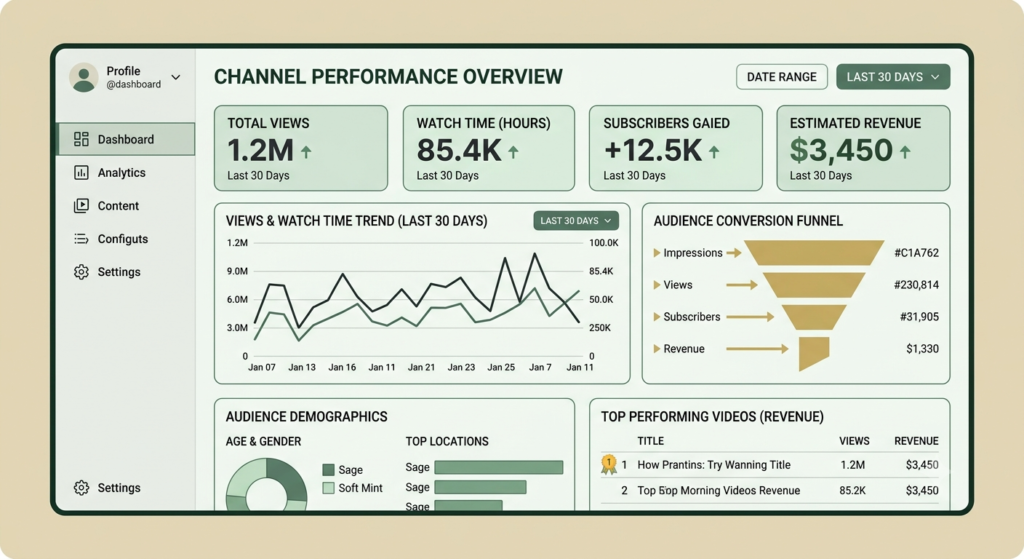
Use YouTube Analytics to understand impressions, click-through rate, watch time, audience retention and other performance signals.
6. Apply for monetization when eligible
Check YouTube Studio for the current Partner Program eligibility requirements applicable to your channel and region.
7. Follow monetization policies
Meeting numerical requirements alone does not guarantee monetization. Your channel and content must comply with YouTube’s policies.
What Affects YouTube Ad Revenue?
Several elements can influence how much advertising revenue a monetized channel generates.
| Factor | Why It Matters |
|---|---|
| Audience location | Advertiser demand varies by market |
| Topic | Some industries attract higher advertising demand |
| Viewer behavior | Not every view creates an ad impression |
| Video length | Longer eligible videos may provide additional ad opportunities |
| Seasonality | Advertising demand changes throughout the year |
| Content suitability | Advertiser-friendly content can have better monetization potential |
| Traffic source | Search, suggested and external audiences can behave differently |
Do not judge your channel only by subscriber count. A smaller channel with a highly relevant audience can sometimes have stronger commercial value than a much larger channel with low viewer intent.
YouTube Ad Revenue vs. Other YouTube Income
Advertising is only one part of the creator economy.
You can potentially build several income streams around the same audience:
- YouTube advertising
- Channel memberships
- Fan funding features
- Affiliate marketing
- Sponsorships
- Digital products
- Services
- Courses
This is why YouTube can become more than a platform for collecting views.
Your videos can act as the top of a content-to-business funnel: attract the right audience, build trust, solve problems and introduce relevant offers.
How to Increase YouTube Ad Revenue
You cannot directly control advertiser demand or guarantee a specific RPM. However, you can improve the factors you control.
Focus on:
Create useful content: Solve a specific problem instead of producing videos only for views.
Target valuable search intent: Use keyword research to understand what viewers want before creating a video.
Improve retention: Give viewers a reason to continue watching. Avoid long introductions that delay the answer.
Strengthen packaging: Test clearer titles and thumbnails that accurately represent the video.
Build topic authority: Create connected videos around a subject instead of publishing completely unrelated topics.
Study analytics: Identify which videos attract qualified viewers and repeat the patterns that work.
Why YouTube SEO Is the Backbone of Ad Revenue
Think of YouTube SEO as the foundation rather than the final goal.
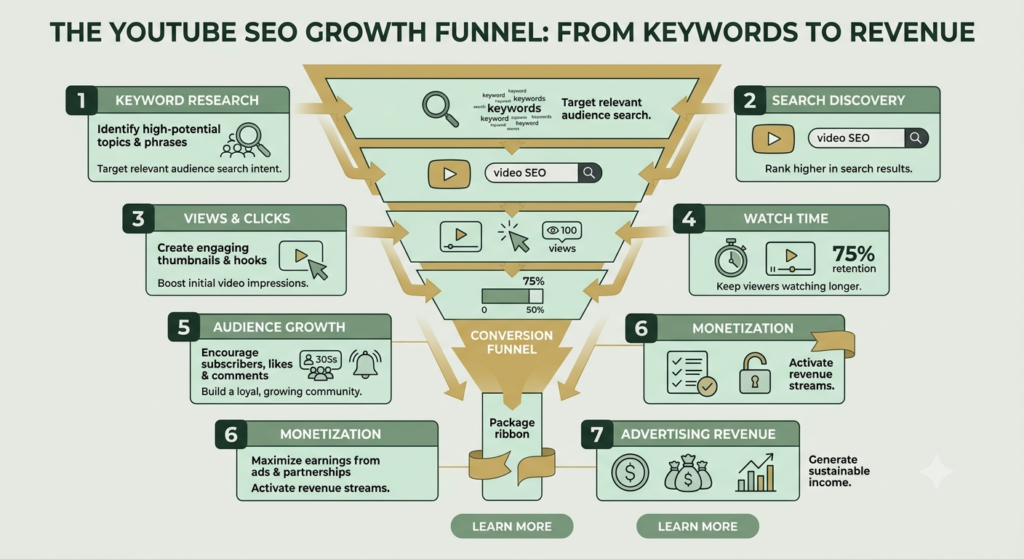
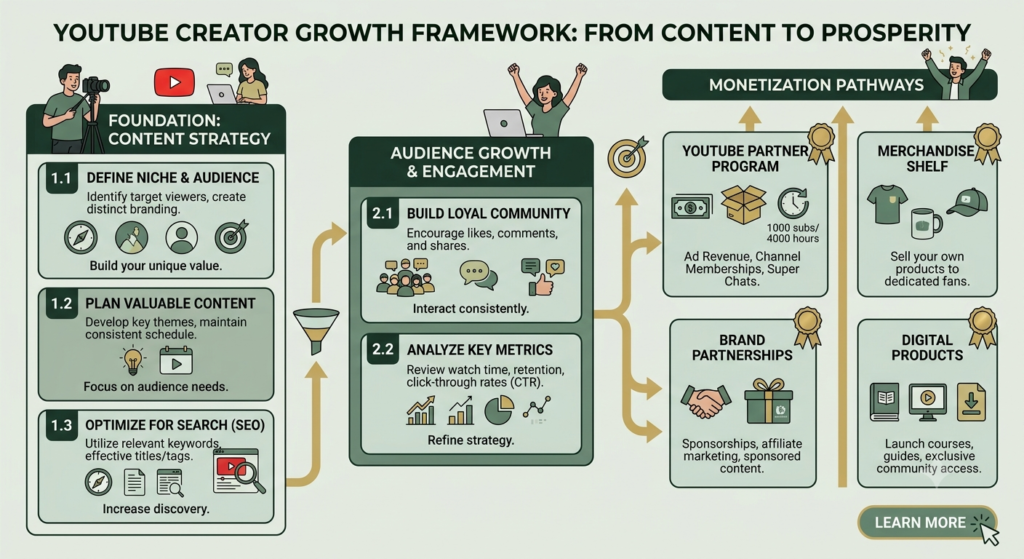
SEO helps your content become discoverable. Discoverability can bring viewers. Valuable content can turn those viewers into returning audiences. A stronger audience can create more opportunities for monetization.
The relationship looks like this:
YouTube SEO → Discovery → Views → Watch Time → Audience → Monetization → Ad Revenue
That is why YouTube SEO is the backbone connecting your content strategy to your potential revenue.
However, SEO does not guarantee earnings. Content quality, audience behavior, monetization eligibility, advertiser demand and YouTube policies all matter.
Common YouTube Ad Revenue Mistakes
Avoid these beginner mistakes:
- Assuming every view earns money
- Chasing subscribers instead of relevant viewers
- Copying other creators
- Using misleading titles or thumbnails
- Ignoring audience retention
- Publishing without keyword research
- Expecting instant income
- Depending entirely on advertising
- Ignoring YouTube monetization policies
A sustainable channel focuses first on helping the audience. Revenue becomes a result of building valuable attention rather than the only reason for publishing.
Frequently Asked Questions
How much can YouTube ad revenue pay?
There is no fixed amount. Earnings depend on factors such as audience location, advertiser demand, content category, eligible views and other monetization factors.
Does every YouTube view generate ad revenue?
No. Not every view results in an advertisement or monetized playback.
Do subscribers directly generate YouTube ad revenue?
No. Subscribers themselves do not pay you. Revenue is generated through eligible monetization activities, including advertising on eligible content.
Is YouTube SEO important for ad revenue?
Yes, indirectly. SEO can improve discoverability and help your videos reach relevant viewers, which can support the audience and viewing activity needed for monetization.
Can Shorts generate advertising revenue?
Yes, eligible Shorts creators can participate in YouTube’s Shorts monetization system under the applicable Partner Program rules.
Final Takeaway
YouTube ad revenue can become an important income stream, but successful monetization starts long before the first advertisement appears. Build useful content, understand your audience, optimize videos for discovery, study analytics and follow YouTube’s monetization policies.
If you are building your channel from scratch, start with YouTube keyword research, create useful videos around genuine search intent, and improve one part of your content strategy at a time.
Ready to grow your channel? Explore Aahraa’s YouTube SEO resources and turn your content into a stronger, search-focused growth system.