
7 Powerful Awareness Campaign Strategies for 2026
Introduction
An awareness campaign is designed to help more people discover, recognize, and remember a business, product, service, cause, or brand. Instead of immediately asking someone to buy, the campaign first creates familiarity and puts the brand in front of the right people.
For startups and growing businesses, this matters because people rarely purchase from a brand they have never heard of. An effective awareness campaign introduces your message before the customer reaches the consideration or purchase stage.
In 2026, businesses can use social media, video, search, display advertising, websites, content marketing, email, and community platforms to build brand awareness. Meta and Google both provide advertising options designed to help businesses reach relevant audiences and increase visibility. Google, for example, provides Display and YouTube campaign options for reach and awareness objectives.
The important point is simple: awareness is not just about getting more impressions. It is about getting your brand remembered by the right people.
What Is an Awareness Campaign?
An awareness campaign is a marketing campaign created primarily to increase visibility, recognition, familiarity, or knowledge of a brand, product, service, idea, or organization.
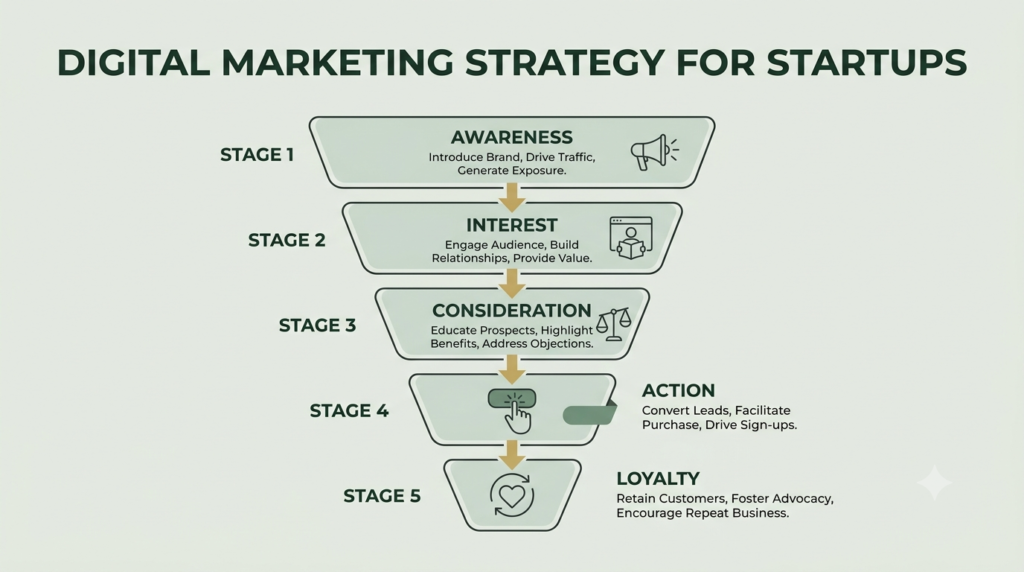
A simple customer journey looks like this:
Awareness → Interest → Consideration → Action → Loyalty
At the awareness stage, the customer may not be ready to purchase. They may not even know that your business exists.
Your job is therefore to answer three basic questions:
- Who are you?
- What do you offer?
- Why should the audience remember you?
Google describes brand-awareness activity as focusing on visibility and interactions with a product, service, or brand, with metrics such as impressions, reach, frequency, and engagement helping advertisers understand exposure.
Why Is an Awareness Campaign Important?
A strong campaign reach can become the foundation of your wider marketing system.
Think of awareness as the front door of your marketing funnel.
If nobody knows your business exists, later campaigns have a smaller pool of people who already recognize your name.
An awareness campaign can help you:
- Introduce a new brand.
- Launch a new product.
- Enter a new market.
- Explain an unfamiliar service.
- Increase recognition.
- Build an audience for future campaigns.
- Create familiarity before asking for a purchase.
- Support future retargeting and conversion activity.
- Establish a consistent brand identity.
For example, a startup selling an SEO service could first show educational content explaining why websites struggle to appear in search results. Later, people who interacted with that content could receive consideration or conversion-focused campaigns.
This makes awareness part of a connected marketing journey rather than an isolated advertisement.
The 7 Essential Elements of an Awareness Campaign
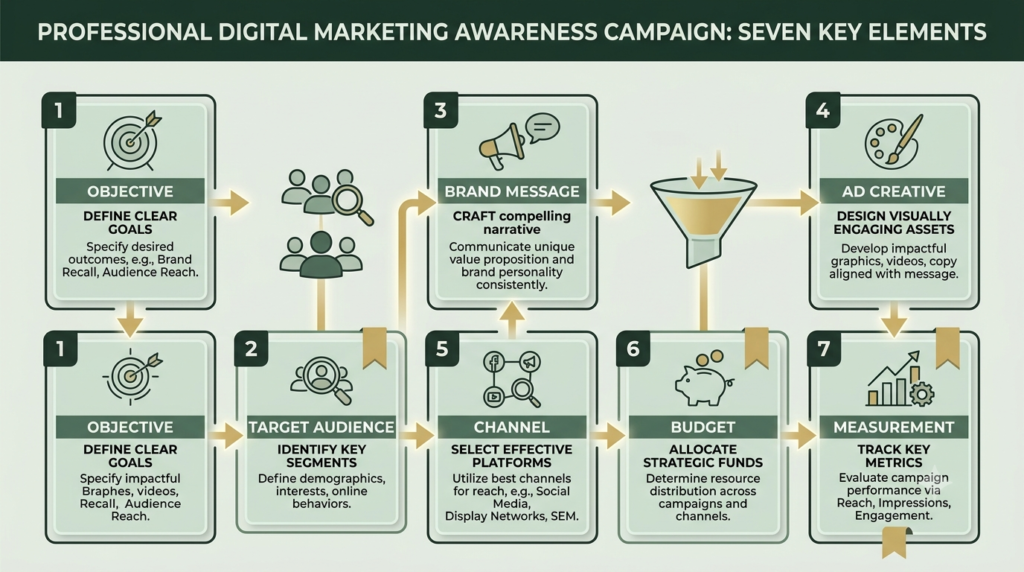
Every successful campaign reach should have a clear structure. Here are the seven core elements.
1. Clear Campaign Objective
Start by deciding exactly what you want the campaign to achieve.
Possible objectives include:
- Increase brand recognition.
- Introduce a new product.
- Reach a new audience.
- Increase visibility in a particular location.
- Explain a new service.
- Build familiarity with a brand.
- Generate attention for a launch.
Do not begin with the question, “What advertisement should I make?”
Begin with:
“What should people know or remember after seeing this campaign?”
This small change can improve the entire campaign strategy.
2. Well-Defined Target Audience
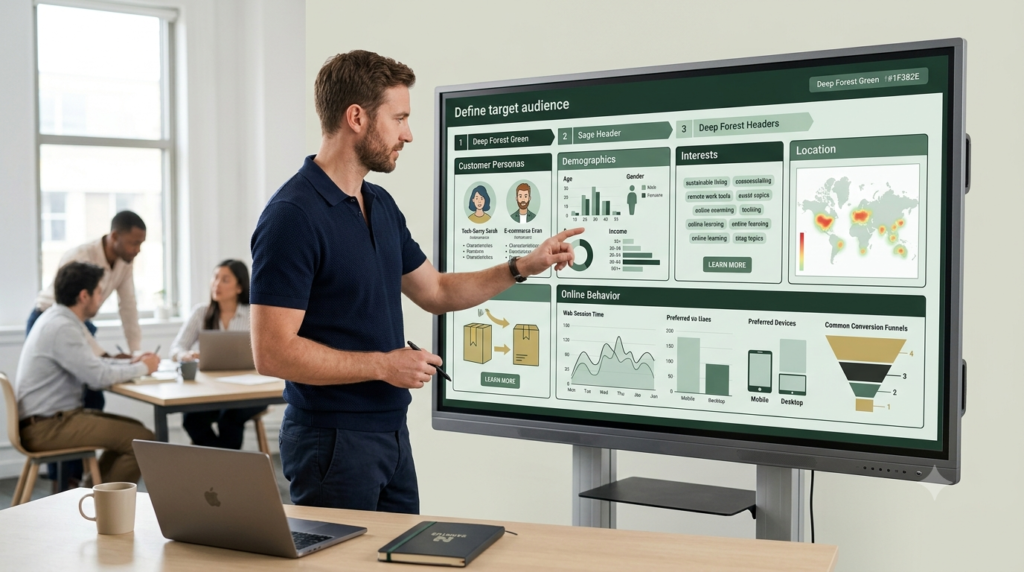
Your target audience is the group of people most relevant to your message.
Define them using factors such as:
- Age range
- Location
- Language
- Interests
- Profession
- Business type
- Buying behavior
- Problems
- Goals
- Online habits
For example:
Business: Digital marketing agency
Target audience: Startup founders
Problem: Low online visibility
Message: Build a stronger digital presence before spending heavily on advertising.
A broad audience can create lots of impressions, but relevance is important. Google’s audience expansion tools, for example, can help campaigns reach additional people similar to selected audience segments.
3. Strong Brand Message
Your message should be easy to understand within a few seconds.
A useful formula is:
Problem + Solution + Brand
For example:
“Struggling to get your startup noticed online? Aahraa helps startups build stronger digital visibility
Avoid putting too much information into one advertisement.
Your audience should quickly understand:
- What the business does.
- Who it helps.
- What problem it solves.
- What makes it relevant.
A consistent message across advertisements, social media, and your website strengthens brand awareness.
4. Effective Ad Creative
Ad creative includes the visual and written elements people see.
This can include:
- Images
- Videos
- Headlines
- Primary text
- Logos
- Colors
- Graphics
- Carousels
- Reels
- Short-form videos
- Calls to action
Good ad creative should stop unnecessary scrolling and communicate one central idea.
For mobile users, keep important text large and easy to read. Use strong contrast, simple layouts, and recognizable branding.
Meta’s official guidance for Reels emphasizes mobile-first creative, vertical formats, clear key messages, and safe placement of important elements.

5. Correct Channel and Placement
A Brand Awareness can use several channels.
| Channel | Useful for | Common formats |
|---|---|---|
| Visual discovery | Reels, Stories, images | |
| Broad audience reach | Images, video, carousel | |
| YouTube | Video visibility | Video ads, Shorts |
| Google Display | Visual reach | Banner and responsive ads |
| Search | Existing demand | Search ads |
| Visual discovery | Pins and promoted content | |
| Website | Brand information | Landing pages, blogs |
| Existing audience | Newsletters and announcements |
Google Display campaigns can help businesses reach people while they browse websites and apps, while YouTube campaigns can be used for reach, views, and engagement.
Choose channels based on where your target audience actually spends time rather than trying to appear everywhere.
6. Budget and Frequency
A Brand awareness needs enough exposure for the message to become familiar.
Two important concepts are:
Reach: How many unique people saw your advertisement.
Frequency: Approximately how many times the average person saw it.
High reach with extremely low frequency may create limited memory. Excessive frequency, however, can cause ad fatigue.
Google provides target-frequency options for certain YouTube ad creative, allowing advertisers to specify a desired exposure frequency.
Start with a manageable budget and monitor the results before increasing spending.
7. Measurement and Optimization
You cannot improve a target audience, if you do not measure it.
Important metrics include:
- Impressions
- Reach
- Frequency
- Video views
- View rate
- Engagement
- Click-through rate
- Website visits
- Brand searches
- Cost per thousand impressions
- Assisted conversions
Do not judge awareness only by immediate sales.
The campaign may be doing its job by increasing visibility and creating a larger audience for later campaigns.
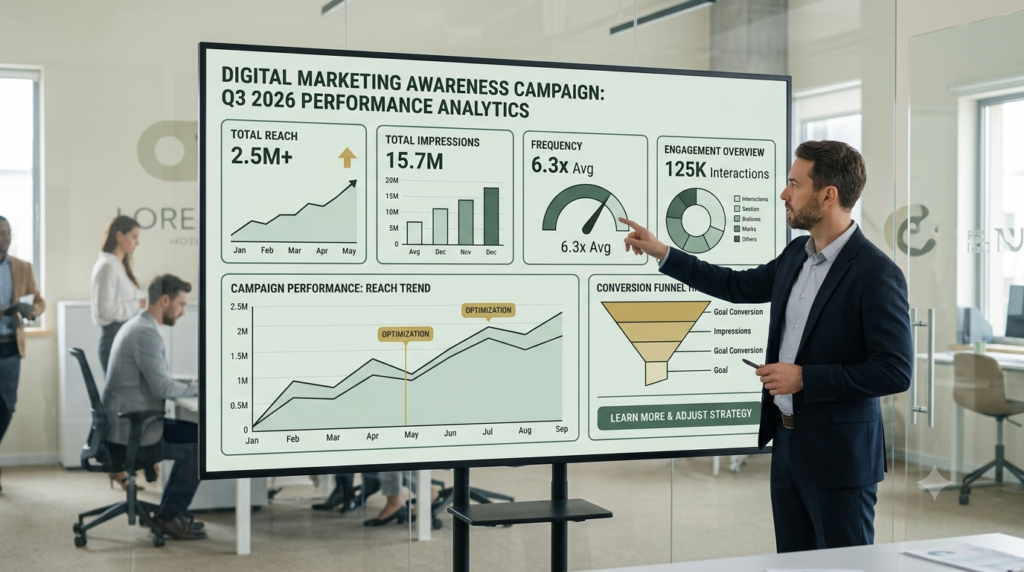
Google specifically identifies impressions, reach, frequency, engagement, and related visitor actions as useful measures for branding campaigns.
How to Create an Awareness Campaign Step by Step
Here is a simple beginner workflow.
Step 1: Define the Goal
Write one sentence:
“I want to increase awareness of ______ among ______.”
Example: “I want to increase awareness of my digital marketing service among startup founders.”
Step 2: Define the Audience
Create a basic customer profile.
Include:
- Who they are
- What they need
- What problem they experience
- Where they spend time online
- What type of content they consume
Step 3: Create One Core Message
Do not create five unrelated messages.
Choose one.
Example: “Build your startup’s digital presence before you spend more on advertising.”
Step 4: Prepare Your Creative
Create at least a few variations:
- One static image
- One short video
- One carousel
- One alternative headline
Keep your logo and visual identity consistent.
Step 5: Select Your Platform
For a visual startup brand, Instagram and Facebook may be useful.
For video education, YouTube may be appropriate.
For broader visual website exposure, Google Display may be useful.
The correct choice depends on your audience and campaign objective.
Step 6: Set Budget and Duration
Choose a realistic daily or total budget.
Do not change everything every day.
Give the campaign enough time to generate useful data before making major decisions.
Step 7: Launch and Monitor
After launch, monitor:
- Reach
- Impressions
- Frequency
- Engagement
- Cost
- Audience response
Look for patterns rather than reacting emotionally to one day’s results.
Step 8: Optimize
If the campaign is not performing as expected, test one variable at a time.
You can test:
- Headline
- Image
- Video
- Audience
- Placement
- Message
- Landing page
Do not change everything simultaneously because you will not know what caused the improvement or decline.

Awareness Campaign vs Conversion Campaign
These campaigns serve different purposes.
| Awareness Campaign | Conversion Campaign |
|---|---|
| Builds recognition | Encourages action |
| Focuses on visibility | Focuses on measurable action |
| Reaches new audiences | Often targets higher-intent audiences |
| Introduces the brand | Promotes a specific offer |
| Measures reach and exposure | Measures leads, purchases, or other conversions |
| Top of funnel | Bottom of funnel |
A full-funnel strategy can connect these stages. Google describes full-funnel video planning as combining awareness, consideration, and action objectives according to the customer’s journey.
Common Campaign Reach Mistakes
Mistake 1: Trying to Sell Immediately
If someone has never heard of your brand, an aggressive sales message may feel premature.
First create familiarity.
Mistake 2: Targeting Everyone
A campaign intended for everyone often becomes relevant to very few people.
Start with a clear target audience.
Mistake 3: Too Much Text
People scroll quickly.
Use one strong message instead of a paragraph inside the advertisement.
Mistake 4: Inconsistent Branding
Changing colors, fonts, logos, and messaging constantly makes recognition harder.
Keep your visual identity consistent.
Mistake 5: Measuring Only Sales
An awareness campaign may have a different primary purpose from a conversion campaign.
Track reach, frequency, impressions, engagement, and other awareness indicators alongside downstream actions.
Mistake 6: Ignoring Creative Quality
Even precise targeting cannot completely compensate for confusing ad creative.
Your message and visual presentation must work together.
Awareness can be viewed as the connecting layer between your brand and your marketing funnel.
It creates the first opportunity for someone to recognize your:
Brand → Message → Product → Website → Content → Social Media → Offer
This is particularly important for startups.
When people repeatedly encounter consistent messaging, your business becomes easier to recognize across different platforms.
That recognition can support future:
- Retargeting
- Lead-generation campaigns
- Website visits
- Content engagement
- Product launches
- Sales campaigns
- Email marketing
- Community building
In other words, awareness does not have to work alone.
It can feed the next stage of your marketing system.
Frequently Asked Questions
What is an awareness campaign?
An awareness campaign is a marketing campaign designed to increase visibility, recognition, familiarity, or understanding of a brand, product, service, or idea.
What is the main goal of an Target Audience?
The main goal is usually to make the right audience aware of and familiar with a brand or message rather than immediately focusing on a purchase.
What should I measure in a campaign reach?
Important metrics include reach, impressions, frequency, video views, engagement, view rate, cost per thousand impressions, and relevant website activity.
Is an awareness campaign useful for startups?
Yes. It can introduce a new startup to its target market and create familiarity that supports later consideration, lead generation, and conversion campaigns.
What is the difference between awareness and conversion campaigns?
Awareness campaigns generally focus on visibility and recognition, while conversion campaigns are designed around measurable actions such as purchases, leads, registrations, or other defined conversions.
How long should an awareness campaign run?
There is no universal duration. The appropriate period depends on the campaign objective, budget, audience size, creative volume, and amount of data needed for evaluation.
Can I run an awareness campaign without video?
Yes. Static images, carousels, display advertisements, website content, and other formats can be used. The best format depends on the platform, audience, and campaign objective.
How can I improve my campaign reach?
You can review audience size, placements, creative quality, budget, frequency, and platform settings. Google also provides audience expansion options for eligible video campaigns.
Final Thoughts
An awareness campaign is more than an advertisement designed to collect impressions. It is the first introduction between your brand and potential customers.
The strongest campaigns start with a clear objective, understand the target audience, communicate one memorable message, use relevant ad creative, select appropriate channels, and measure exposure carefully.
In 2026, marketers have more platforms, automation, AI-assisted creative tools, and audience options than ever. That makes strategy even more important.
Start simple.
Know who you want to reach.
Know what you want them to remember.
Create useful and recognizable content.
Measure what happens.
Then improve one element at a time.
When awareness connects with consideration and conversion, it becomes a practical foundation for a complete marketing system.