
7 Powerful YouTube Keyword-Based Ideas for Fast Growth Today
Finding something to post on YouTube can feel difficult when you are starting from zero. Instead of guessing what viewers might like, YouTube Keyword-Based Ideas give you a practical way to discover topics people are already searching for.
A keyword-based idea starts with a phrase, question, or problem that viewers type into YouTube. You then turn that search demand into a useful video topic, title, outline, and content plan.
This approach connects YouTube video ideas, YouTube keyword research, keyword-based video ideas, and a wider YouTube SEO strategy.

What Are YouTube Keyword-Based Ideas?
YouTube Keyword-Based Ideas are video topics developed from keywords or search phrases that are relevant to your audience.
For example, suppose your channel teaches beginners about YouTube. A broad idea might be: “YouTube SEO”
A keyword-based idea can be more specific: “How to Do YouTube Keyword Research for Beginners”
The second idea gives you a clearer audience, search intent, and problem to solve.
YouTube explains that Search considers how well a video’s title, description, and video content match a viewer’s search, along with engagement.
So keywords can help you identify opportunities, but keywords alone do not guarantee rankings.
Why Keyword-Based Ideas Matter
A strong keyword-based idea can help you answer four important questions:
| Element | Question |
|---|---|
| Keyword | What is the viewer searching for? |
| Intent | Why are they searching? |
| Topic | What useful problem can I solve? |
| Format | What type of video best answers it? |
This is why keyword research can become the backbone of your content planning.
However, it is important to understand that it is not the entire YouTube algorithm. YouTube also considers viewer personalization, performance, satisfaction, topic interest, competition, and other signals.

How to Find YouTube Keyword-Based Ideas
1. Start With Your Audience
Before searching for keywords, define the person you want to help.
Ask:
- Who is my viewer?
- What problem are they facing?
- What result do they want?
- What beginner question might they type into YouTube?
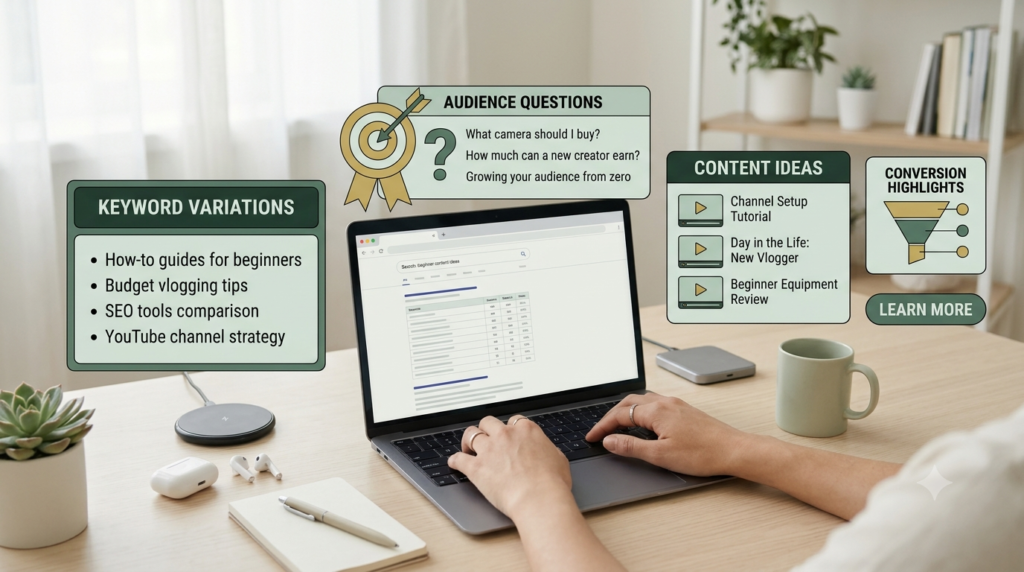
For example, a beginner creator may search:
- how to start YouTube
- YouTube video ideas
- how to get YouTube views
- YouTube SEO for beginners
- how to find YouTube keywords
These searches can become your first list of keyword-based video ideas.
2. Use YouTube Search Suggestions
Type a broad phrase into YouTube’s search box and observe the suggestions.
For example, type:
YouTube keyword research
You may discover variations such as:
- YouTube keyword research for beginners
- YouTube keyword research tools
- how to find keywords for YouTube
- YouTube keyword research tutorial
These variations reveal different search intents.
3. Use YouTube Studio Trends
In 2026, YouTube Studio’s Trends tab can help creators explore what their audiences and viewers across YouTube are searching for. It can show top searches, breakout videos, recent videos, audience interest, and content gaps.
You can access it through:
YouTube Studio → Analytics → Trends
Look for topics that are relevant to your niche rather than simply chasing every trending subject.
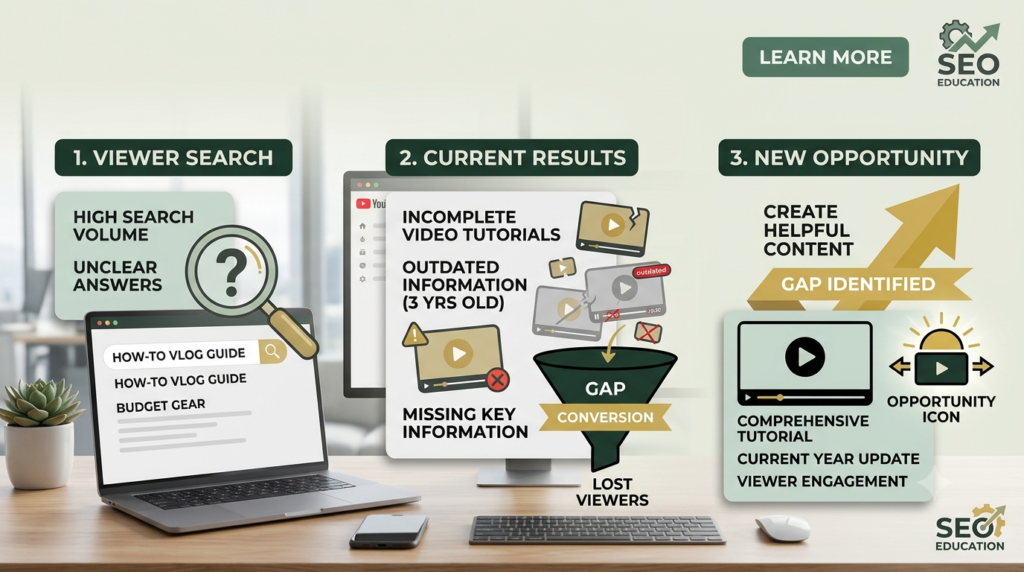
4. Look for Content Gaps
A content gap exists when viewers cannot find enough relevant or high-quality results for a particular search.
YouTube specifically identifies content gaps as opportunities where viewers may find no results, an exact match, relevant content, or sufficiently current/high-quality content.
This makes content gaps especially useful for finding new video ideas.
Turn One Keyword Into Multiple Video Ideas
One keyword should not necessarily produce only one video.
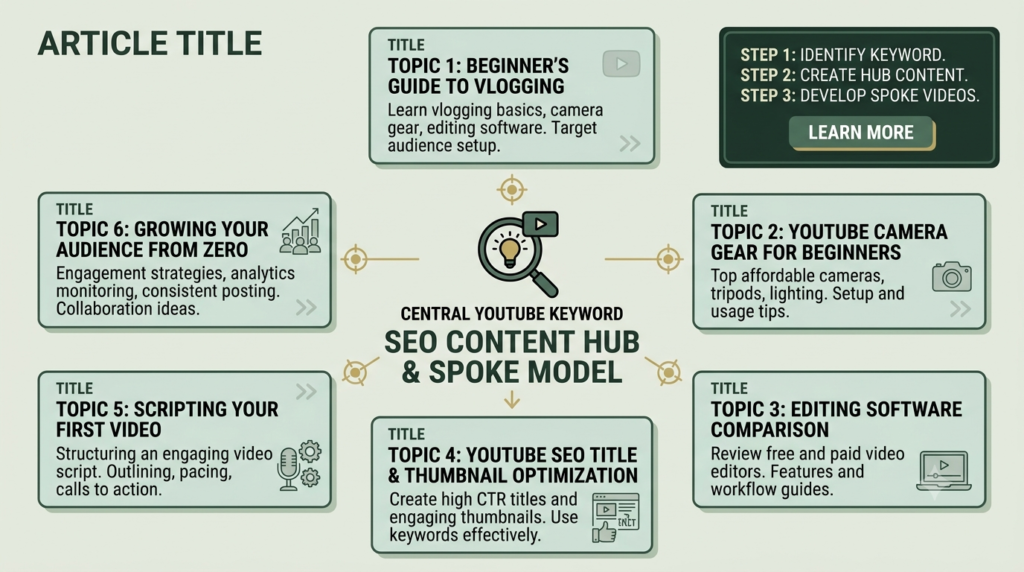
For example, the keyword YouTube keyword research can become:
- What Is YouTube Keyword Research?
- How to Do YouTube Keyword Research
- 7 YouTube Keyword Research Mistakes
- Best Free YouTube Keyword Research Methods
- YouTube Keyword Research for Beginners
- How to Find Long-Tail YouTube Keywords
This creates a topical cluster instead of isolated videos.
That cluster can strengthen your channel’s relevance around a subject while giving viewers multiple useful entry points.
How Keyword Ideas Become Your Content Backbone
Think of your content structure like this:
Keyword → Search Intent → Video Idea → Title → Video → Related Videos → Playlist → Analytics
This is where keyword research becomes the backbone of a broader content entity structure.
A keyword identifies the subject. Search intent identifies the viewer’s need. The video answers that need. Related videos expand the topic. Playlists connect related content, while Analytics tells you what your audience actually responds to.
YouTube recommends grouping content by format, audience, topic longevity, style, and other characteristics, then studying performance patterns in Analytics.
So the keyword is the starting point—not the finish line.
How to Correct and Optimize a Keyword-Based Idea
Before creating the video, use this simple checklist:
Check 1: Search intent
Does the video actually answer what the viewer wants?
Check 2: Specificity
Avoid extremely broad topics when your channel is new.
Instead of:
YouTube
try:
How to Start a YouTube Channel for Beginners
Check 3: Competition
Search the keyword and study the existing results.
Ask:
- Are the results outdated?
- Are they answering the exact question?
- Can I explain the subject more clearly?
- Can I provide a better example?
- Is there an underserved beginner audience?
Check 4: Title promise
Your title should accurately communicate the value of the video.
YouTube says titles and thumbnails are important for communicating value and setting expectations, while viewer response ultimately matters for performance.
Check 5: Content quality
Do not create a video simply because a keyword exists.
Create it because you can genuinely help the viewer.
Common Mistakes to Avoid
- Choosing keywords unrelated to your audience
- Repeating keywords unnaturally
- Making misleading titles
- Copying competitors’ video ideas word-for-word
- Targeting only high-volume keywords
- Ignoring search intent
- Forgetting long-tail questions
- Creating a video without a clear viewer benefit
- Treating keywords as more important than viewer satisfaction
YouTube states that recommendations are influenced by viewer personalization and how audiences respond to content, including whether they choose to watch, continue watching, and feel satisfied.
A Simple Keyword-Based Idea Formula
Use this formula whenever you feel stuck:
Keyword + Audience + Problem + Desired Result = Video Idea
Example:
Keyword: YouTube thumbnails
Audience: Beginners
Problem: Low clicks
Result: Better click appeal
Video idea:
“How to Create YouTube Thumbnails That Get More Clicks”
This gives you a much stronger starting point than simply saying, “I need a video about thumbnails.”
Final Keyword-Based Ideas Checklist
Before publishing, ask:
- Is the keyword relevant to my audience?
- Does the topic solve a real problem?
- Is the search intent clear?
- Does the title naturally contain the primary keyword?
- Does the description explain the video?
- Does the video deliver the title’s promise?
- Is the thumbnail easy to understand on mobile?
- Have I connected the video to related content?
- Can I turn this topic into a content cluster?
- Will Analytics help me decide what to create next?
Remember: YouTube Keyword-Based Ideas are a starting framework, not a shortcut. The strongest strategy combines search demand with useful content, clear packaging, and genuine audience satisfaction.

Frequently Asked Questions
What are YouTube Keyword-Based Ideas?
They are video topics created from keywords, questions, and search phrases relevant to your target audience. They help turn search demand into practical video concepts.
Are keywords still important for YouTube in 2026?
Yes, keywords remain useful for understanding search intent and relevance. However, YouTube also considers viewer response, personalization, satisfaction, competition, and topic interest.
How do I find YouTube video ideas from keywords?
Start with a broad topic, use YouTube search suggestions, check YouTube Studio’s Trends tab, examine content gaps, and turn specific searches into useful video concepts.
Should every video target one keyword?
It is better to have one clear primary topic or search intent per video. Related phrases can naturally support the main topic without forcing repeated keywords.
What is the best keyword for a new YouTube channel?
There is no universal best keyword. A good starting keyword is relevant to your niche, specific enough to target, connected to a real viewer problem, and realistic for your channel.
Can keyword-based ideas guarantee YouTube views?
No. Keywords can help you identify relevant search opportunities, but they cannot guarantee views, rankings, or recommendations. Viewer interest and content performance still matter.
Conclusion
YouTube Keyword-Based Ideas make content planning more systematic. Instead of opening your camera and wondering what to create, you can begin with a real search, understand the viewer’s intent, and build a useful video around it.
Use keywords to discover opportunities, but use your expertise and audience understanding to create the actual value.
Start with one keyword, one problem, and one useful video. Then use the results from YouTube Analytics to decide what deserves your next video.
Ready to build your next video idea? Pick one relevant keyword today and turn it into one helpful video before searching for another.