
YouTube Content Funnel: 7 Powerful Steps to Grow in 2026
A YouTube content funnel is a simple system that moves viewers from discovering your content to watching more videos, trusting your channel, and eventually taking an action such as subscribing, visiting your website, or buying a product. For beginners, it provides a clear way to plan content instead of uploading random videos.
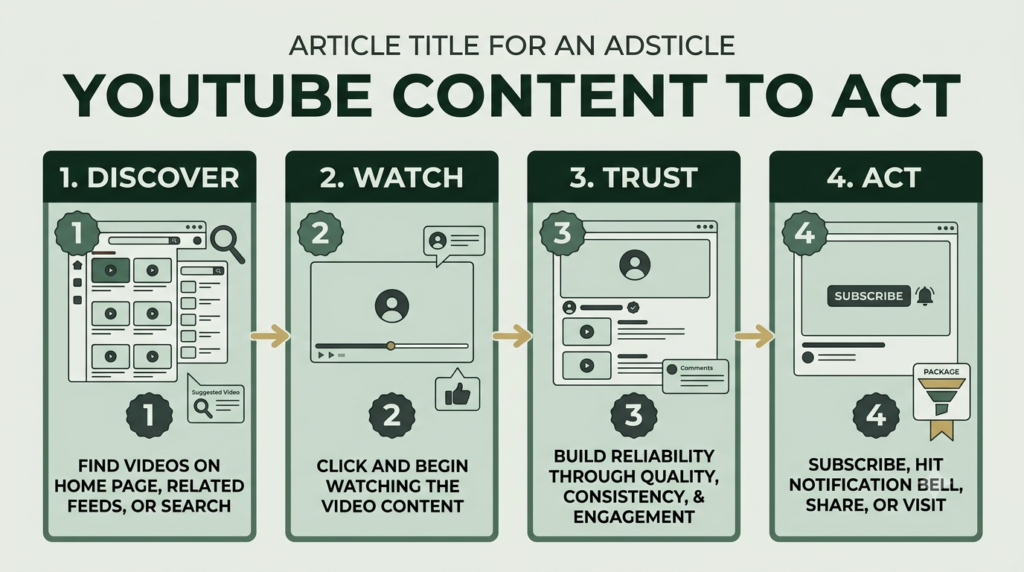
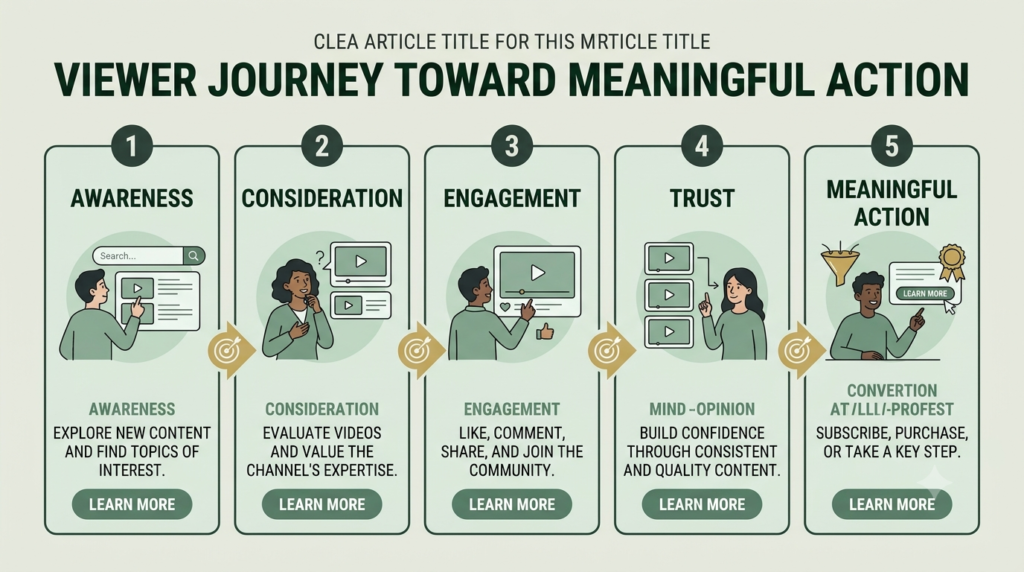
Think of the funnel as a journey: discover → watch → trust → engage → act.
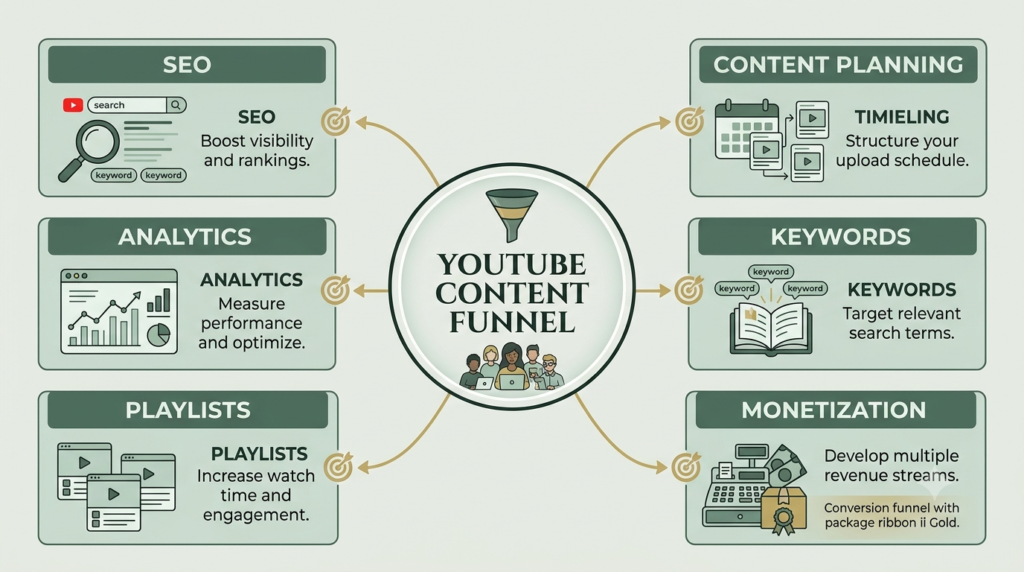
A good YouTube content funnel can become the backbone of your entire YouTube strategy because it connects content planning, SEO, audience intent, video topics, playlists, calls to action, and monetization into one system.
What Is a YouTube Content Funnel?
A YouTube content funnel is a structured content journey that guides people through different stages of awareness.
Someone may discover your channel through a YouTube search. After watching one useful video, they may click another related video or playlist. As they learn more from you, they gradually become a regular viewer and eventually take your desired action.
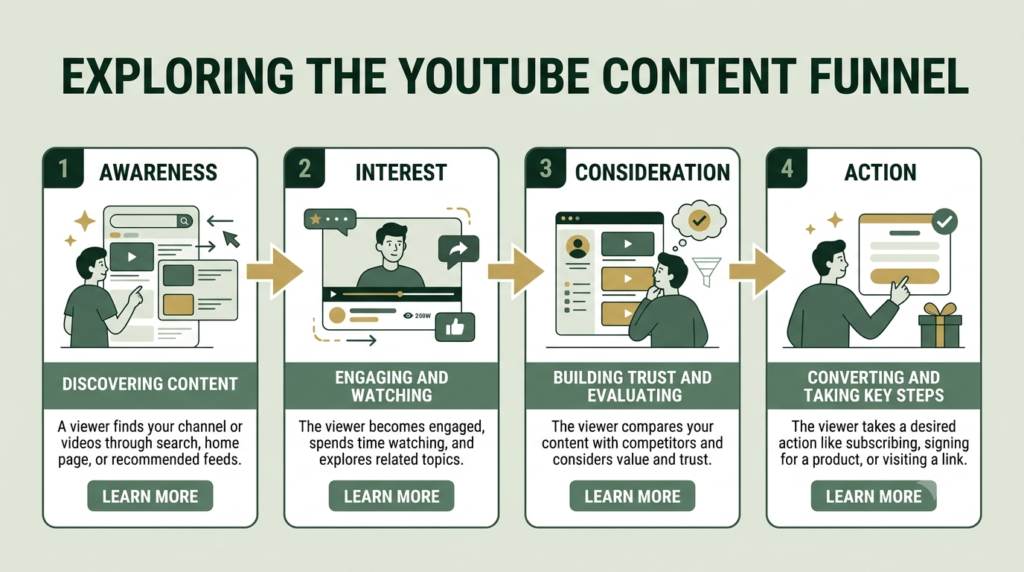
The funnel normally includes four important stages:
- Awareness – Help new people discover you.
- Interest – Give them useful information that keeps them watching.
- Consideration – Build credibility and demonstrate expertise.
- Action – Encourage a meaningful next step.
This approach makes your content work together rather than functioning as isolated videos.
7 Powerful Elements of a YouTube Content Funnel
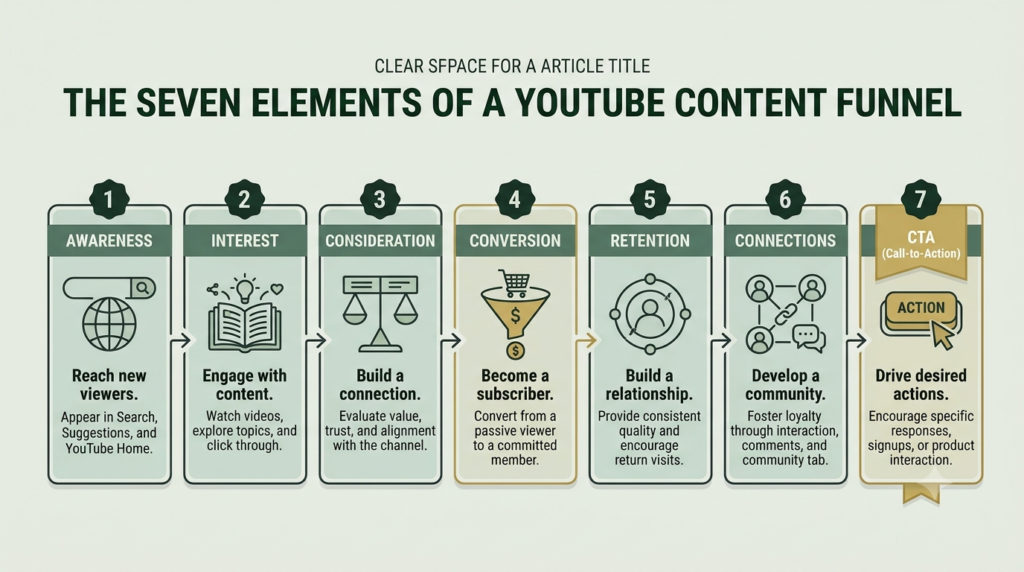
1. Awareness Content
Awareness content reaches people who may not know your channel yet.
Examples include:
- Beginner tutorials
- “What is…” videos
- Common mistakes
- Problem-solving videos
- Search-focused educational content
For example, a YouTube SEO channel could create “What Is YouTube SEO? A Beginner’s Guide”.
The goal is not to sell immediately. The goal is to answer a problem clearly enough that viewers want to explore your channel.
2. Interest Content
Once viewers discover you, interest content gives them a reason to continue watching.
Useful formats include:
- Step-by-step tutorials
- Checklists
- Comparisons
- Strategy videos
- How-to guides
Link related videos using end screens, cards, descriptions, and playlists where appropriate.
3. Consideration Content
At this stage, viewers are evaluating whether your advice is useful and trustworthy.
You can create:
- Case studies
- Detailed walkthroughs
- Tool comparisons
- Results-based lessons
- Mistake-and-solution videos
This stage is particularly important for creators who eventually want to sell digital products or services.
4. Conversion Content
Conversion content encourages viewers to take a specific action.
That action could be:
- Subscribe
- Download a free resource
- Visit your website
- Join an email list
- Purchase a product
- Watch a related video
A good CTA should feel like a natural continuation of the video.
Instead of saying, “Buy my product,” explain how the resource solves the problem you just discussed.
5. Retention Content
A funnel should not end after one conversion.
Create content that gives existing viewers a reason to return.
Examples include:
- Series
- Weekly tutorials
- Advanced guides
- Updates
- Frequently requested topics
Your goal is to turn a one-time viewer into a returning viewer.
6. Internal Content Connections
Your videos should connect with each other.
For example:
YouTube Keyword Research → YouTube Titles → YouTube Thumbnails → YouTube Video SEO → YouTube Analytics
This creates a content pathway.
Playlists are especially useful because they organize related videos into a logical learning journey.
7. Clear Calls to Action
Every video should have one primary next step.
For example:“If you want to learn how to optimize your YouTube titles, watch the next guide in this series.”
The CTA should match the viewer’s stage rather than interrupting the experience.

YouTube Content Funnel vs. Traditional Content Strategy
| Funnel Stage | Viewer Intent | Suitable Content | Main Goal |
|---|---|---|---|
| Awareness | “I have a problem.” | Beginner/search videos | Discovery |
| Interest | “How can I solve it?” | Tutorials | Engagement |
| Consideration | “Can I trust this?” | Case studies/comparisons | Trust |
| Conversion | “What should I do next?” | Product/resource videos | Action |
| Retention | “What else can I learn?” | Series/playlists | Return visits |
How to Build a YouTube Content Funnel
Start with one specific audience problem.
Step 1: Identify the problem
Ask:
What does my target viewer want to achieve?
For example:“I want more people to find my YouTube videos.”
Step 2: Create awareness topics
Turn the problem into beginner-friendly searches.
Examples:
- What Is YouTube SEO?
- How YouTube Search Works
- YouTube Keyword Research for Beginners
Step 3: Build supporting videos
Create deeper content around the same problem.
For example:
→ Keyword Research
→ Video Titles
→ Descriptions
→ Tags
→ Thumbnails
→ Analytics
Step 4: Connect the videos
Add relevant internal links through:
- Playlists
- Descriptions
- End screens
- Cards
- Pinned comments
The viewer should always have an obvious next step.
Step 5: Add one relevant CTA
Your CTA should correspond to the topic.
If the video teaches keyword research, your next CTA could lead to a keyword research guide rather than an unrelated product.

Why the YouTube Content Funnel Is the Backbone of Your Content Strategy
The funnel acts as the backbone because it gives every piece of content a purpose.
Without a funnel, you might publish videos based only on ideas that sound interesting. With a funnel, each video has a role.
It connects:
Audience problem → keyword → video → related video → playlist → trust → CTA → conversion
This also supports topical authority. When several closely related videos and articles cover different aspects of one subject, your audience can move naturally through the topic.
For your website, YouTube content can also connect with supporting SEO articles. For example, your YouTube Keyword Research guide can support a video about finding keywords.
For authoritative YouTube information, creators should also refer to YouTube Help and the YouTube Creator Academy.
How to Optimize Your YouTube Content Funnel to 99/100
SEO optimization is not about achieving a perfect plugin score by repeating keywords. Focus on search intent, usefulness, structure, and internal connections.
Use this checklist:
- Put the primary keyword naturally in the title.
- Mention it naturally in the introduction.
- Use it in one relevant heading.
- Include it naturally in the URL.
- Write a compelling meta description.
- Use related keywords throughout the article.
- Create descriptive image alt text.
- Add relevant internal links.
- Link to authoritative external sources.
- Use short paragraphs.
- Add useful H2 and H3 headings.
- Include a table where it improves understanding.
- Add an FAQ section.
- Use one clear CTA.
- Check mobile readability.
- Avoid keyword stuffing.
- Remove unnecessary repetition.
- Proofread grammar and spelling.
- Connect the article to your wider YouTube topic cluster.

Frequently Asked Questions
What is a YouTube content funnel?
A YouTube content funnel is a structured system that guides viewers from discovering your content to watching related videos, trusting your expertise, and taking a desired action.
Why is a content funnel important on YouTube?
It helps your videos work together. Instead of publishing unrelated topics, you create a connected viewer journey that can improve engagement, returning viewers, and conversions.
What should I put at the top of a YouTube funnel?
Start with awareness content that answers common beginner questions or solves searchable problems. These videos introduce new viewers to your channel.
Can a beginner create a YouTube funnel?
Yes. Start with one audience problem, create one beginner video, then develop several supporting videos that answer related questions.
How many stages should a YouTube funnel have?
There is no mandatory number. A practical beginner funnel can use awareness, interest, consideration, conversion, and retention.
Final Takeaway
A YouTube content funnel turns individual videos into a connected growth system. Instead of asking, “What video should I make next?” ask, “Where should this viewer go next?”
When every video solves a specific problem and points naturally toward another useful resource, your channel becomes easier to navigate, easier to understand, and more valuable to your audience.
Ready to build your funnel? Start with one audience problem, create one awareness video, and then map three related videos that take the viewer one step deeper.